Great Bend in Barton County, Kansas — The American Midwest (Upper Plains)
Santa Fe Trail

Photographed by Cosmos Mariner, September 8, 2024
1. Santa Fe Trail Marker
Mexico won its independence from Spain in 1821, allowing the road to Santa Fe to open. This trail of commerce between Missouri and Mexico was a major international trade route. Economies were influenced from Mexico City to England. William Becknell was the first to travel the road to Santa Fe from Missouri in 1821. The United States Government surveyed the road in 1825. American and Mexican traders traveled the 900 miles with heavy freight wagons pulled by oxen, hauling cloth, jewelry, hardware, and manufactured goods west, and gold, silver, wools, furs, and mules east. Traders, settlers, and the military passed where you now stand until the Atchinson, Topeka & Santa Fe railroad arrived at Great Bend in 1872. Portions of the trail to the west continued to exist until 1880.
Topics and series. This historical marker is listed in these topic lists: Industry & Commerce • Roads & Vehicles • Settlements & Settlers. In addition, it is included in the Santa Fe Trail series list. A significant historical year for this entry is 1821.
Location. 38° 21.67′ N, 98° 45.359′ W. Marker is in Great Bend, Kansas, in Barton County.
this page online

Regionally, this marker is in Central Kansas. It is also in the American Midwest, in the Corn Belt, on the prairies, on the Southern Plains, and on the Santa Fe Trail Corridor. Globally, it is in North America, the Western Hemisphere, the Western World, and the Anglosphere. Historically, it finds itself in what was once the Louisiana Purchase.
Other nearby markers. At least 8 other markers are within walking distance of this marker: Lt. Zebulon Pike, 1806 (a few steps from this marker); a different marker also named Santa Fe Trail (a few steps from this marker); Prey and Play (approx. ¼ mile away); Post Rock & Black Gold (approx. ¼ mile away); Wild West Superhighway (approx. half a mile away); Veterans of Foreign Wars Memorial (approx. half a mile away); Streetscape (approx. 0.6 miles away); Jack Kilby (approx. 0.6 miles away).
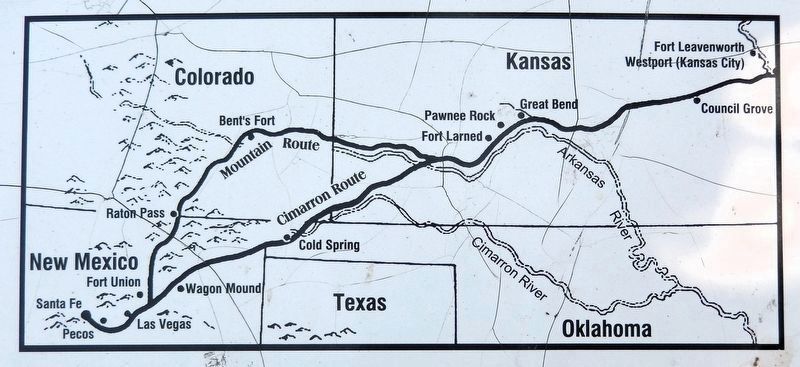
2. Marker detail: Santa Fe Trail Map
Also see . . .
1. The Santa Fe National Historic Trail (National Park Service).
Excerpt: From 1821 until 1846, the Santa Fe Trail was a two-way international commercial highway used by both Mexican and American traders. Then, in 1846, the Mexican-American War began, and a few months later, America’s Army of the West followed the Santa Fe Trail westward to successfully invade Mexico. After the Treaty of Guadalupe Hidalgo ended the war in 1848, the Santa Fe Trail became a national road connecting the more settled parts of the United States to the new southwest territories. Commercial freighting along the trail boomed to unheard-of levels, including considerable military freight hauling to supply the southwestern forts. The trail was also used by stagecoach lines, thousands of gold seekers heading to the California and Colorado gold fields, adventurers, missionaries, wealthy New Mexican families and emigrants.(Submitted on June 13, 2026, by Cosmos Mariner of Cape Canaveral, Florida.)
2. William Becknell (c. 1788 to 1856) (Wikipedia).
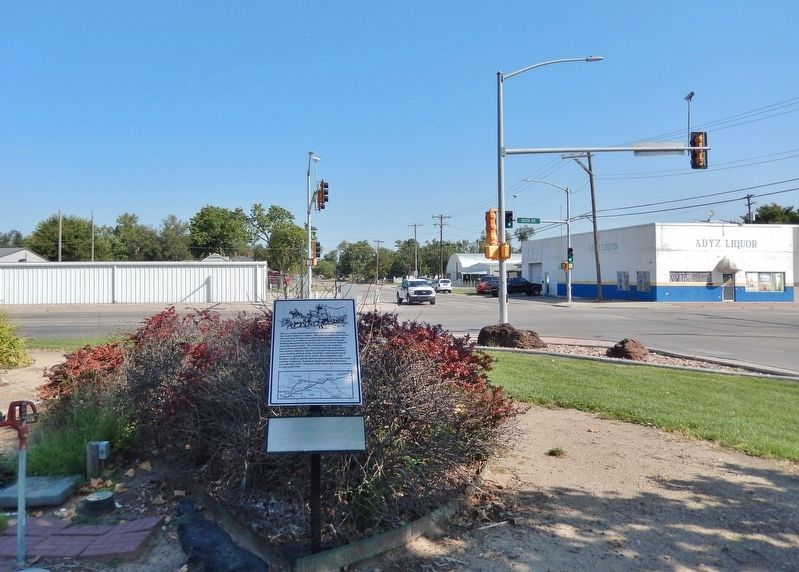
Excerpt: William Becknell(Submitted on June 13, 2026, by Cosmos Mariner of Cape Canaveral, Florida.)was an American soldier, politician, and freight operator who is credited by Americans with opening the Santa Fe Trail in 1821. He found a trail for part of the route that was wide enough for wagon trains and draft teams, making it easier for traders and emigrants along this route. The Santa Fe Trail became an early major transportation route through central North America that connected Franklin, Missouri with Santa Fe, New Mexico, serving both trading and emigrant parties. It served as a vital commercial highway from the 1820s until 1880, when the railroad was introduced to Santa Fe. Becknell made use of long-established trails made by Native Americans, and Spanish and French colonial explorers and traders for centuries before his trip.Photographed by Cosmos Mariner, September 8, 20243. Santa Fe Trail MarkerLooking north through the east side of Santa Fe Trail Park. Frey Street is on the right. US Highway 56 crosses in the background.
Photographed by Cosmos Mariner, September 8, 2024
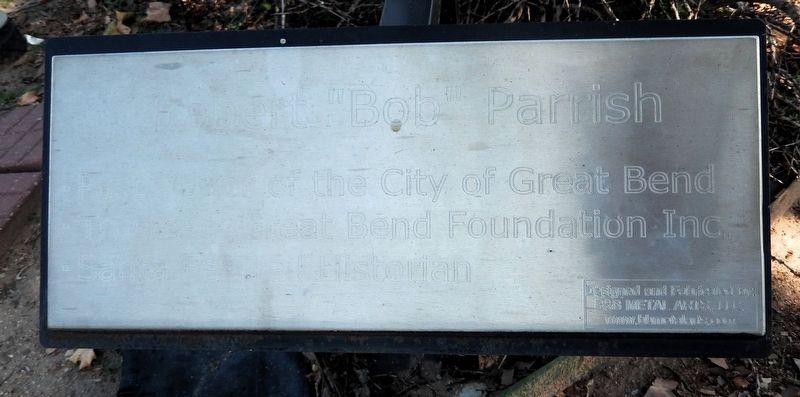
4. Santa Fe Trail Marker Dedication
• Past Mayor of the City of Great Bend
• Trustee — Great Bend Foundation Inc.
• Santa Fe Trail Historian
Designed and Fabricated by B&B Metal Arts, LLC.
Credits. This page was last revised on June 13, 2026. It was originally submitted on June 12, 2026, by Cosmos Mariner of Cape Canaveral, Florida. This page has been viewed 15 times since then. Photos: 1, 2, 3, 4. submitted on June 13, 2026, by Cosmos Mariner of Cape Canaveral, Florida.
