Creston in Ogle County, Illinois — The American Midwest (Great Lakes)
Illinois Lincoln Highway
Paved roads lifted Illinois out of the mud
Photographed by Cosmos Mariner, September 11, 2023
1. Illinois Lincoln Highway Marker
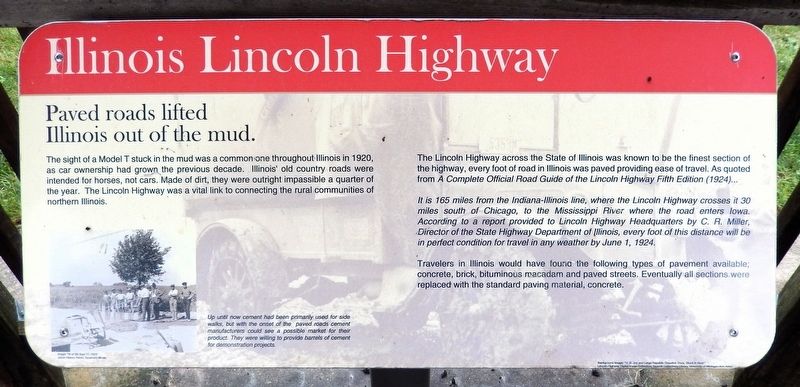
The sight of a Model T stuck in the mud was a common one throughout Illinois in 1920, as car ownership had grown the previous decade. Illinois' old country roads were intended for horses, not cars. Made of dirt, they were outright impassible a quarter of the year. The Lincoln Highway was a vital link to connecting the rural communities of northern Illinois.
The Lincoln Highway across the State of Illinois was known to be the finest section of the highway, every foot of road in Illinois was paved providing ease of travel. As quoted from A Complete Official Road Guide of the Lincoln Highway Fifth Edition (1924)...
It is 165 miles from the Indiana-Illinois line, where the Lincoln Highway crosses it 30 miles south of Chicago, to the Mississippi River where the road enters Iowa. According to a report provided to Lincoln Highway Headquarters by C. R. Miller, Director of the State Highway Department of Illinois, every foot of this distance will be in perfect condition for travel in any weather by June 1, 1924.
Travelers in Illinois would have found the following types of pavement available; concrete, brick, bituminous macadam and
this page online
[image caption] Up until now cement had been primarily used for side walks, but with the onset of the paved roads cement manufacturers could see a possible market for their product. They were willing to provide barrels of cement for demonstration projects.
Erected by Illinois Lincoln Highway Coalition & America's Byways.
Topics and series. This historical marker is listed in this topic list: Roads & Vehicles. In addition, it is included in the Lincoln Highway series list. A significant historical date for this entry is June 1, 1924.
Location. 41° 55.884′ N, 88° 57.871′ W. Marker is in Creston, Illinois, in Ogle County. It is on North Main Street just north of East North Street, on the right when traveling north. The marker is in the Illinois Lincoln Highway Coalition interpretive gazebo on the south side of Creston Village Hall. Touch for map. Marker is at or near this postal address: 110 North Main Street, Creston IL 60113, United States of America. Touch for directions.

Regionally, this marker is in the American Midwest and in the Corn Belt.
Photographed by Cosmos Mariner, September 11, 2023
2. Illinois Lincoln Highway Marker
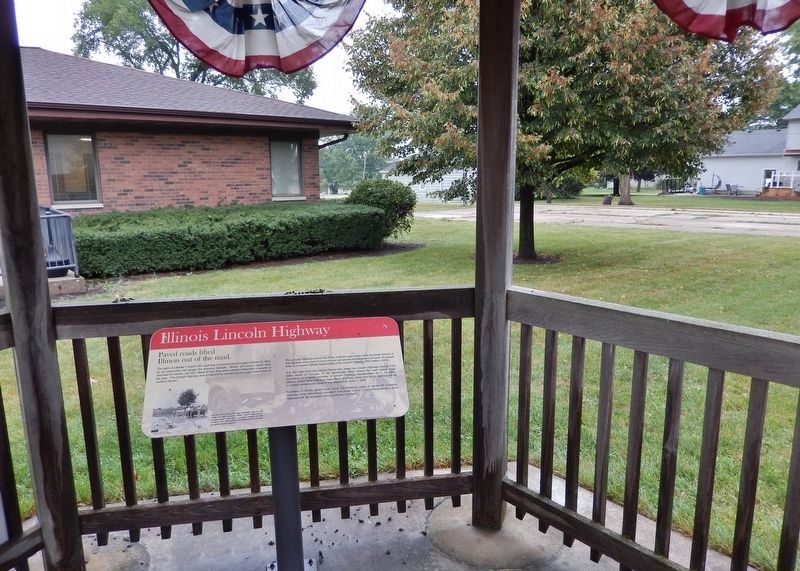
Creston Village Hall is in the left background.
Other nearby markers. At least 8 other markers are within 5 miles of this marker, measured as the crow flies: The Lincoln Highway - The nation’s first coast-to-coast highway! (here, next to this marker); a different marker also named Illinois Lincoln Highway (here, next to this marker); Lincoln Highway (here, next to this marker); Creston Veterans Memorial (a few steps from this marker); Creston (within shouting distance of this marker); The History of Headons (within shouting distance of this marker); The Water Fountain and Mile Marker Below (within shouting distance of this marker); Kishwaukee College Veterans Memorial (approx. 4.4 miles away). Touch for a list and map of all markers in Creston.
Related markers. Click here for a list of markers that are related to this marker. Illinois Lincoln Highway Coalition - Creston
Also see . . . Lincoln Highway Illinois.
Photographed by Cosmos Mariner, September 11, 2023
3. Illinois Lincoln Highway Marker
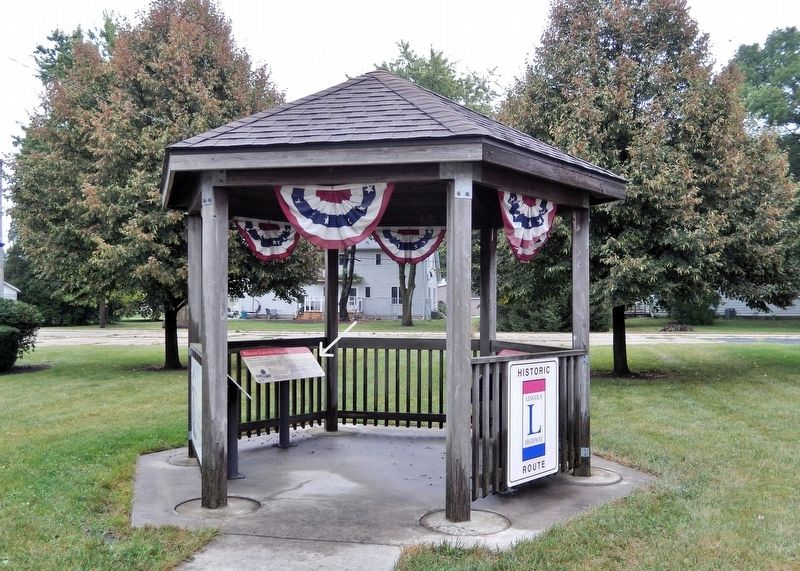
This is one of four related markers in the Creston Village Illinois Lincoln Highway Coalition interpretive gazebo.
Excerpt: Established in 1912 by early automotive entrepreneur Carl G. Fisher, the Lincoln Highway is regarded as the country’s first transcontinental route and is affectionately known as the “Father Road.” Inspired by the Good Roads Movement and the National Old Trails Road, the Lincoln Highway was also the first route constructed specifically for automobile use, catalyzed by the need for all-weather, hard-surfaced, durable roads and the idea that the route would showcase what roads could be.(Submitted on June 16, 2026, by Cosmos Mariner of Cape Canaveral, Florida.)Illinois has the distinguished honor of being the first state to complete its segment through the dedication and hard work of the communities along the route. The first federal highway funding legislation would not be established until the 1916 Federal Aid Road Act was signed into law, which provided federal subsidies for road-building efforts for the first time in the nation's history. Due to the lack of public funding, individuals and communities funded and undertook the physical construction of the Lincoln Highway. In turn, the highway provided an economic boost to the communities located along the route, earning the nickname “The Main
Street of America.”
Credits. This page was last revised on June 16, 2026. It was originally submitted on June 15, 2026, by Cosmos Mariner of Cape Canaveral, Florida. This page has been viewed 24 times since then. Photos: 1, 2, 3. submitted on June 16, 2026, by Cosmos Mariner of Cape Canaveral, Florida.
