
Lewes Historic District in Sussex County, Delaware — The American Northeast (Mid-Atlantic)
The Cannonball House
Photographed by Ian Lefkowitz, May 4, 2024
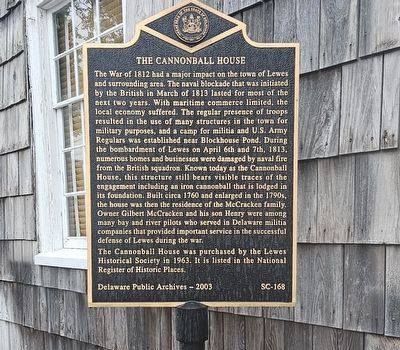
1. The Cannonball House Marker
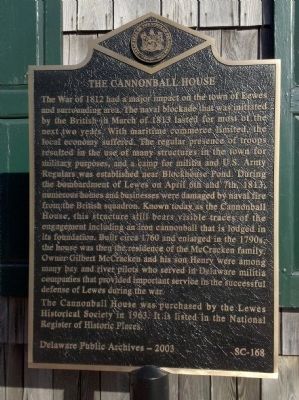
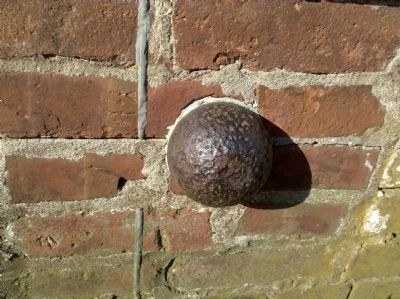
The War of 1812 had a major impact on the town of Lewes and surrounding area. The naval blockade that was initiated by the British in March of 1813 lasted for most of the next two years. With maritime commerce limited, the local economy suffered. The regular presence of troops resulted in the use of many structures in the town for military purposes, and a camp for militia and U.S. Army Regulars was established near Blockhouse Pond. During the bombardment of Lewes on April 6th and 7th, 1813, numerous homes and businesses were damaged by naval fire from the British squadron. Known today as the Cannonball House, this structure still bears visible traces of the engagement including an iron cannonball that is lodged in its foundation. Built circa 1760 and enlarged in the 1790s, the house was then the residence of the McCracken family. Owner Gilbert McCracken and his son Henry were among the many bay and river pilots who served in Delaware militia companies that provided important service in the successful defense of Lewes during the war.
The Cannonball House was purchased by the Lewes Historical Society in 1963. It is listed in the National Register of Historic Places.
Erected 2003
this page online
Topics and series. This historical marker is listed in these topic lists: War of 1812 • Waterways & Vessels. In addition, it is included in the Delaware Public Archives series list. A significant historical month for this entry is March 1813.
Location. 38° 46.553′ N, 75° 8.357′ W. Marker is in Lewes, Delaware, in Sussex County. It is in the Lewes Historic District. It is at the intersection of Bank Street and Front Street on Bank Street. Touch for map. Marker is in this post office area: Lewes DE 19958, United States of America. Touch for directions.

Regionally, this marker is on Delaware’s Beaches. It is also in the American Mid-Atlantic, on the Delmarva Peninsula, and on the Eastern Seaboard. Globally, it is in the North Atlantic Region, North America, the Western Hemisphere, the Western World, and the Anglosphere. Historically, it finds itself in what was once New Netherland, one of the original Thirteen Colonies, and the Antebellum South.
Other nearby markers. At least 8 other markers are within walking distance of this marker: A different marker also named The Cannonball House
Photographed by F. Robby, May 1, 2010
2. The Cannonball House Marker
Another marker is no longer nearby. The Bombardment of Lewes (was within shouting distance of this marker but has been replaced with another marker now near it).
Photographed by F. Robby, May 1, 2010
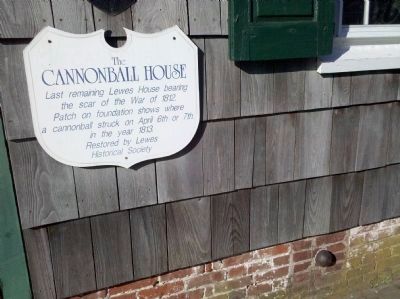
3. Second Marker and Cannonball
The cannonball is in the lower right of this picture, in the brick foundation.
Photographed by F. Robby, May 1, 2010
4. The Cannonball
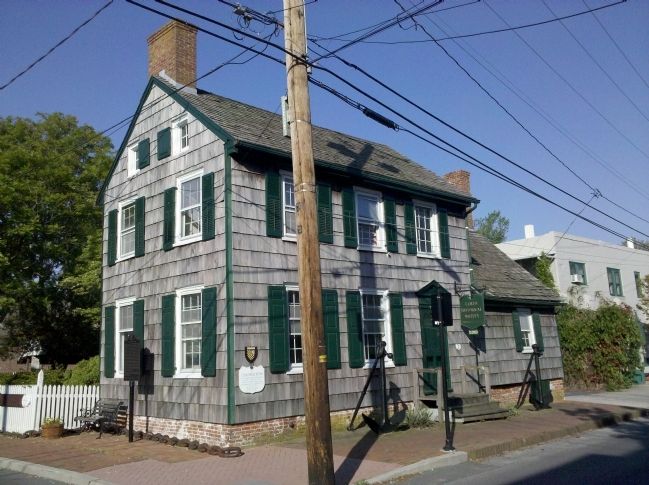
Photographed by F. Robby, May 1, 2010
5. The Cannonball House
Both markers are in the foreground.
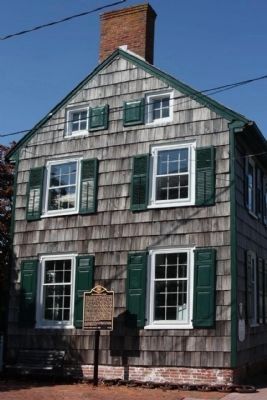
Photographed by Mike Stroud, October 15, 2010
6. The Cannonball House and Marker
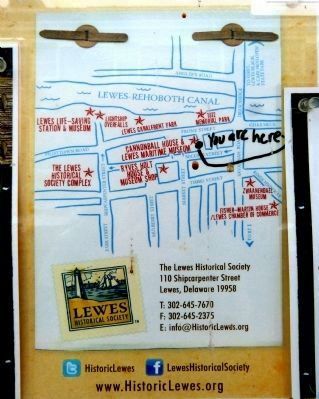
Photographed by Allen C. Browne, February 3, 2013
7. You Are Here
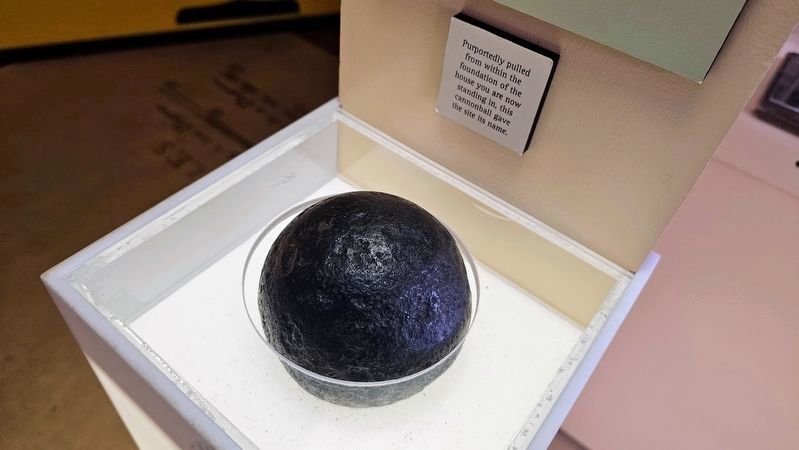
Photographed by Ian Lefkowitz, May 4, 2024
8. The Cannonball
The cannonball on the exterior of the house is a replica, but has been returned after being stolen. The one inside is likely to have apocryphally hit the house as well.
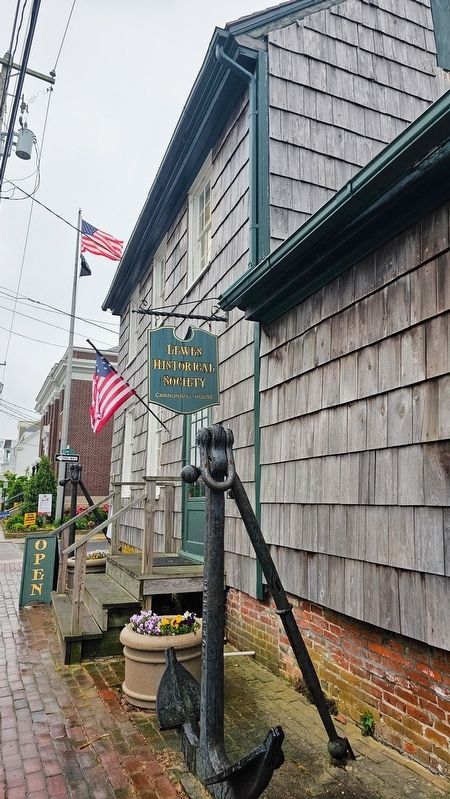
Photographed by Ian Lefkowitz, May 4, 2024
9. The Entrance to the Cannonball House
Credits. This page was last revised on April 2, 2025. It was originally submitted on May 4, 2010, by F. Robby of Baltimore, Maryland. This page has been viewed 1,648 times since then and 31 times this year. Photos: 1. submitted on March 19, 2025, by Ian Lefkowitz of New York, New York. 2, 3, 4, 5. submitted on May 4, 2010, by F. Robby of Baltimore, Maryland. 6. submitted on October 17, 2010, by Mike Stroud of Bluffton, South Carolina. 7. submitted on February 16, 2013, by Allen C. Browne of Silver Spring, Maryland. 8, 9. submitted on March 19, 2025, by Ian Lefkowitz of New York, New York.
