Collingwood in Simcoe County, Ontario — Central Canada (North America)
Pride Flag
Building An Inclusive Community
Photographed by Cosmos Mariner, June 4, 2024
1. Pride Flag Marker
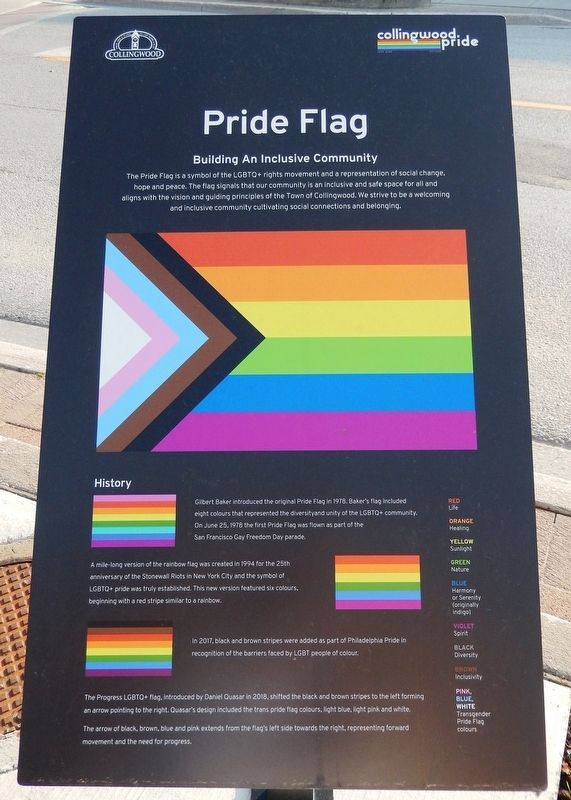
The Pride Flag is a symbol of the LGBTQ+ rights movement and a representation of social change, hope and peace. The flag signals that our community is an inclusive and safe space for all and aligns with the vision and guiding principles of the Town of Collingwood. We strive to be a welcoming and inclusive community cultivating social connections and belonging.
History
Gilbert Baker introduced the original Pride Flag in 1978. Baker's flag included eight colours that represented the diversity and unity of the LGBTQ+ community. On June 25, 1978 the first Pride Flag was flown as part of the San Francisco Gay Freedom Day parade.
A mile-long version of the rainbow flag was created in 1994 for the 25th anniversary of the Stonewall Riots in New York City and the symbol of LGBTQ+ pride was truly established. This new version featured six colours, beginning with a red stripe similar to a rainbow.
In 2017, black and brown stripes were added as part of Philadelphia Pride in recognition of the barriers faced by LGBT people of colour.
The Progress LGBTQ+ flag, introduced by Daniel Quasar in 2018, shifted the black and brown stripes to
this page online
The arrow of black, brown, blue and pink extends from the flag's left side towards the right, representing forward movement and the need for progress.
Red — Life • Orange — Healing • Yellow — Sunlight • Green — Nature • Blue — Harmony or Serenity (originally indigo) • Violet — Spirit • Black — Diversity • Brown — Inclusivity • Pink, Blue, White — Transgender Pride Flag colours
Erected by Collingwood Pride.
Topics and series. This historical marker is listed in this topic list: Man-Made Features. In addition, it is included in the Vexillology series list. A significant historical date for this entry is June 25, 1978.
Location. 44° 30.074′ N, 80° 12.925′ W. Marker is in Collingwood, Ontario, in Simcoe County. It is at the intersection of Saint Marie Street and Simcoe Street, on the left when traveling south on Saint Marie Street. Touch for map. Marker is at or near this postal address: 65 Simcoe Street, Collingwood ON L9Y 1H7, Canada. Touch for directions.

Regionally, this marker is in Central Ontario
Photographed by Cosmos Mariner, June 4, 2024
2. Pride Flag Marker
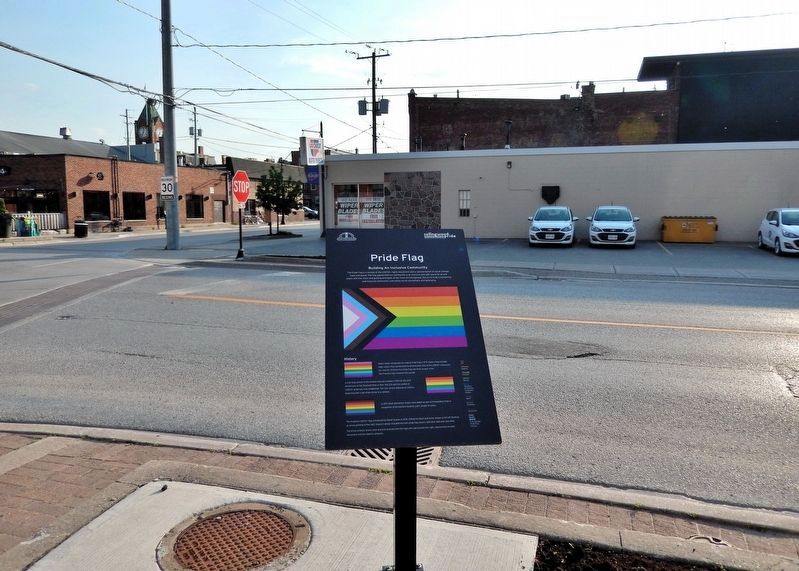
Looking west across Saint Marie Street. The painted pride flag crosswalk is across Simcoe Street, at the intersection to the left of this image.
Other nearby markers. At least 8 other markers are within walking distance of this marker: Simcoe Street - Late 1890's (within shouting distance of this marker); All Saints' Anglican Church (about 90 meters away, measured in a direct line); Collingwood World War I Cenotaph (about 150 meters away); St. Mary's Collingwood, 1858 (about 210 meters away); St. Charles Garnier, SJ (about 210 meters away); The Northern Railway Company of Canada (about 210 meters away); The Associated Country Women of the World / L'union mondiale des femmes rurales (about 210 meters away); Collingwood - An Overview / Collingwood Elevators (approx. 0.3 kilometers away). Touch for a list and map of all markers in Collingwood.
Also see . . . Pride Flag (Wikipedia).
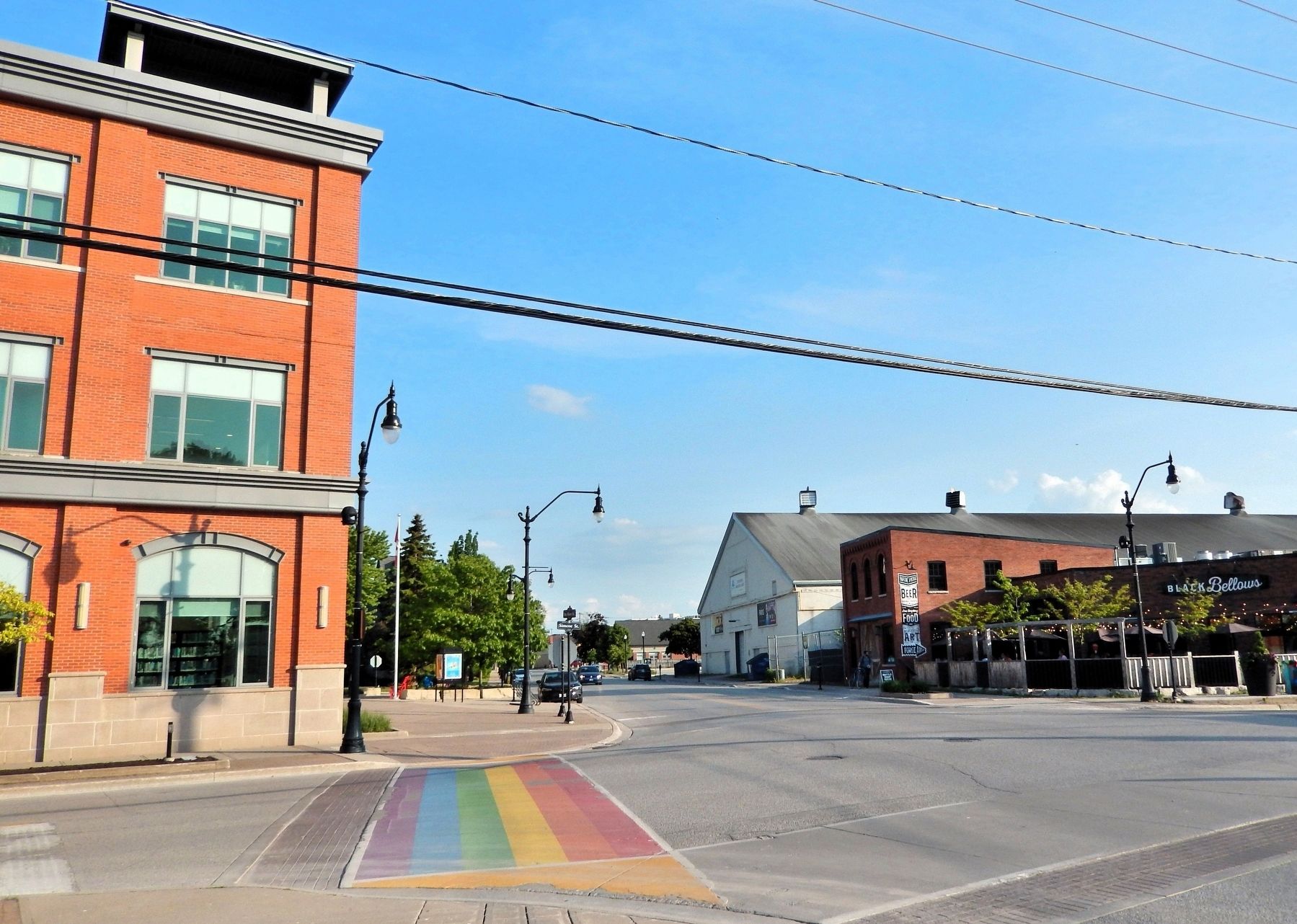
Excerpt:(Submitted on June 28, 2026, by Cosmos Mariner of Cape Canaveral, Florida.)A pride flag is any flag that represents a segment or part of the LGBTQ community. Pride in this case refers to the notion of LGBTQ pride. The rainbow flag, which represents the entire LGBTQ community, is the most widely used pride flag. Pride flags can represent various sexual orientations, romantic orientations, gender identities, subcultures, and regional purposes.Photographed by Cosmos Mariner, June 4, 20243. Pride Flag Crosswalk Across Simcoe StreetLooking north across Simcoe Street from beside the marker.Numerous communities have embraced distinct flags, with a majority drawing inspiration from the rainbow flag. These flags are often created by amateur designers and later gain traction online or within affiliated organizations, ultimately attaining a semi-official status as a symbolic representation of the community. Typically, these flags incorporate a range of colors that symbolize different aspects of the associated communities.
Credits. This page was last revised on June 28, 2026. It was originally submitted on June 28, 2026, by Cosmos Mariner of Cape Canaveral, Florida. This page has been viewed 14 times since then. Photos: 1, 2, 3. submitted on June 28, 2026, by Cosmos Mariner of Cape Canaveral, Florida.
