Near Bunker Hill in Berkeley County, West Virginia — The American South (Appalachia)
James Johnston Pettigrew Monument
Photographed by Tom Fuchs, June 16, 2007
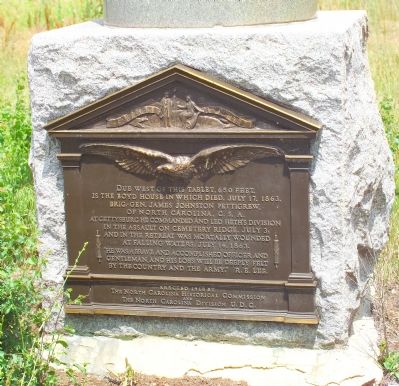
1. General James Johnston Pettigrew Monument
Due west of this tablet, 650 feet, is the Boyd House in which died, July 17, 1863, Brig.-Gen. James Johnston Pettigrew, of North Carolina, C. S. A. At Gettysburg he commanded and led Heth’s Division in the assault on Cemetery Ridge, July 3; and in the retreat was mortally wounded at Falling Water, July 14, 1863.
“He was a brave and accomplished officer and gentleman, and his loss will be deeply felt by the country and the Army.” R. E. Lee.
Erected by The North Carolina Historical Commission and The North Carolina Division U.D.C.
Topics and series. This monument and memorial is listed in this topic list: War, US Civil. In addition, it is included in the United Daughters of the Confederacy series list. A significant historical date for this entry is July 17, 1863.
Location. 39° 19.993′ N, 78° 3.392′ W. Monument is near Bunker Hill, West Virginia, in Berkeley County. It is on Runnymeade Road (County Route 26) 0.2 miles west of Winchester Avenue (U.S. 11), on the left when traveling west. Touch for map. Monument is at or near this postal address: 121 Runnymeade Rd, Bunker Hill WV 25413, United States of America. Touch for directions.

Regionally,
this page online
Other nearby markers. At least 8 other markers are within 3 miles of this marker, measured as the crow flies: Morgan Chapel (within shouting distance of this marker); Christ Church (within shouting distance of this marker); a different marker also named Christ Church (about 300 feet away, measured in a direct line); Morgan Morgan (approx. ¼ mile away); "Morgan Acres" (approx. ¼ mile away); Col. Morgan Morgan (approx. ¼ mile away); Morgan Cabin (approx. 2.6 miles away); Cool Spring Presbyterian Church (approx. 2.6 miles away). Touch for a list and map of all markers in Bunker Hill.
Another marker is no longer nearby. Gettysburg Campaign (was approx. 1.2 miles away but has been permanently removed).
More about this monument.

Photographed by Tom Fuchs, June 16, 2007
2. James Johnston Pettigrew Monument
Original location
Also see . . .
1. 1994 entry by Clyde Wilson in the NCpedia for James Johnson Pettigrew. (Submitted on June 17, 2007.)
2. Carolina Cavalier: The Life and Mind of James Johnston Pettigrew. Book by Clyde N. Wilson on Amazon.com (Submitted on June 17, 2007.)
3. The Long Lost Journal of Confederate General James Johnston Pettigrew. Book by Daniel F. Bauer on Amazon.com (Submitted on June 17, 2007.)
4. Review of The Long Lost Journal. 2001 Review by Gary Luhman. (Submitted on June 17, 2007.)
5. Article about the damage to the marker. (Submitted on June 7, 2020, by Robert Heyward of Prattville, Alabama.)
Additional commentary.
1. Accidently hit by a truck on March 3, 2020. Catastrophic Damage
This was hit by a truck early on the morning of March 3, 2020. It was significantly damaged but could be repaired. It was still in the same condition at the beginning of June 2020.
— Submitted June 7, 2020, by Robert Heyward of Prattville, Alabama.
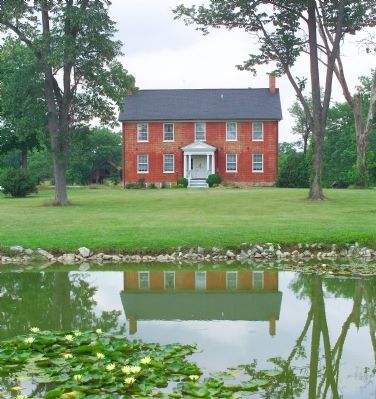
2. Edgewood
The historic Edgewood estate serves as the anchor for this memorial landscape. Built in 1839 by General Elisha Boyd for his son John, the estate is deeply entwined with the final chapters of the Civil War. It was here that Confederate Brigadier General James Johnston Pettigrew succumbed to his wounds while
Photographed by Tom Fuchs, June 16, 2007
3. Edgewood, the John Boyd House
— Submitted July 12, 2026.

Photographed by Bradley Owen, November 10, 2024
4. James Johnston Pettigrew Monument
Original location on Winchester Ave. Only the concrete base remains.
Photographed by Bradley Owen, October 16, 2016
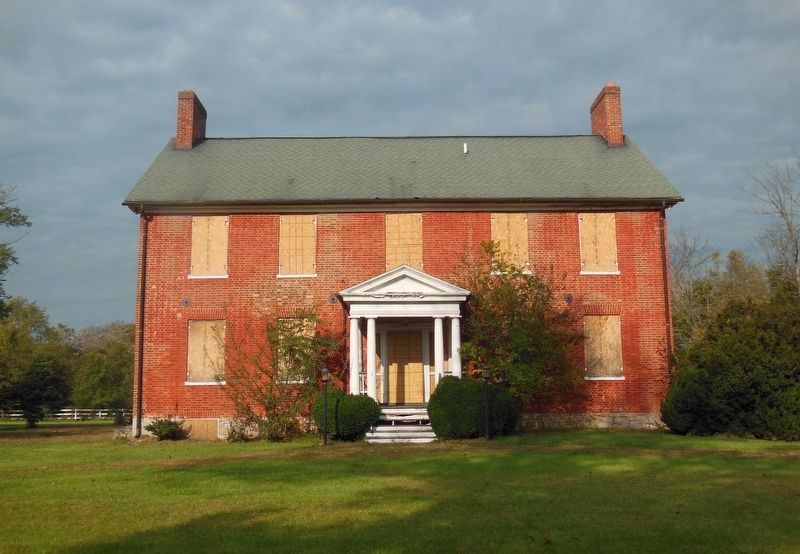
5. Edgewood, the John Boyd House
Condition of the house in 2016.
Photographed by Bradley Owen, October 16, 2016
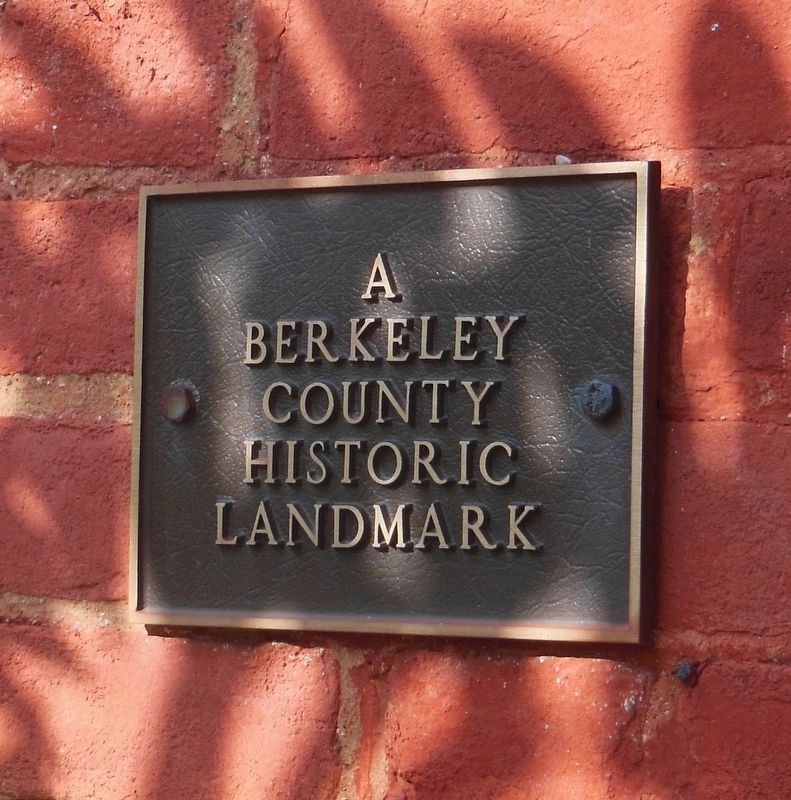
6. A Berkeley County Historic Landmark Marker on The Boyd House
Credits. This page was last revised on July 12, 2026. It was originally submitted on June 17, 2007, by Tom Fuchs of Greenbelt, Maryland. This page has been viewed 10,906 times since then and 227 times this year. Last updated on July 10, 2026, by Matthew Umstead of Martinsburg, West Virginia. Photos: 1, 2, 3. submitted on June 17, 2007, by Tom Fuchs of Greenbelt, Maryland. 4. submitted on November 10, 2024, by Bradley Owen of Morgantown, West Virginia. 5, 6. submitted on February 10, 2021, by Bradley Owen of Morgantown, West Virginia. • Bernard Fisher was the editor who published this page.
