Den Helder, North Holland, Netherlands — Northwestern Europe
Symboliek op grafstenen
⎯⎯⎯
Symbolism on Gravestones
Photographed by Andrew Ruppenstein, June 2, 2026
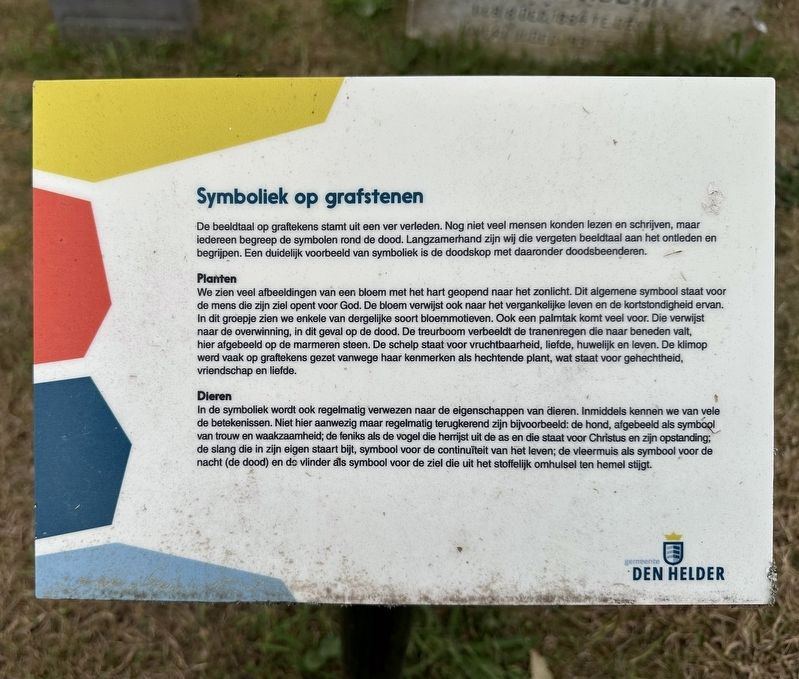
1. Symboliek op grafstenen / Symbolism on Gravestones Marker

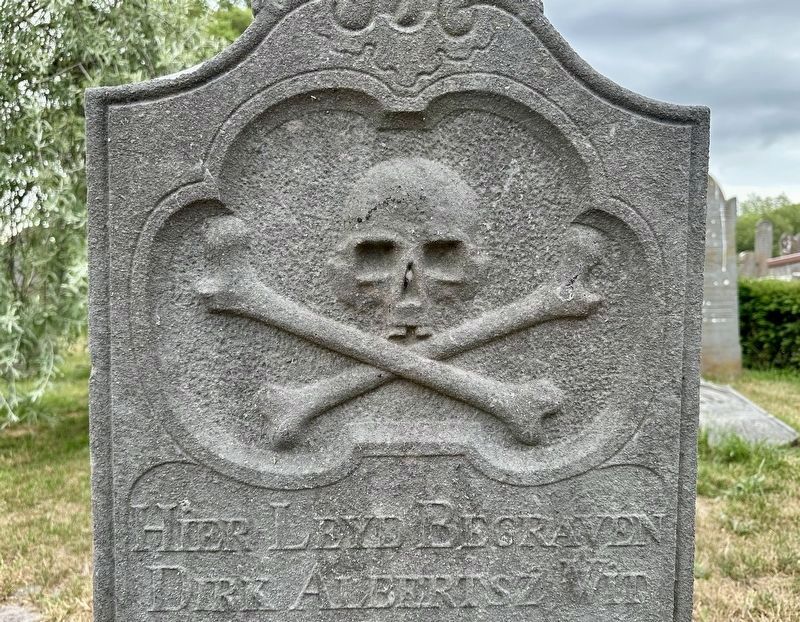
De beeldtaal op graftekens stamt uit een ver verleden. Nog niet veel mensen konden lezen en schrijven, maar iedereen begreep de symbolen rond de dood. Langzamerhand zijn wij die vergeten beeldtaal aan het ontleden en begrijpen. Een duidelijk voorbeeld van symboliek is de doodskop met daaronder doodsbeenderen.
Planten
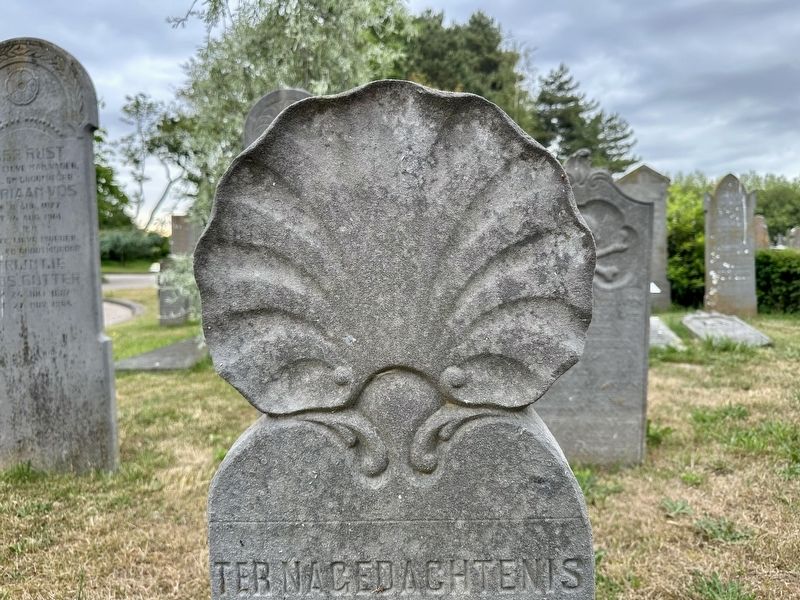
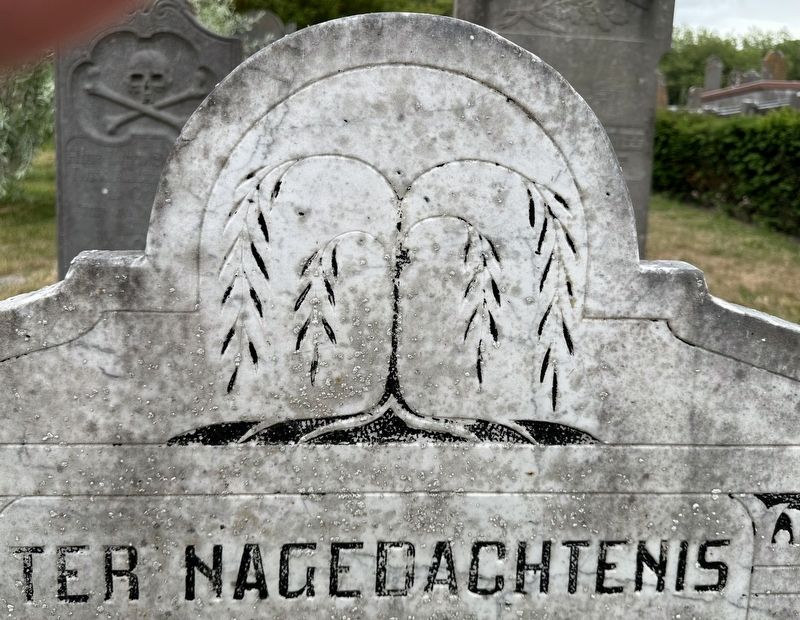
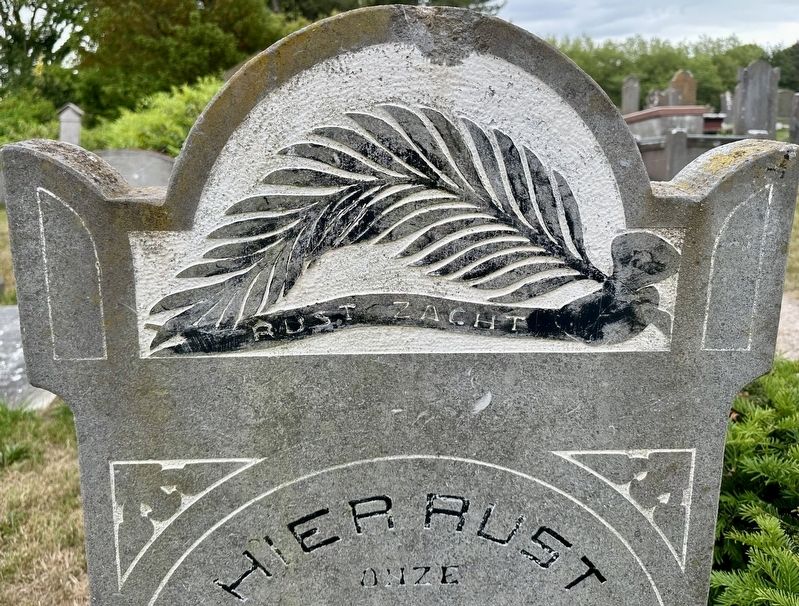
We zien veel afbeeldingen van een bloem met het hart geopend naar het zonlicht. Dit algemene symbool staat voor de mens die zijn ziel opent voor God. De bloem verwijst ook naar het vergankelijke leven en de kortstondigheid ervan. In dit groepje zien we enkele van dergelijke soort bloemmotieven. Ook een palmtak komt veel voor. Die verwijst naar de overwinning, in dit geval op de dood. De treurboom verbeeldt de tranenregen die naar beneden valt, hier afgebeeld op de marmeren steen. De schelp staat voor vruchtbaarheid, liefde, huwelijk en leven. De klimop werd vaak op graftekens gezet vanwege haar kenmerken als hechtende plant, wat staat voor gehechtheid, vriendschap en liefde.
Dieren
In de symboliek wordt ook regelmatig verwezen naar de eigenschappen van dieren. Inmiddels
this page online
Symbolism on Gravestones
The visual language found on grave markers dates back to the distant past. Few people could read or write, yet everyone understood the symbols associated with death. We are gradually deciphering and coming to understand this forgotten visual language. A clear example of such symbolism is the skull with crossed bones beneath it.
Plants
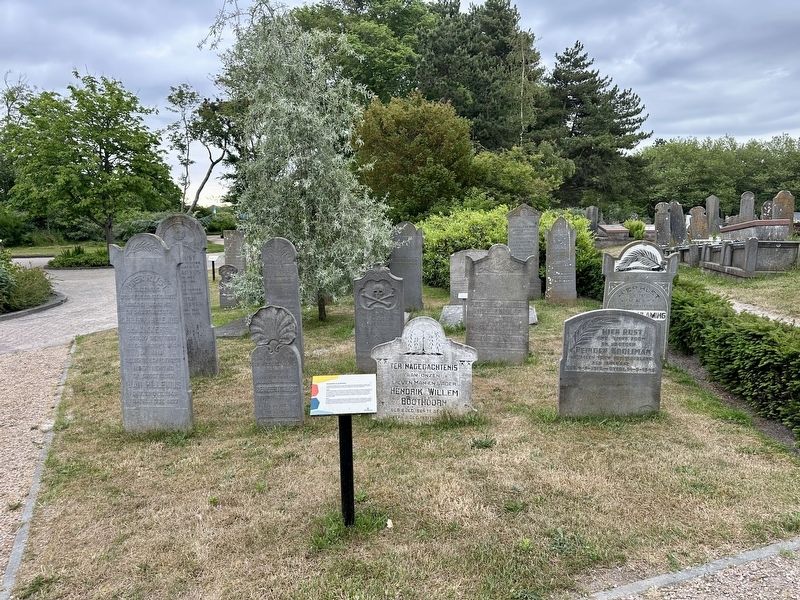
We often see images of a flower with its center open to the sunlight. This common symbol represented a person opening their soul to God. The flower also alludes to the transience and fleeting nature of life. In this group, we see several such floral motifs. Palm branches also appeared
Photographed by Andrew Ruppenstein, June 2, 2026
2. Symboliek op grafstenen / Symbolism on Gravestones Marker - wide view
Animals
Symbolism also frequently drew upon the characteristics of animals, and the meanings associated with many of them are well known. Although not present here, recurring examples include: the dog, depicted as a symbol of loyalty and vigilance; the phoenix, the bird that rises from the ashes, symbolizing Christ and His resurrection; the snake biting its own tail, a symbol of the continuity of life; the bat, symbolizing night (death); and the butterfly, symbolizing the soul ascending to heaven from its material shell.
Erected by Gemeente Den Helder.
Topics. This historical marker is listed in this topic list: Cemeteries & Burial Sites.
Location. 52° 57.057′ N, 4° 44.244′ E. Marker is in Den Helder, Noord-Holland (North Holland). It is on Kerkhoflaan.
Photographed by Andrew Ruppenstein, June 2, 2026
3. Gravestone symbol: seashell

Regionally, it is in Europe, the European Union, Atlantic Europe, the Benelux Low Countries, the Schengen Area, Western Europe, and the Western World. Historically, it finds itself in what was once the Holy Roman Empire.
Other nearby markers. At least 8 other markers are within walking distance of this marker: Christelijke symboliek / Christian Symbolism (here, next to this marker); Zeevaart, Post, Zeeredder / Navigation, Post, and Sea Rescuers (here, next to this marker); Soortens Graftekens… / Types of Grave Markers… (a few steps from this marker); Ambachtelijke vaardigheden / Craft Skills (a few steps from this marker); Bijzonder oude graftekens / Exceptionally Old Grave Markers (a few steps from this marker); Waddenzee-graftekens / Waddenzee Gravestones (a few steps from this marker); Materialen / Materials (a few steps from this marker); Historische gedenktuin / Historical Memorial Garden
Photographed by Andrew Ruppenstein, June 2, 2026
4. Gravestone symbol: weeping willow
Photographed by Andrew Ruppenstein, June 2, 2026
5. Gravestone symbol: skull and crossed bones
Photographed by Andrew Ruppenstein, June 2, 2026
6. Gravestone symbol: palm frond
Credits. This page was last revised on July 26, 2026. It was originally submitted on July 26, 2026, by Andrew Ruppenstein of Lamorinda, California. This page has been viewed 4 times since then. Photos: 1, 2, 3, 4, 5, 6. submitted on July 26, 2026, by Andrew Ruppenstein of Lamorinda, California.
