Dundas near Hamilton, Ontario — Central Canada (North America)
The Griffin House
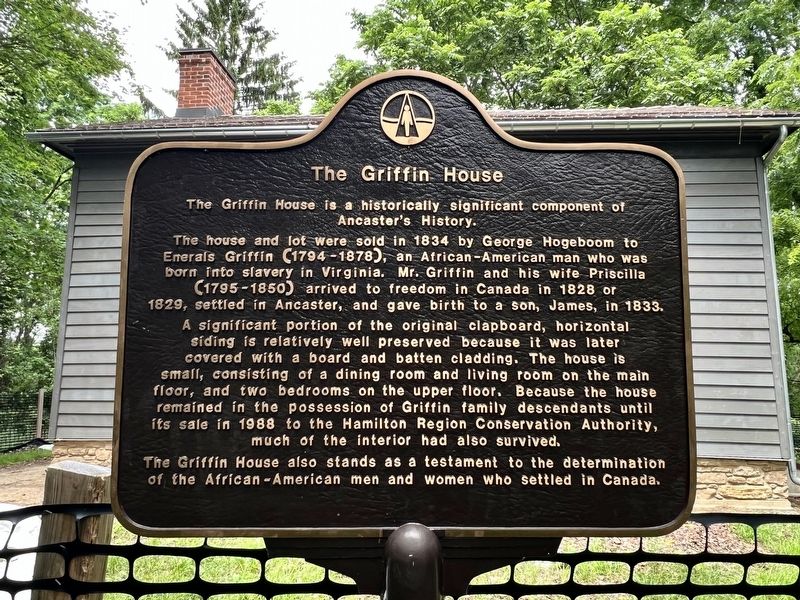
Photographed by Tim Boyd, July 22, 2026
1. The Griffin House Marker
The Griffin House is a historically significant component of Ancaster's History.
The house and lot were sold in 1834 by George Hogeboom to Emerals Griffin (1794-1878), an African-American man who was born into slavery in Virginia. Mr. Griffin and his wife Priscilla (1795-1850) arrived to freedom in Canada in 1828 or 1829, settled in Ancaster, and gave birth to a son, James, in 1833.
A significant portion of the original clapboard, horizontal siding is relatively well preserved because it was later covered with a board and batten cladding. The house is small, consisting of a dining room and living room on the main floor, and two bedrooms on the upper floor. Because the house remained in the possession of Griffin family descendants until its sale in 1988 to the Hamilton Region Conservation Authority, much of the interior had also survived.
The Griffin House also stands as a testament to the determination of the African-American men and Women who settled in Canada.
Topics. This historical marker is listed in these topic lists: Abolition & Underground RR • African Americans • Architecture • Settlements & Settlers. A significant historical year for this entry is 1834.
Location. 43° 14.139′ N,
this page online

Regionally, this marker is on the Golden Horseshoe, in the Hamilton-Halton-Brant Area, and specifically in the Toronto Metropolitan Area. It is also in Central Canada. Globally, it is in North America, on the Great Lakes, in the Western Hemisphere, in the Western World, and in the Anglosphere. Historically, it finds itself in what was once a British colony, the Viceroyalty of New France, the Haudenosaunee (Iroquois) Confederacy, and Rupert’s Land.
Other nearby markers. At least 8 other markers are within 3 kilometers of this marker, measured as the crow flies: The Hermitage (approx. half a kilometer away); Hermitage Estate History (approx. 0.6 kilometers away); Richardson-Farmer-Ashworth House
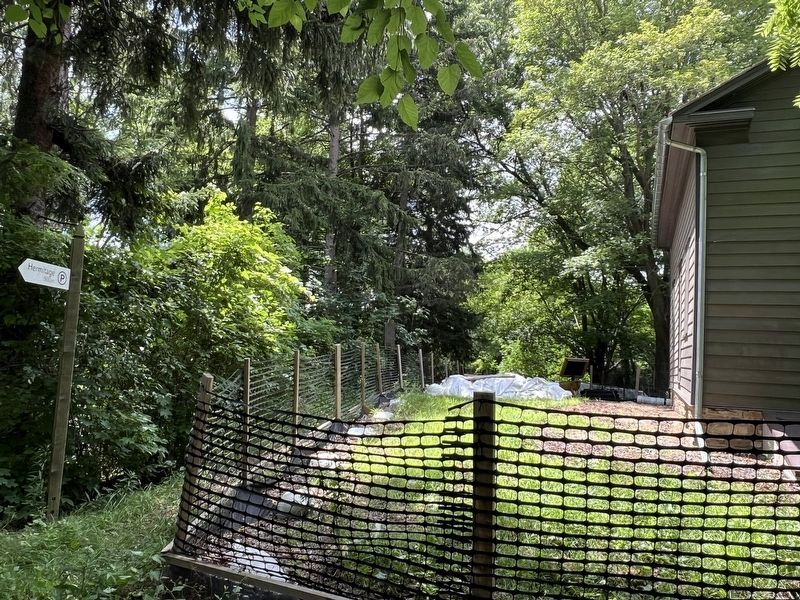
Photographed by Tim Boyd, July 22, 2026
2. The Griffin House Marker
Th reverse of the marker is visible at the center of the photo
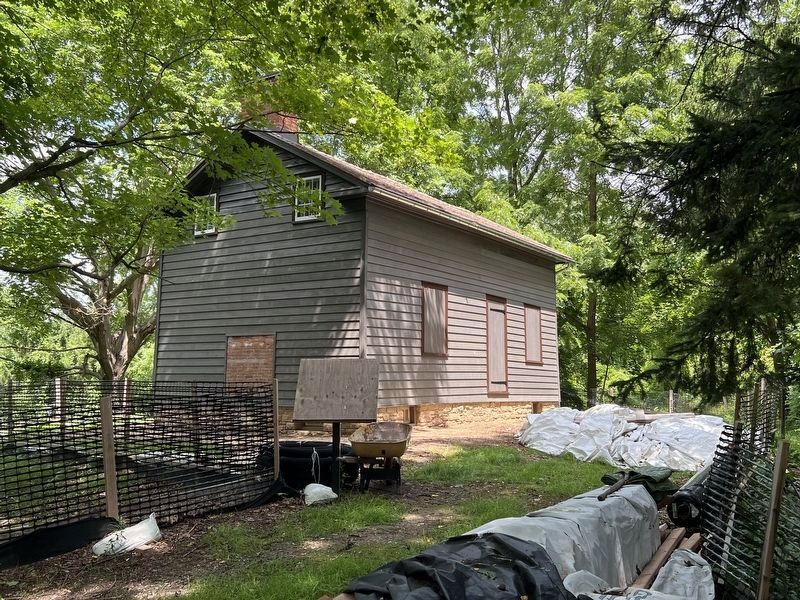
More about this marker. As of July 2026, the Griffin House site is not open to the public as it undergoes restoration work
Also see . . . ‘If These Four Walls Could Talk’: The Griffin House, An Agent of Change.
Enerals Griffin was about 41 years old when he arrived in Ancaster Township (present-day Hamilton, ON) where he purchased a house set upon 50 acres of land. With land and water routes along the Niagara Peninsula and Lake Ontario, Ancaster was a prime location for those fleeing slavery and persecution in the United States in the mid-19th century. Enerals was one of the first Free Black people to settle in the area in 1834.(Submitted on July 26, 2026, by Tim Boyd of Hamilton, Ontario.)
A Freedom Seeker who had been born into slavery on a Virginia plantation around 1793, Enerals settled first in Ohio, then the Niagara region, whenrace riots pushed many free Black settlers out of the state in 1829. Unlike many self-emancipators who made their homes in Upper Canada, Enerals did not join planned Black settlements like the Wilberforce Colony or Dawn Settlement, or an unplanned one like Hamilton’s “Little Africa.”Instead, he and his European-descended wife made their home in the predominantly white community of Ancaster.Photographed by Tim Boyd, July 25, 20263. The Griffin House in 2026Undergoing restoration July 2026
Credits. This page was last revised on July 27, 2026. It was originally submitted on July 26, 2026, by Tim Boyd of Hamilton, Ontario. This page has been viewed 10 times since then. Photos: 1, 2, 3. submitted on July 26, 2026, by Tim Boyd of Hamilton, Ontario. • Andrew Ruppenstein was the editor who published this page.
