
El Asintal, Retalhuleu, Guatemala — Central America
Estación Guacalitos
Guacalitos Station
Photographed by J. Makali Bruton, December 27, 2025
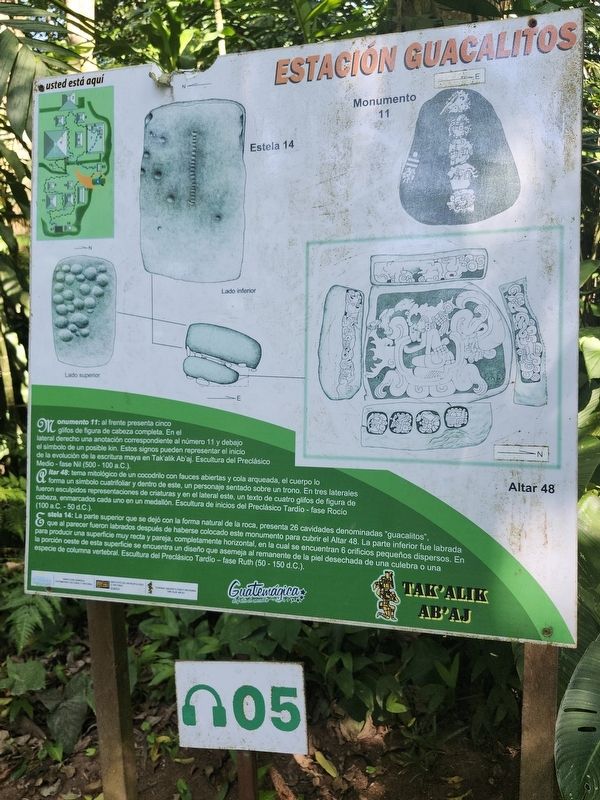
1. Estación Guacalitos Marker

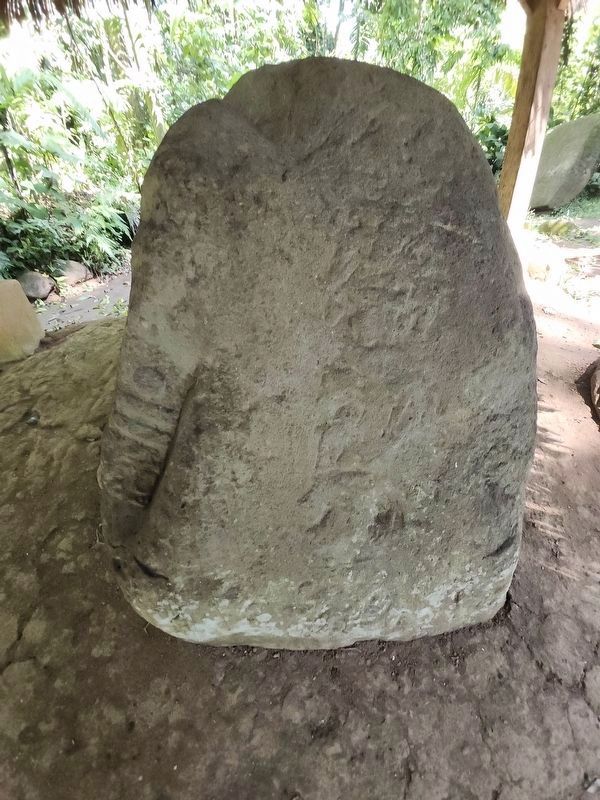
Monumento 11: al frente presenta cinco glifos de figura de cabeza completa. En el lateral derecho una anotación correspondiente al número 11 y debajo el símbolo de un posible kin. Estos signos pueden representar el inicio de la evolución de la escritura maya en Tak'alik Ab'aj. Escultura del Preclásico Medio-fase Nil (500-100 a.C.).
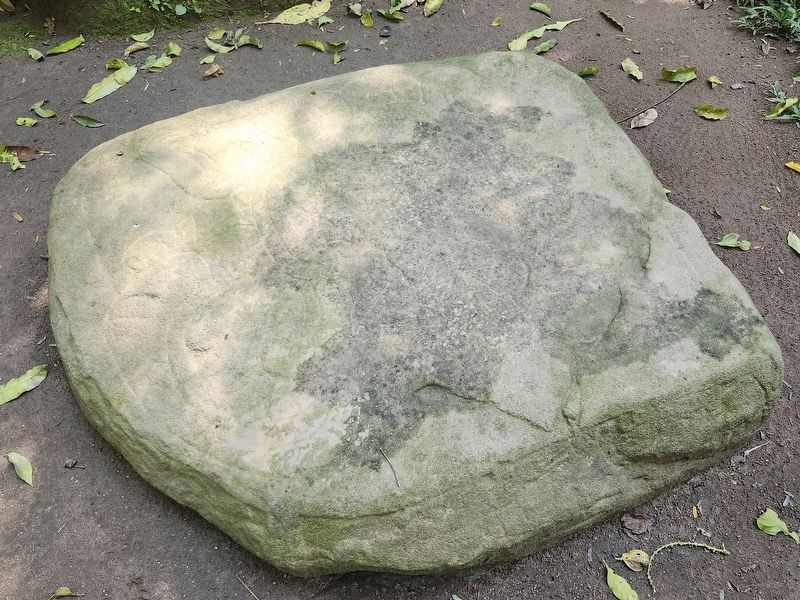
Altar 48: tema mitológico de un cocodrilo con fauces abiertas y cola arqueada, el cuerpo lo forma un simbolo cuatrifoliar y dentro de este, un personaje sentado sobre un trono. En tres laterales fueron esculpidos representaciones de criaturas y en el lateral este, un texto de cuatro glifos de figura de cabeza, enmarcados cada uno en un medallón. Escultura de inicios del Preclásico Tardío - fase Rocío (100 a.C.-50 d.C.)
Estela 14: La parte superior que se dejó con la forma natural de la roca, presenta 26 cavidades denominadas "guacalitos", que al parecer fueron labrados después de haberse colocado este monumento para cubrir el Altar 48. La parte inferior fue labrada para producir una superficie muy recta y pareja, completamente horizontal, en la cual se encuentran 6 orificios pequeños dispersos.
this page online
Monument 11: on the front there are five glyphs of a full-headed figure. On the right side there is a glyph corresponding to the number 11 and below it the symbol of a possible kin. These signs may represent the beginning of the evolution of Maya writing in Tak'alik Ab'aj. Sculpture from the Middle Preclassic-Nil phase (500-100 B.C.).
Altar 48: A mythological theme of a crocodile with open jaws and an arched tail, the body is formed by a four-leaf symbol and inside it, a figure seated on a throne. On three sides were sculpted representations of creatures and on the east side, a text of four glyphs of a figure of a head, each framed in a medallion. Sculpture from the early Late Preclassic - Dew phase (100 BC-50 AD)
Stele 14: The upper part of the stele was left with the natural shape of the rock, it has 26 cavities called "guacalitos", which apparently were carved after this monument was placed to
Photographed by J. Makali Bruton, December 27, 2025
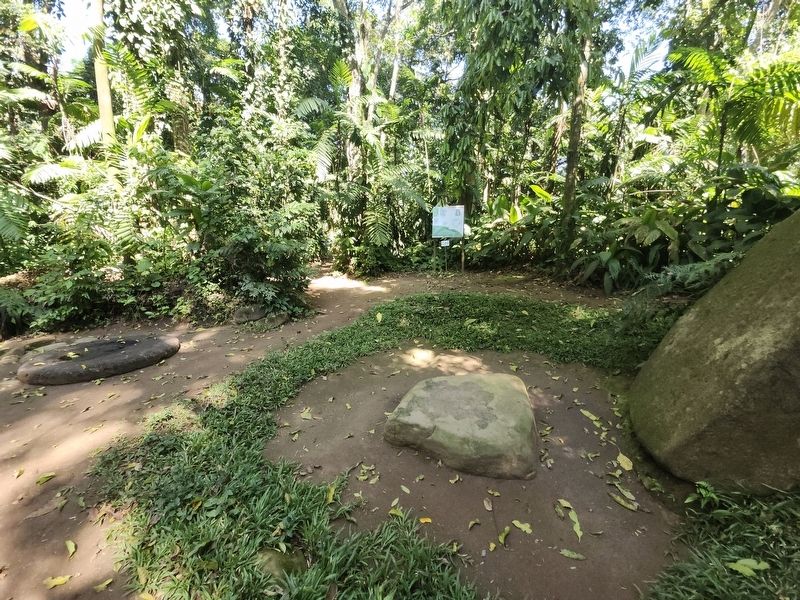
2. Estación Guacalitos Marker
Erected by Instituto de Antropología e Historia (IDAEH). (Marker Number 5.)
Topics. This historical marker is listed in this topic list: Anthropology & Archaeology.
Location. 14° 38.254′ N, 91° 43.952′ W. Marker is in El Asintal, Retalhuleu. It can be reached from no nearby road. Touch for map. Touch for directions.

Regionally, it is in North America, specifically in Central America, in Mesoamerica, on the Ring of Fire, on the Pacific Rim, and in the Western Hemisphere. Historically, it finds itself in what was once New Spain and also a Spanish colony.
Other nearby markers. At least 8 other markers are within walking distance of this marker: Tanmi Tnam Plaza (within shouting distance of this marker); Estación Entierro No. 2
Photographed by J. Makali Bruton, December 27, 2025
3. Altar 48
Another marker is no longer nearby. Guacalitos Station (was here, next to this marker but has been permanently removed).
Photographed by J. Makali Bruton, December 27, 2025
4. Monument 11
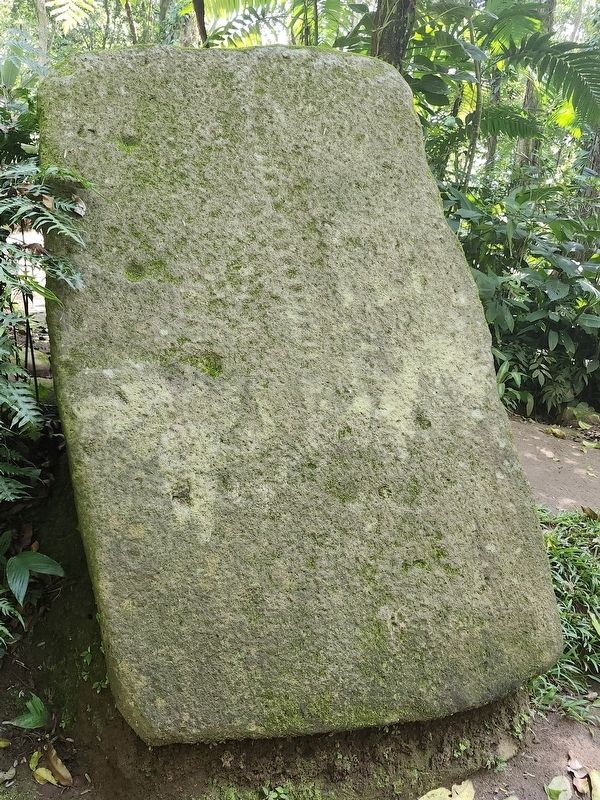
Photographed by J. Makali Bruton, December 27, 2025
5. Stele 14
Credits. This page was last revised on August 9, 2026. It was originally submitted on August 8, 2026, by J. Makali Bruton of Washington, District of Columbia. This page has been viewed 11 times since then. Photos: 1, 2, 3, 4, 5. submitted on August 8, 2026, by J. Makali Bruton of Washington, District of Columbia.
