Waterville in Lucas County, Ohio — The American Midwest (Great Lakes)
Ohio Electric Railroad Bridge
⎯⎯⎯
Roche De Bout, Roche De Boeuf
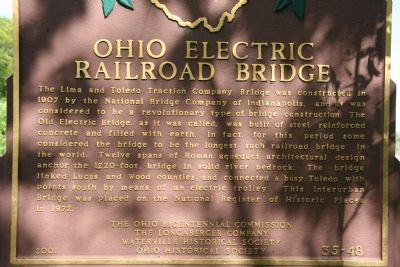
Photographed by Dale K. Benington, May 14, 2010
1. Ohio Electric Railroad Bridge
this page online
Erected 2001 by Ohio Bicentennial Commission, The Longaberger Company, Waterville Historical Society, and The Ohio Historical Society. (Marker Number 35-48.)
Topics and series. This historical marker is listed in these topic lists: Bridges & Viaducts • Indigenous Peoples and Communities • Industry & Commerce • Landmarks • Natural Features • Settlements & Settlers. In addition, it is included in the Ohio Historical Society / The Ohio History Connection series list. A significant historical year for this entry is 1907.
Location. 41° 29.266′ N, 83° 43.78′ W. Marker is in Waterville, Ohio, in Lucas County. It is on South River Road north of Anthony Wayne Trail (U.S. 24), on the right when traveling north. Touch for map. Marker is in this post office area: Waterville OH 43566, United States of America. Touch for directions.

Regionally, this marker is on the Lake Erie Shore
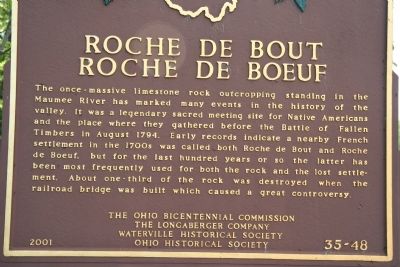
Photographed by Dale K. Benington, May 14, 2010
2. Roche De Bout/Roche De Boeuf Marker
Other nearby markers. At least 8 other markers are within walking distance of this marker: Bowling Green Fault (about 400 feet away, measured in a direct line); Fort Deposit / Roche de Bout (approx. ¼ mile away); Roche de Bout (approx. 0.3 miles away); The Towpath Trail (approx. 0.3 miles away); Stitt Park (approx. ¾ mile away); Fort Miamis Reserve/Miltonville (approx. 0.8 miles away); Waterville Civil War Monument (approx. 0.8 miles away); Wakeman Hall / Waterville Historical Society (approx. 0.9 miles away). Touch for a list and map of all markers in Waterville.
Another marker is no longer nearby. Site of Fort Deposit / Roche de Boeuf (was about 500 feet away but has been confirmed missing).
Also see . . . Building the Bridge.
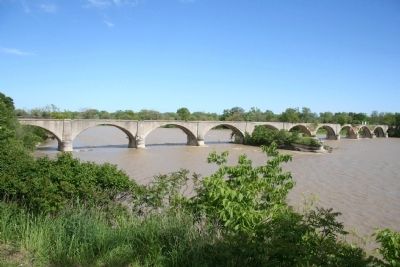
Photographed by Dale K. Benington, May 14, 2010
3. Ohio Electric Railroad Bridge / Roche De Bout/Roche De Boeuf
View of the Ohio Electric Railroad Bridge with Roche De Bout seen about in the middle of the bridge.
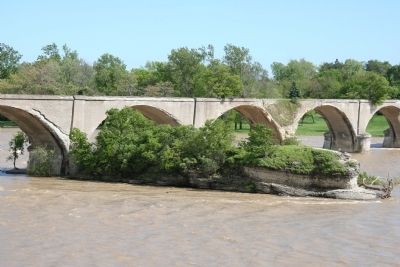
Photographed by Dale K. Benington, May 14, 2010
4. Roche De Bout/Roche De Boeuf
Photographed by Dale K. Benington, May 14, 2010
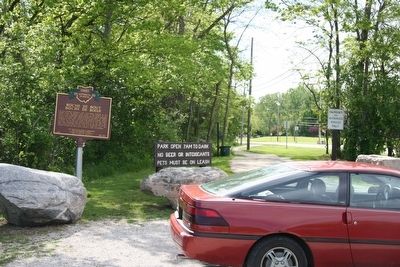
5. Ohio Electric Railroad Bridge / Roche De Bout/Roche De Boeuf Marker
View looking south of the historical marker at the southern end of a small parking lot that over looks the Ohio Electric Railroad Bridge, along the west bank of the Maumee River. In the opening, just beyond the trees, is the Anthony Wayne Trail (SR 53).
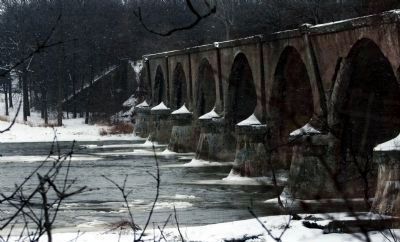
Photographed by John A. Current, circa 2009
6. Ohio Electric Railroad Bridge
Photo title: "The Death of History"
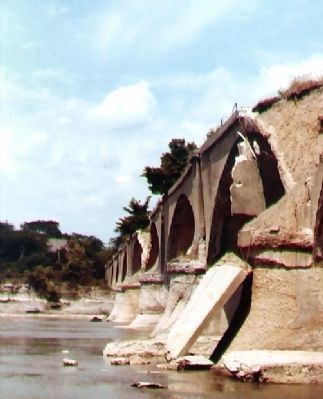
Photographed by John A. Current, circa June 1986
7. Ohio Electric Railroad Bridge / Wood County
Taken near what was once the settlement of Middleton.
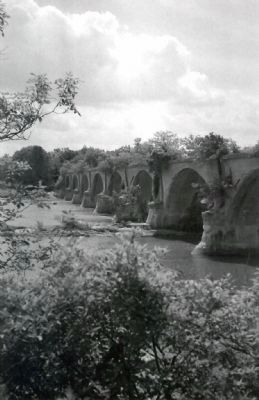
Photographed by John A. Current, circa 2007
8. Ohio Electric Railroad Bridge / Lucas County
An abandoned historical landmark. Ignored now, missed later.
Photographed by Dale K. Benington, March 21, 2016
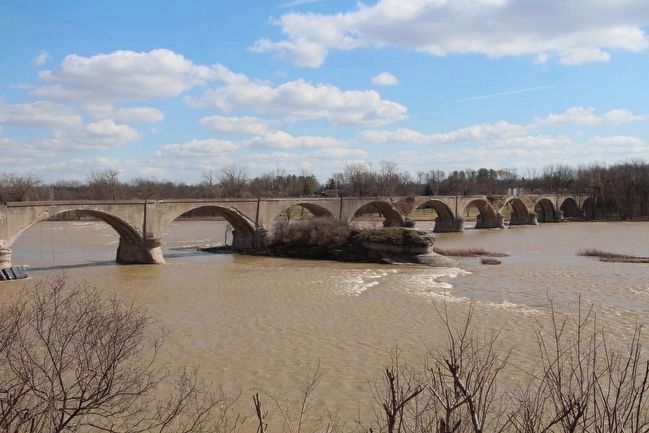
9. Ohio Electric Railroad Bridge / Roche De Bout/Roche De Boeuf Marker
View of the Ohio Electric Railroad Bridge, and Roche De Bout/Roche De Boeuf, as seen from the Lucas County side of the river.
Photographed by Craig Doda, June 11, 2024
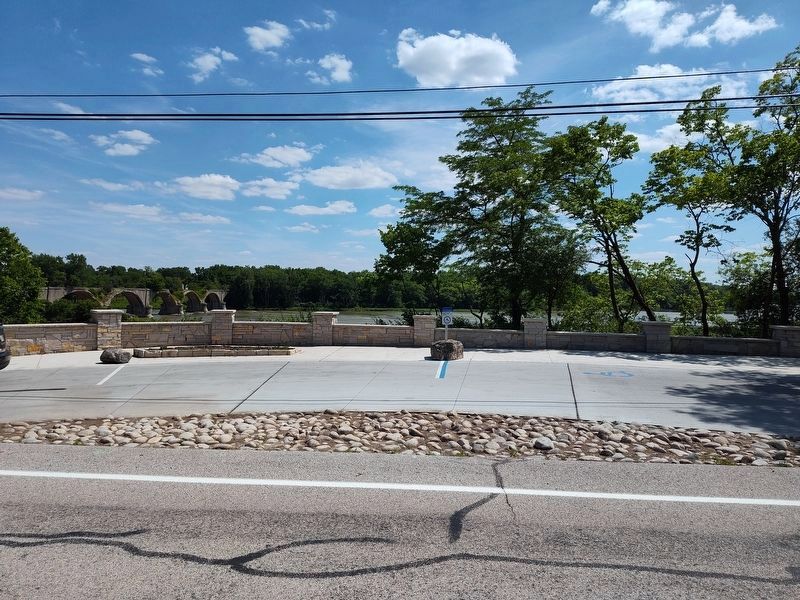
10. Roche De Bout Overlook
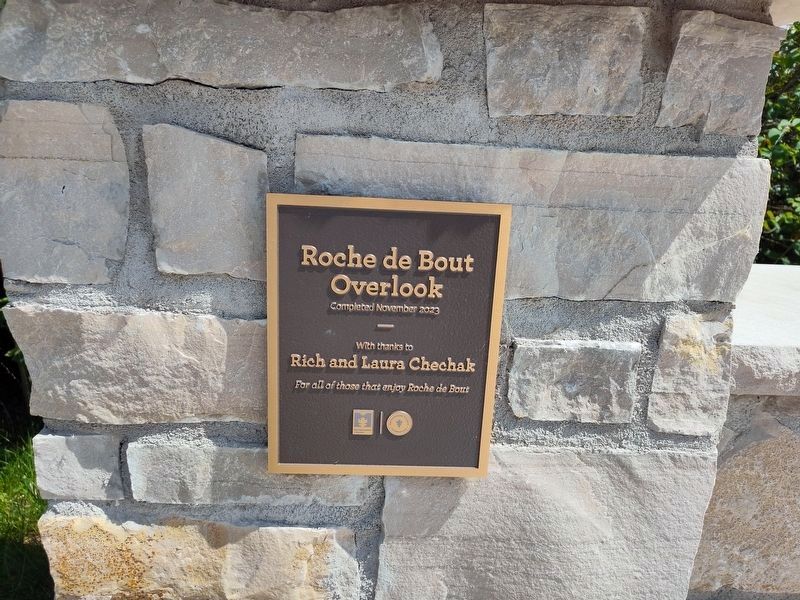
Photographed by Craig Doda, June 11, 2024
11. Roche De Bout Overlook
Credits. This page was last revised on August 11, 2025. It was originally submitted on May 17, 2010, by Dale K. Benington of Toledo, Ohio. This page has been viewed 5,754 times since then and 104 times this year. Photos: 1, 2, 3, 4, 5. submitted on May 18, 2010, by Dale K. Benington of Toledo, Ohio. 6, 7, 8. submitted on August 9, 2012, by John A. Current of Weston, Ohio. 9. submitted on March 23, 2016, by Dale K. Benington of Toledo, Ohio. 10, 11. submitted on June 20, 2024, by Craig Doda of Napoleon, Ohio.
