Gurnee in Lake County, Illinois — The American Midwest (Great Lakes)
Timeline

Photographed by Sean P. Flynn, August 9, 2026
1. Timeline Marker
1501 - African Slaves in the New World
Spanish settlers bring slaves from Africa to Santo Domingo (now the capital of the Dominican Republic).
1619 - Slaves in Virginia
Africans brought to Jamestown were the first slaves imported into Britain's North American colonies. Like indentured servants, they were probably freed after a period of service.
1700 - First Antislavery Publication
Massachusetts jurist and printer, Samuel Seawell, publishes the first North American antislavery pamphlet, The Selling of Joseph.
1705 - Slaves as Property
Describing slaves as real estate, Virginia lawmakers allow owners to bequeath their slaves. The same law allows masters to "kill and destroy" runaways.
1775 - Abolitionist Society
Anthony Benezet of Philadelphia founds the world's first abolitionist society. Benjamin Franklin becomes its president in 1787.
1776 - Declaration of Independence
The Continental Congress asserts, "that these United Colonies are, and of Right ought to be Free and Independent States."
1793 - Fugitive Slave Act
The United States outlaws any efforts to impede the capture of runaway slaves. (Also
this page online
1808 - United States Bans Slave Trade
Importing African slaves to the United States is outlawed, but smuggling continues.
Topics and series. This historical marker is listed in these topic lists: Abolition & Underground RR • African Americans • Settlements & Settlers • War, US Revolutionary. In addition, it is included in the Signers of the Declaration of Independence series list. A significant historical year for this entry is 1501.
Location. 42° 22.362′ N, 87° 55.124′ W. Marker is in Gurnee, Illinois, in Lake County. It is on Kilbourne Road north of Old Grand Avenue, on the right when traveling north. The marker is inside the ruins of the Mother Rudd Barn. Touch for map. Marker is at or near this postal address: 4690 Old Grand Avenue, Gurnee IL 60031, United States of America. Touch for directions.

Regionally, this marker is in Greater Chicago. It is also in the American Midwest. Globally, it is in North America, on the Great Lakes, in the Western Hemisphere, in the Western World, and in the Anglosphere. Historically, it finds itself in what was once the territory of the Mississippian Culture
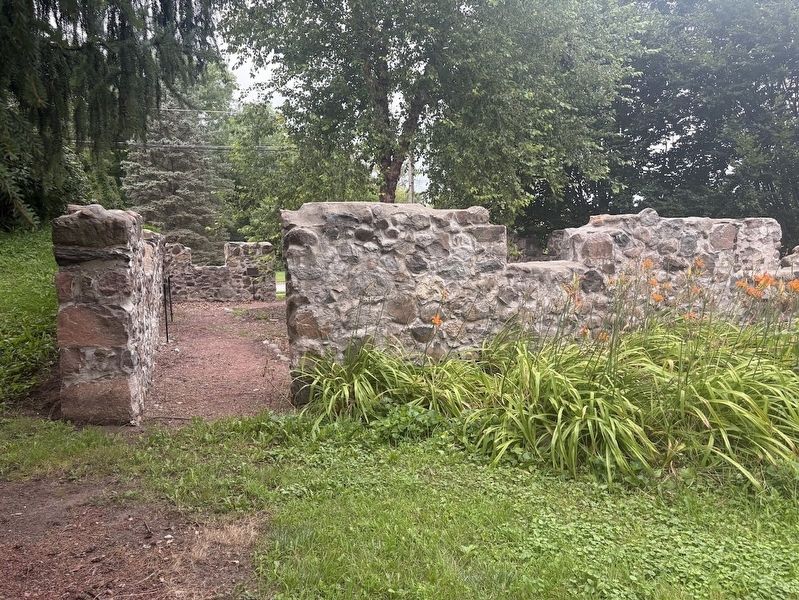
Photographed by Sean P. Flynn, August 9, 2026
2. Mother Rudd Barn ruins
Several markers have been erected inside the ruins of this barn, which was used in pre-Civil War times as a stop on the Underground Railroad.
Other nearby markers. At least 15 other markers are within walking distance of this marker: A different marker also named Timeline (here, next to this marker); The Journey (a few steps from this marker); Underground Railroad in Illinois (a few steps from this marker); "Lamp of Liberty" (a few steps from this marker); The Mother Rudd Barn (a few steps from this marker); Underground Railroad (a few steps from this marker); Lake County's First African American Settler (a few steps from this marker); a different marker also named The Mother Rudd Barn (a few steps from this marker); Esper A. Petersen (about 500 feet away, measured in a direct line); American Legion Post 771 (approx. 0.2 miles away); Logger's Run (approx. ¾ mile away); Aquaman Splashdown (approx. 0.8 miles away); Fiddler's Fling (approx. 0.8 miles away); DC Super-Villains Swing (approx. 0.8 miles away); Great America Scenic Railway (approx. 0.8 miles away). Touch for a list and map of all markers in Gurnee.
More about this marker. The marker is one of seven inside the ruins of the Mother Rudd Barn. The barn is just north of the Mother
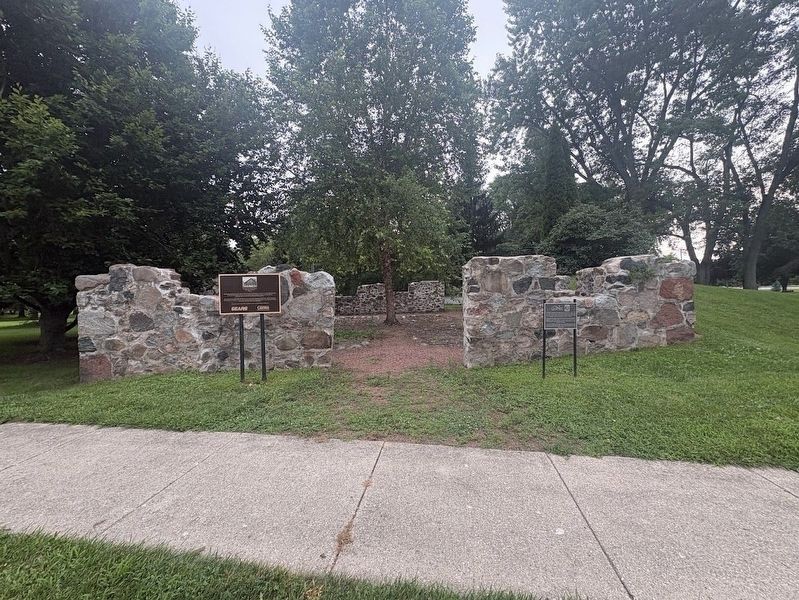
Photographed by Sean P. Flynn, August 9, 2026
3. Mother Rudd Barn ruins
The marker on the left is about the barn's use as a stop on the Underground Railroad; the one on the right is about Lake County's first settler, Amos Bennett. Markers inside the ruins discuss the Underground Railroad.
There are two other markers in front of the ruins: one about this barn's history as an Underground Railroad stop, and another about Lake County's first African-American settler.
Credits. This page was last revised on August 12, 2026. It was originally submitted on August 10, 2026, by Sean P. Flynn of Oak Park, Illinois. This page has been viewed 12 times since then. Photos: 1, 2, 3. submitted on August 10, 2026, by Sean P. Flynn of Oak Park, Illinois.
