Near Quinton in New Kent County, Virginia — The American South (Mid-Atlantic)
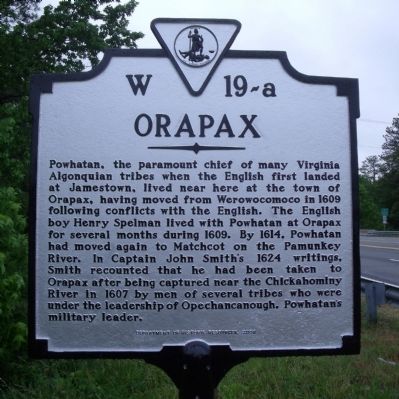
Orapax
Photographed by Bernard Fisher, May 18, 2010
1. Orapax Marker
Erected 2008 by Department of Historic Resources. (Marker Number W 19-a.)
Topics and series. This historical marker is listed in these topic lists: Colonial Era • Indigenous Peoples and Communities. In addition, it is included in the Virginia Department of Historic Resources (DHR) series list. A significant historical year for this entry is 1609.
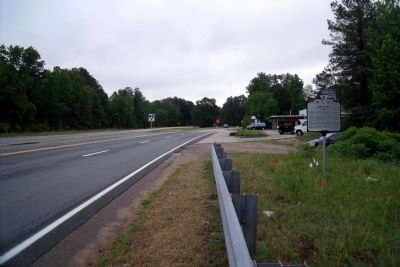
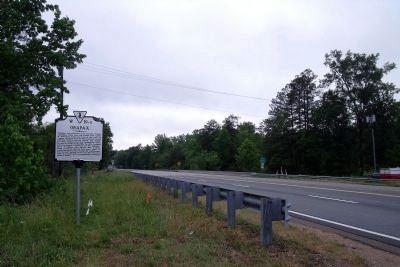
Location. 37° 30.882′ N, 77° 12.256′ W. Marker is near Quinton, Virginia, in New Kent County. It is on East Williamsburg Road (U.S. 60) 0.2 miles east
this page online

Regionally, this marker is on Virginia’s Peninsula and in Coastal Virginia. It is also in the American South, specifically in the Upper South, in the Tidewater, and on the Eastern Seaboard. Globally, it is in the North Atlantic Region, North America, the Western Hemisphere, the Western World, and the Anglosphere. Historically, it finds itself in what was once the territory of the Mississippian Culture, one of the original Thirteen Colonies, one of the Confederate States of America, and the Antebellum South.
Other nearby markers. At least 8 other markers are within 3 miles of this marker, measured as the crow flies: Capt. John Smith Captured (about 700 feet away); Bottom's Bridge (approx. 0.2 miles away); 1896 Engineer Aviation Battalion Memorial (approx. 1½ miles away); Elko Community Center (approx. 1½ miles away); Meadows Fire Tower (approx. 2 miles away); Antioch School Site (approx. 2.1 miles away); Antioch Baptist Church (approx. 2.3 miles away);
Photographed by Bernard Fisher, May 18, 2010
2. Rt 60 (facing east)
Other markers no longer nearby. New Kent County (was about 700 feet away, measured in a direct line but has been confirmed missing); Henrico County / New Kent County (was about 700 feet away but has been confirmed missing); McClellan's Crossing (was about 700 feet away but has been permanently removed); New Kent Road (was about 800 feet away but has been permanently removed).
Photographed by Bernard Fisher, May 18, 2010
3. Rt 60 (facing west)
Credits. This page was last revised on June 16, 2016. It was originally submitted on May 18, 2010, by Bernard Fisher of Richmond, Virginia. This page has been viewed 3,530 times since then and 153 times this year. Photos: 1, 2, 3. submitted on May 18, 2010, by Bernard Fisher of Richmond, Virginia.
