Old Irving Park in Chicago in Cook County, Illinois — The American Midwest (Great Lakes)
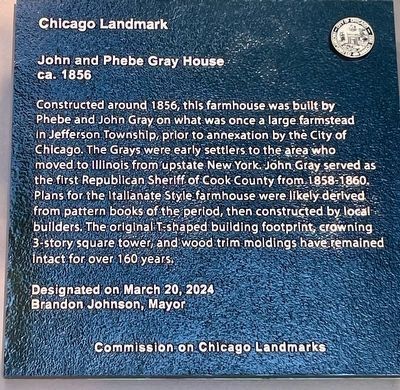
John and Phebe Gray House
ca. 1856
| — | Chicago Landmark | — |
Photographed by Tom Gull, August 23, 2026
1. John and Phebe Gray House Marker
Designated on March 20, 2024
Brandon Johnson, Mayor
Erected 2026 by Commission on Chicago Landmarks, City of Chicago.
Topics and series. This historical marker is listed in these topic lists: Agriculture • Architecture • Government & Politics • Settlements & Settlers. In addition, it is included in the Chicago's Surviving Pre-Fire Structures, and the Illinois, Chicago Landmarks Commission series lists. A significant historical year for this entry is 1856.
Location. 41° 57′ N, 87° 44.269′ W. Marker is
this page online

Regionally, this marker is on Chicago’s North Side. It is also in the American Midwest. Globally, it is in North America, on the Great Lakes, in the Western Hemisphere, in the Western World, and in the Anglosphere. Historically, it finds itself in what was once the Viceroyalty of New France, the territory of the Mississippian Culture, and the Northwest Territory.
Other nearby markers. At least 8 other markers are within 2 miles of this marker, measured as the crow flies: John and Phebe Gray (here, next to this marker); John and Clara Merchant House (about 500 feet away, measured in a direct line); Carl Schurz High School (approx. 0.2 miles away); Stephen A. Race House (approx. 0.3 miles away); Charles N. Loucks House (approx. 0.3 miles away); Villa District (approx. ¾ mile away); Florsheim Shoe Company Building (approx. one
Photographed by Tom Gull, August 23, 2026
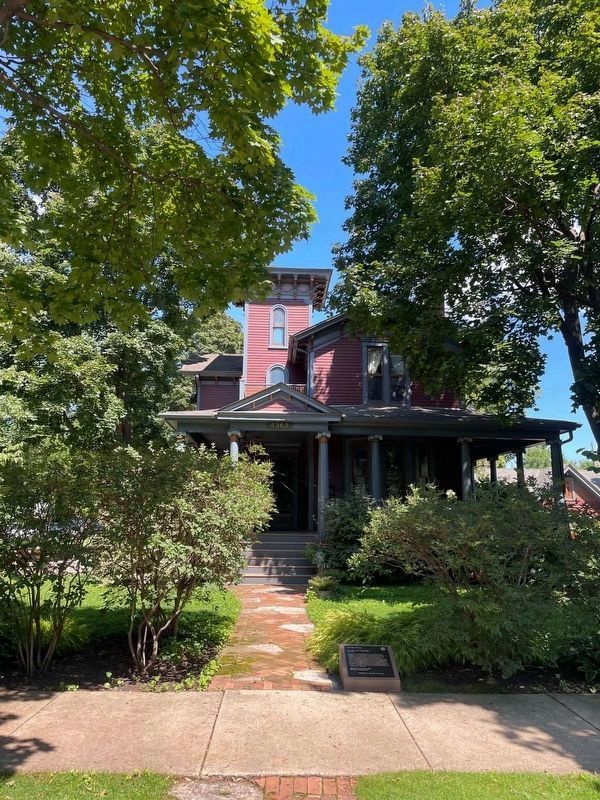
2. John and Phebe Gray House Marker
More about this marker. The home was designated a landmark in 2024, and the plaque was added in August 2026. Another marker was added to this site by the home's 2026 owners, offering a deeper description of the Grays and, in particular, their link to the anti-slavery movement.
Regarding John and Phebe Gray House. This home is the rare Chicago structure that pre-dates the Great Chicago Fire of 1871. The Grays land was later subdivided into a suburb called Grayland. Jefferson Township was annexed into the City of Chicago in 1889.
As described on the other plaque at this home, Gray was a well-known anti-slavery advocate, and there are long-standing rumors that the home was a stop on the Underground Railroad. In 2017, the home's owners opened up the home to archeologists from Lake Forest College, however no direct evidence of a tie to the Underground Railroad has been found.
Also see . . .
1. Old Irving Park residents obtain landmark status for their home, where two plaques tell its history.
Excerpt: "The Clouds(Submitted on August 24, 2026, by Sean P. Flynn of Oak Park, Illinois.)began seeking landmark recognition after learning about the property’s historical significance from friends and neighbors. It was the only house in the immediate area when it was built, and residential development grew around the original farmstead as Irving Park developed into a railroad suburb. It remains the oldest residence in Old Irving Park."Photographed by Tom Gull, August 23, 20263. John and Phebe Gray House

2. Historical John Gray House In Irving Park Is Now A Chicago Landmark. From Block Club Chicago.
Excerpt: "A short account of Gray’s life as it relates to the Grayland rail station and the settlement that sprung up next to it appears in manuscripts about Chicago and Cook County history written by 19th-century historian Alfred T. Andreas. According to neighborhood lore, the Gray home had a room under the front foyer leading to a tunnel that was used in the Underground Railroad. Historians haven’t been able to substantiate those claims, according to the landmarks commission."(Submitted on August 24, 2026, by Sean P. Flynn of Oak Park, Illinois.)
3. Was This Irving Park Home Part Of The Underground Railroad? Archaeologists Aim To Find Out.
Courtesy of the Commission on Chicago Landmarks
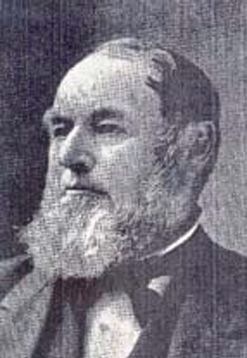
4. John Gray
Gray died in 1889.
Credits. This page was last revised on August 25, 2026. It was originally submitted on August 24, 2026, by Sean P. Flynn of Oak Park, Illinois. This page has been viewed 22 times since then. Photos: 1, 2, 3, 4. submitted on August 24, 2026, by Sean P. Flynn of Oak Park, Illinois.
