Charleston in Charleston County, South Carolina — The American South (South Atlantic)
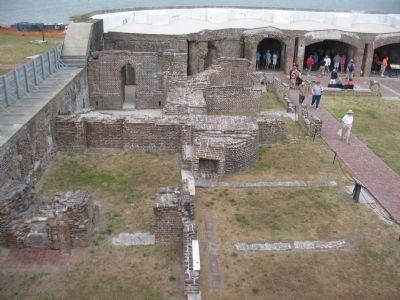
Gorge Wall
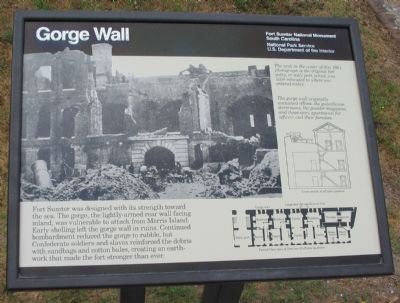
Photographed by Craig Swain, May 3, 2010
1. Gorge Wall Marker
Erected by Fort Sumter National Monument South Carolina, National Park Service - U.S. Department of the Interior.
Topics. This historical marker is listed in these topic lists: Forts and Castles • War, US Civil. A significant historical month for this entry is July 1863.
Location. 32° 45.136′ N, 79° 52.501′ W. Marker is in Charleston, South Carolina, in Charleston County. It can be reached from the Fort Sumter Ferry Terminal. Located at Fort Sumter National Monument and only reached by boat. See links below for more information about access to the site. Touch for map. Marker is in this post office area: Charleston SC 29412, United States of America. Touch for directions.

Regionally, this marker is in Historic Charleston
this page online
Other nearby markers. At least 8 other markers are within walking distance of this marker: The Garrison Defending Fort Sumter (here, next to this marker); Battery Huger (a few steps from this marker); Powder Magazine (a few steps from this marker); Fort Sumter 1861-65 (a few steps from this marker); Fort Sumter Today (within shouting distance of this marker); Casemates and Cannon (within shouting distance of this marker); Fort Johnson (within shouting distance of this marker); Charleston Besieged (within shouting distance of this marker). Touch for a list and map of all markers in Charleston.
More about this marker. In the center is a wartime photograph showing damage to the wall.
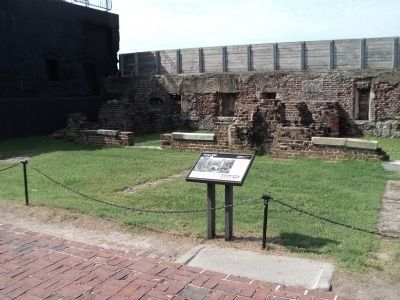
Photographed by Bill Coughlin, August 4, 2013
2. Gorge Wall Marker
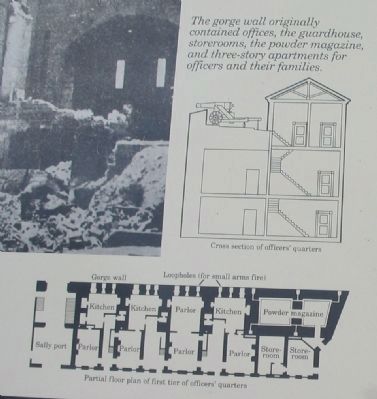
Photographed by Craig Swain, May 3, 2010
3. Close up of Cross Section and Floor Plan
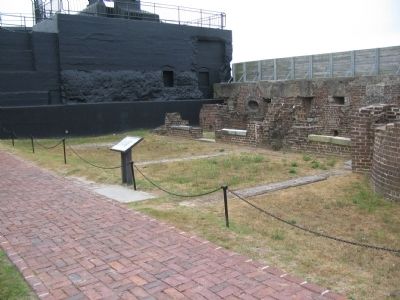
Photographed by Craig Swain, May 3, 2010
4. Gorge Wall Marker
Photographed by Craig Swain, May 3, 2010
5. Remains of the Gorge Wall
Photographed by Bradley Owen
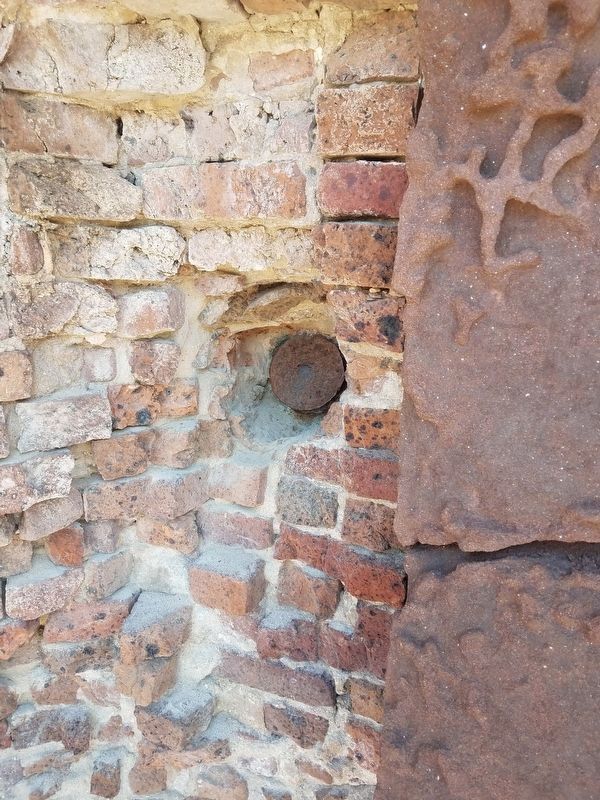
6. Shell Still Embedded In Fort’s Inner Wall
Credits. This page was last revised on January 4, 2026. It was originally submitted on May 19, 2010, by Craig Swain of Leesburg, Virginia. This page has been viewed 1,705 times since then and 66 times this year. Photos: 1. submitted on May 19, 2010, by Craig Swain of Leesburg, Virginia. 2. submitted on August 17, 2013, by Bill Coughlin of Woodland Park, New Jersey. 3, 4, 5. submitted on May 19, 2010, by Craig Swain of Leesburg, Virginia. 6. submitted on September 12, 2020, by Bradley Owen of Morgantown, West Virginia.
