Ketchikan in Ketchikan Gateway Borough, Alaska — Northwest (North America)
A People’s Distinctive Art
Photographed by Bill Coughlin, September 2, 2026
1. A People’s Distinctive Art Marker
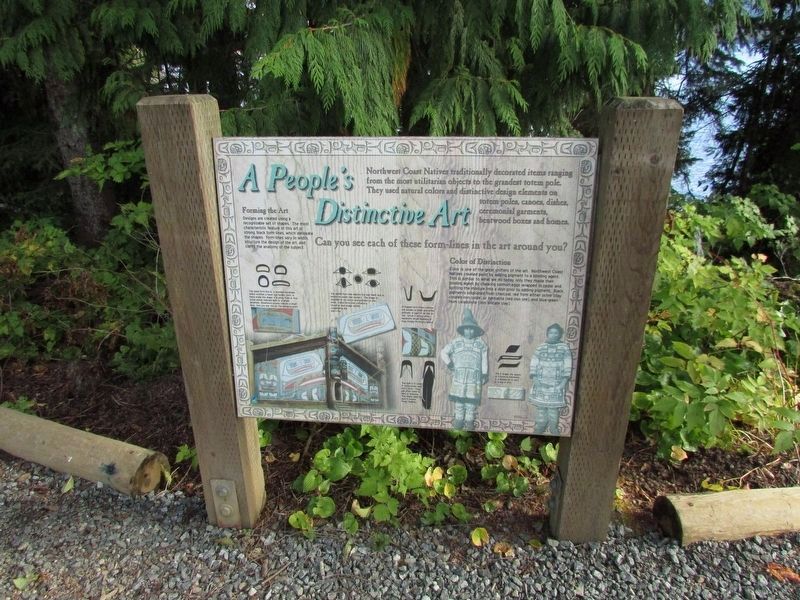
Northwest Coast Natives traditionally decorated items ranging from the most utilitarian objects to the grandest totem pole. They used natural colors and distinctive design elements on totem poles, canoes, dishes, ceremonial garments, bentwood boxes and homes
Can you see each of these form-lines in the art around you?
Forming the Art
designs are created using a recognizable set of shapes. The most characteristic feature of this art is strong, black form-lines, which delineate the shapes. Form-lines vary in width, structure the design of the art, and clarify the anatomy of the subject.
Color of Distinction
Color is one of the great unifiers of the art. Northwest Coast Natives created paint by adding pigment to a binding agent. This is similar to what we do today, only they made their binding agent by chewing salmon eggs wrapped in cedar and spitting the mixture into a dish prior to adding pigment. Black pigments originated from charcoal, red from either ochre (clay colored iron oxide) or hematite (red iron ore), and blue-green from celadonite (iron silicate clay).
The ovoid form-line is a rounded rectangle which outlines a head,
this page online
The eyelid form-lines depict the eye itself and is within an ovoid (eye socket). This shape is rounded in its center and pointed on the ends. Eyelid form-line contains a round or oval shape within, suggesting the eye’s iris.
U-shaped form-lines contour the bodies of birds and other animals, or part of an ear or tail. Small U forms often represent small feathers or may simply fill empty space.
The split-U is used in conjunction with the U form. They are often seen in ears or feathers. The Haida word for split-U means flicker feather.
The S shape fills space or connects elements in a design as in part of a leg or arm.
Topics. This historical marker is listed in these topic lists: Arts, Letters, Music • Indigenous Peoples and Communities.
Location. 55° 25.17′ N, 131° 46.401′ W. Marker is in Ketchikan, Alaska, in Ketchikan Gateway Borough. It can be reached from Totem Bight Road, on the right when
Photographed by Bill Coughlin, September 2, 2026
2. A People’s Distinctive Art Marker

Regionally, this marker is in Southeast Alaska, in Tlingit and Haida & Tsimshian Region. It is also on the American Pacific Coast. Globally, it is in North America, in the Inside Passage, on the Pacific Rim, in the Western Hemisphere, in the Western World, and in the Anglosphere. Historically, it finds itself in what was once the Russian Empire.
Other nearby markers. At least 8 other markers are within walking distance of this marker: The story of Totem Bight (a few steps from this marker); What is Totem Bight? (a few steps from this marker); Symbols and Society (within shouting distance of this marker); Harvest from the Sea (within shouting distance of this marker); Understanding Totem Poles (within shouting distance of this marker); Continuing the Cycle (within shouting distance of this marker); A Look Into the Clan House (within shouting distance of this marker); Houses of Heritage (within shouting distance of this marker). Touch for a list and map
Photographed by Bill Coughlin, September 2, 2026
3. A People’s Distinctive Art Marker
More about this marker. Pictures on the marker show a clan house and clothing that displays examples of the various form-lines mentioned on the marker.
Photographed by Bill Coughlin, September 2, 2026
4. Totem Pole
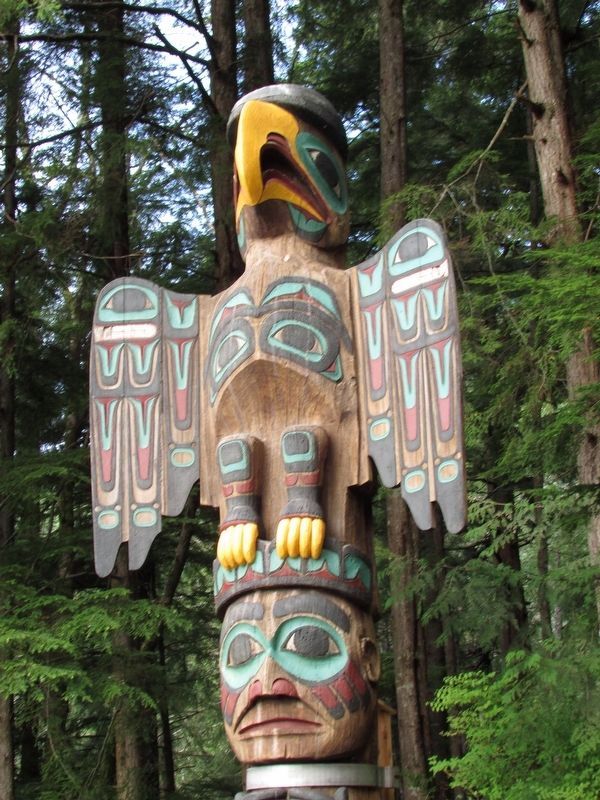
The ovoid form-line can be seen on this totem pole.
Photographed by Bill Coughlin, September 2, 2026
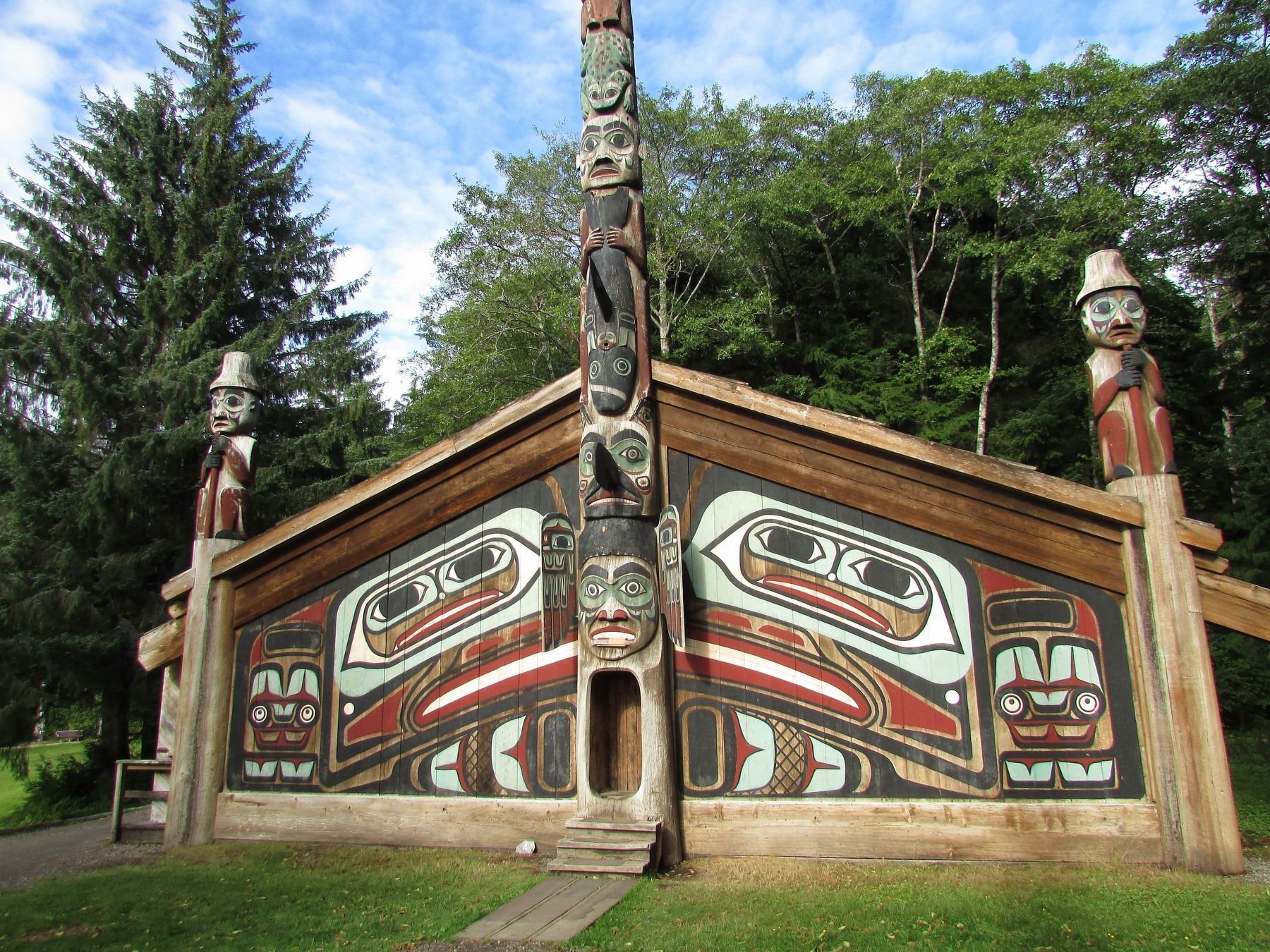
5. Clan House
More examples of the form-line described on the marker can be seen on the Clan House.
Credits. This page was last revised on September 15, 2026. It was originally submitted on September 15, 2026, by Bill Coughlin of Woodland Park, New Jersey. This page has been viewed 6 times since then. Photos: 1, 2, 3, 4, 5. submitted on September 15, 2026, by Bill Coughlin of Woodland Park, New Jersey.
