Fernandina Beach in Nassau County, Florida — The American South (South Atlantic)
Civilian Conservation Corps Company 1420
Fort Clinch State Park
Photographed by Stephen Thomas White, February 4, 2026
1. Civilian Conservation Corps Company 1420 Marker
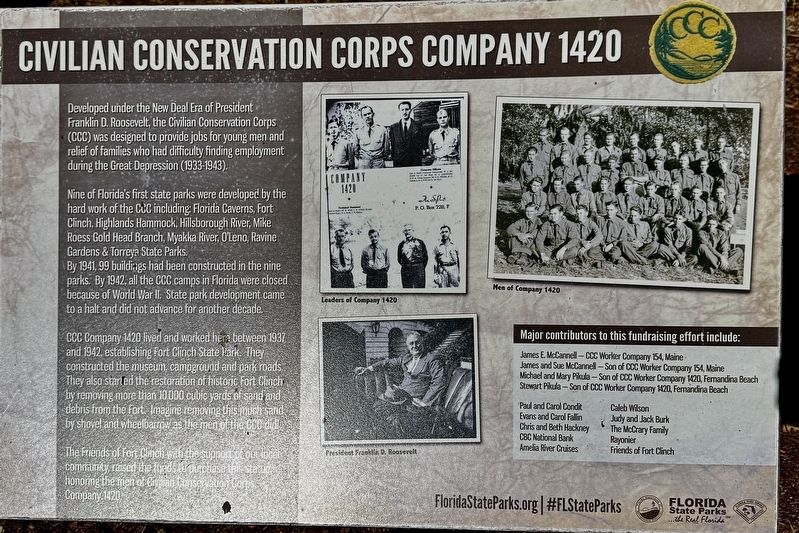
Nine of Florida's first state parks were developed by the hard work of the CCC including: Florida Caverns, Fort Clinch, Highlands Hammock, Hillsborough River, Mike Roess Gold Head Branch, Myakka River, O'Leno, Ravine Gardens & Torreya State Parks.
By 1941, 99 buildings had been constructed in the nine parks. By 1942, all the CCC camps in Florida were closed because of World War II. State park development came to a halt and did not advance for another decade.
CCC Company 1420 lived and worked here between 1937 and 1942, establishing Fort Clinch State Park. They constructed the museum, campground and park roads. They also started the restoration of historic Fort Clinch by removing more than 10,000 cubic yards of sand and debris from the Fort. Imagine removing this much sand by shovel and wheelbarrow as the men of the CCC did!
The Friends of Fort Clinch with
this page online
(captions)
Leaders of Company 1420
President Franklin D. Roosevelt
Men of Company 1420
Major contributors to this fundraising effort include:
James E. McCannell — CCC Worker Company 154 Maine
James and Sue McCannell — Son of CCC Worker Company 154, Maine
Michael and Mary Pikula — Son of CCC Workers Company 1420, Fernandina Beach
Stewart Pikula — Son of CCC Worker Company 1420, Fernandina Beach
Paul and Carol Conduit • Evans and Carol Fallin • Chris and Beth Hackney • CBC National Bank • Amelia River Cruises • Caleb Wilson • Judy and Jack Burk • The McCrary Family • Rayonier • Friends of Fort Clinch
Topics and series. This historical marker is listed in this topic list: Parks & Recreational Areas. In addition, it is included in the Civilian Conservation Corps (CCC) series list. A significant historical year for this entry is 1941.
Location. 30° 42.215′ N, 81° 27.206′ W. Marker is in Fernandina Beach, Florida, in Nassau County. It is on Fort Clinch Street Park Drive 0.1 miles
Photographed by Stephen Thomas White, February 4, 2026
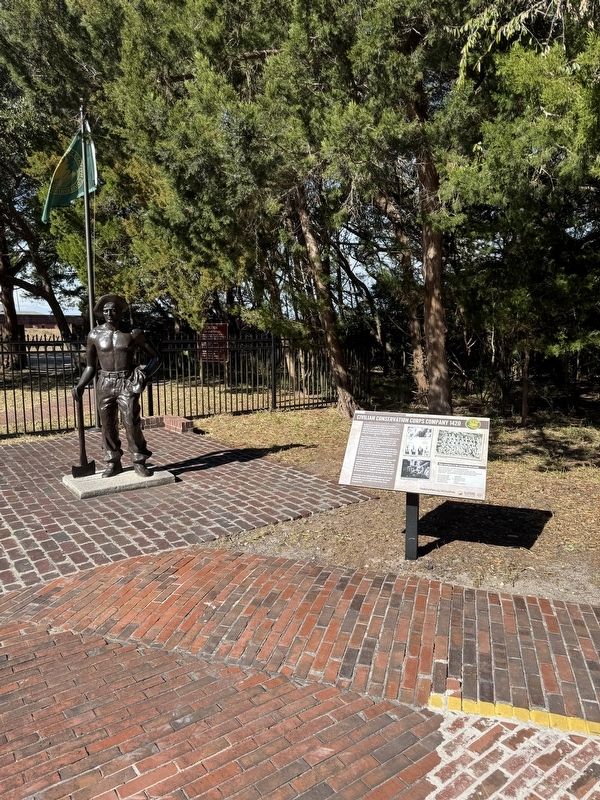
2. Civilian Conservation Corps Company 1420 Marker

Regionally, this marker is in First Coast, in Greater Jacksonville, and on the Sea Islands. It is also in the American South and on the Eastern Seaboard. Globally, it is in the North Atlantic Region, North America, a Gulf of Mexico state, the Western Hemisphere, the Western World, and the Anglosphere. Historically, it finds itself in what was once New Spain, the territory of the Mississippian Culture, one of the Confederate States of America, and the Antebellum South.
Other nearby markers. At least 8 other markers are within one mile of this marker, measured as the crow flies: Fort Clinch (a few steps from this marker); Fort Clinch Military Road (within shouting distance of this marker); Fort San Carlos (approx. one mile away); Old Town (approx. one mile away); The Plaza (approx. one mile away); The UNESCO Slave Route Project: Resistance, Liberty, Heritage / Amelia Island, Fl
Photographed by Stephen Thomas White, February 4, 2026
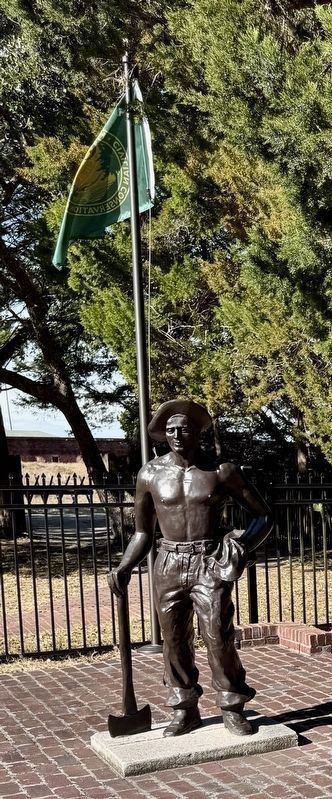
3. Civilian Conservation Corps Company 1420 Statue
Also see . . . Fort Clinch State Park . (Submitted on September 17, 2026, by Stephen Thomas White of Norfolk, Virginia.)
Credits. This page was last revised on September 18, 2026. It was originally submitted on September 17, 2026, by Stephen Thomas White of Norfolk, Virginia. This page has been viewed 11 times since then. Photos: 1, 2, 3. submitted on September 17, 2026, by Stephen Thomas White of Norfolk, Virginia. • Andrew Ruppenstein was the editor who published this page.
