Galva in Henry County, Illinois — The American Midwest (Great Lakes)
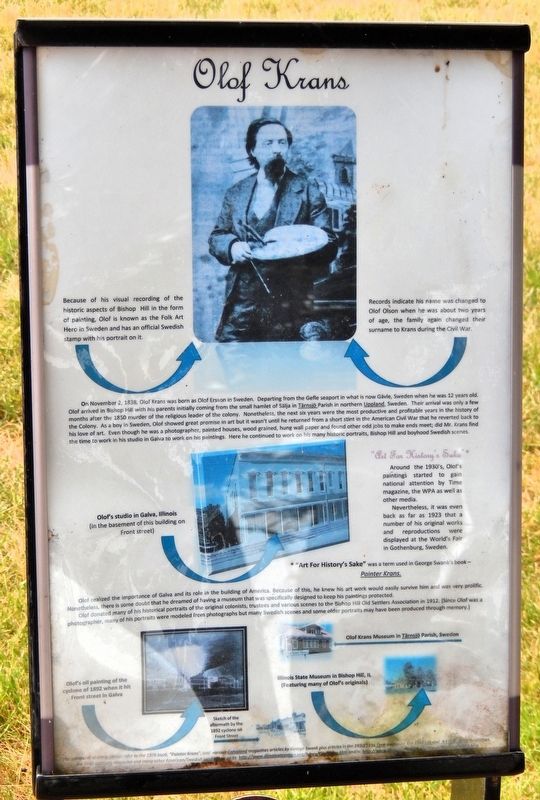
Olof Krans
Photographed by Cosmos Mariner, June 24, 2021
1. Olof Krans Marker
On November 2, 1838, Olof Krans was born as Olof Ersson in Sweden. Departing from the Gefle seaport in what is now Gävle, Sweden when he was 12 years old, Olof arrived in Bishop Hill with his parents initially coming from the small hamlet of Sälja in Tärnsjö Parish in northern Uppland, Sweden. Their arrival was only a few months after the 1850 murder of the religious leader of the colony. Nonetheless, the next six years were the most productive and profitable years in the history of the Colony. As a boy in Sweden, Olof showed great promise in art but it wasn't until he returned from a short stint in the American Civil War that he reverted back to his love of art. Even though he was a photographer, painted houses, wood grained, hung wall paper and found other odd jobs to make ends meet; did Mr. Krans find the time to work in his studio in Galva to work on his paintings. Here he continued to work on his many historic portraits, Bishop Hill and boyhood Swedish scenes.
Olof realized the importance of Galva and its role in the building of America. Because of this, he knew his art work would easily survive him and was very prolific. Nonetheless, there is some doubt that he dreamed of having a museum that was specifically designed to keep his paintings protected.
Olof donated many of his historical portraits of the original colonists, trustees and various scenes to the Bishop Hill Old Settlers Association in 1912. [Since Olof was a photographer, many of his portraits were modeled from photographs but many Swedish scenes and some older portraits may have been produced through memory.]
“Art For History’s Sake” *
Around the 1930’s, Olof’s paintings started to gain national attention by Time magazine, the WPA as well as other media.
Nevertheless, it was even back as far as 1923 that a number of his original works and
this page online
* “Art For History’s Sake” was a term used in George Swank’s book — Painter Krans.
[image captions]
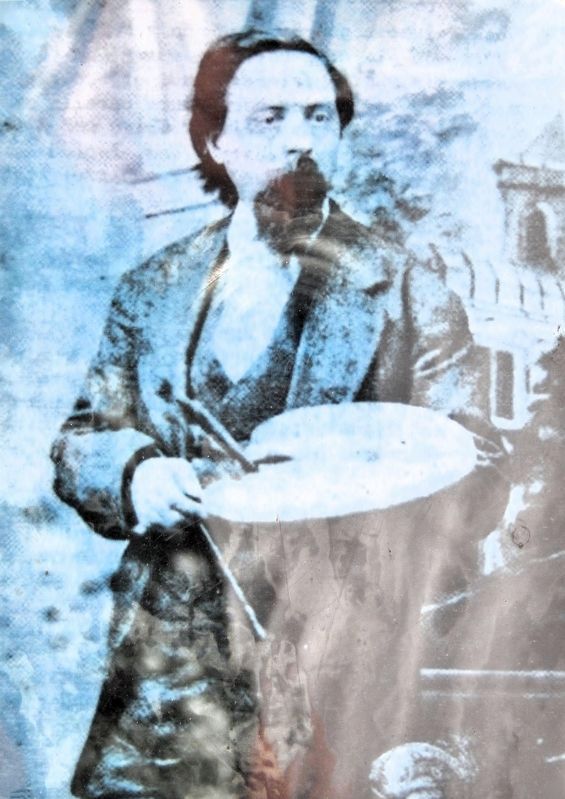
• Because of his visual recording of the historic aspects of Bishop Hill in the form of painting, Olof is known as the Folk Art Hero in Sweden and has an official Swedish stamp with his portrait on it.
• Records indicate his name was changed to Olof Olson when he was about two years of age, the family again changed their surname to Krans during the Civil War.
• Olof’s studio in Galva, Illinois (in the basement of this building on Front Street).
• Olof’s oil painting of the cyclone of 1892 when it hit Front Street in Galva.
• Sketch of the aftermath by the 1892 cyclone on Front Street.
• Olof Krans Museum in Tärnsjö Parish, Sweden.
• Illinois State Museum in Bishop Hill, IL (featuring many of Olof’s originals).
Topics. This historical marker is listed in these topic lists: Arts, Letters, Music • Immigration • Settlements & Settlers. A significant historical date for this entry is November 2, 1838.
Location. 41° 9.971′ N, 90° 2.708′ W. Marker is in Galva, Illinois, in Henry
2. Marker detail: Olof Krans

Regionally, this marker is in Northern Illinois. It is also in the American Midwest and in the Corn Belt. Globally, it is in North America, the Western Hemisphere, the Western World, and the Anglosphere. Historically, it finds itself in what was once the territory of the Mississippian Culture and also the Northwest Territory.
Other nearby markers. At least 8 other markers are within walking distance of this marker: Galva Opera House/Temperance Hall (a few steps from this marker); Hayes Pump and Planter Company (a few steps from this marker); Sgt. Schuyler Brent Patch (a few steps from this marker); Wistrand Manufacturing Co. and the Blue Star line (a few steps from this marker); The Scrap Drive of 1942 (within shouting distance of this marker); To the Sons of this Community Who Gave Their Future to Preserve Our Heritage (within shouting
Photographed by Cosmos Mariner, June 24, 2021
3. Olof Krans Marker
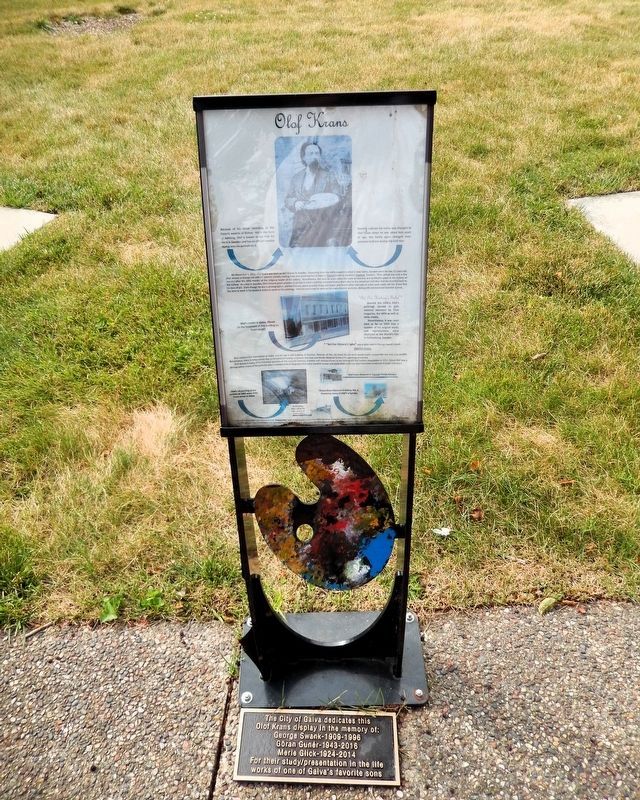
The City of Galva dedicates this Olof Krans display in the memory of:
George Swank 1909-1996
Göran Gunér 1943-2016
Merle Glick 1924-2014
Also see . . .
1. Olof Krans (Wikipedia).
Excerpt: When Krans was twelve years old his family emigrated to the United States. The family arrived at the Bishop Hill Colony in Bishop Hill, Illinois during 1850. Bishop Hill was the site of a utopian religious community founded in 1846 by Swedish pietist Eric Jansson and his followers. During the first two winters at the colony, Krans attended school and as he got older he was an ox boy and later worked in the black smith and paint shops.(Submitted on September 20, 2026, by Cosmos Mariner of Cape Canaveral, Florida.)
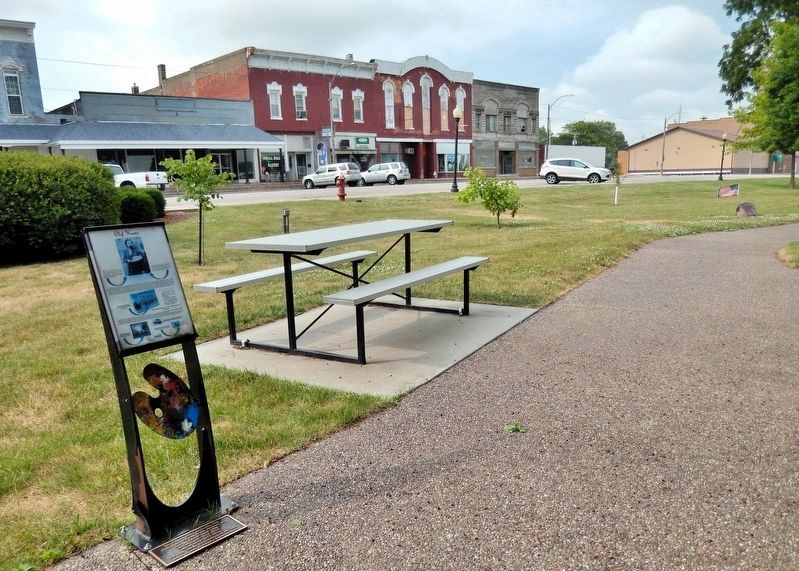
When the American Civil War started, the immigrants raised an entire company and Krans was among the volunteers. He mustered into the Union Army in Company D, 57th Illinois Volunteer Infantry Regiment. He changed his last name to Krans. The word krans can be translated to mean wreath or garland in the Swedish language. His whole family subsequently adopted the new name. After the Battle of Fort Donelson in Tennessee he was given a disability dischargeon June 3, 1862.Photographed by Cosmos Mariner, June 24, 20214. Olof Krans MarkerLooking northeast through Veterans Memorial Park. Front Street is on the left.
After the war, Krans married in 1867 and relocated to Galva, Illinois. There he became a house painter and also did interior decorating, including the interior of Galva's Methodist and Lutheran Churches. In 1896 while he was recovering from a fall, he began painting memories and people from his youth in the Bishop Hill Colony. In his paintings, Krans documented daily life at Bishop Hill. He began painting a series of pictures that described everyday life in the early days of the colony. On the 50th anniversary of the Bishop Hill Colony, Krans donated a large portion of his paintings to the colony. Olof Krans died in Altona, Illinois. At the time of his death he had finished more than 90 pictures.
2. Bishop Hill Colony (Wikipedia).
Excerpt: Bishop Hill Colony is a historic district in Bishop Hill, Illinois. Bishop Hill was the site of a utopian religious community which operated as a commune. It was founded in 1846 by Swedish pietist Eric Janson and his followers. The community was named Bishop Hill after the parish of Biskopskulla in Uppland, Sweden.(Submitted on September 20, 2026, by Cosmos Mariner of Cape Canaveral, Florida.)
Founded in 1846 by religious dissidents who emigrated from Sweden to establish a new way of life on the Illinois prairie, the colony was run as a commune until its dissolution in 1861. The Bishop Hill Colony was the landmark Swedish settlement in Western Illinois leading the large Swedish-American communities in Galesburg, Rock Island, and Chicago.
Credits. This page was last revised on September 20, 2026. It was originally submitted on September 19, 2026, by Cosmos Mariner of Cape Canaveral, Florida. This page has been viewed 6 times since then. Photos: 1, 2, 3, 4. submitted on September 20, 2026, by Cosmos Mariner of Cape Canaveral, Florida.
