Corning in Steuben County, New York — The American Northeast (Mid-Atlantic)
Visibility of Truth
2016
Photographed by Cosmos Mariner, June 8, 2021
1. Visibility of Truth Marker
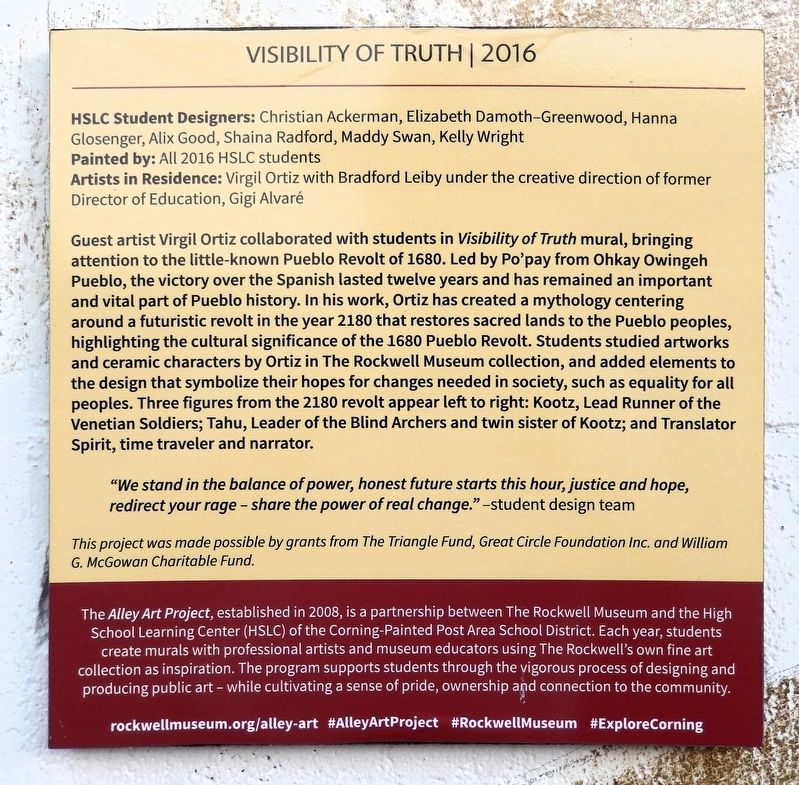
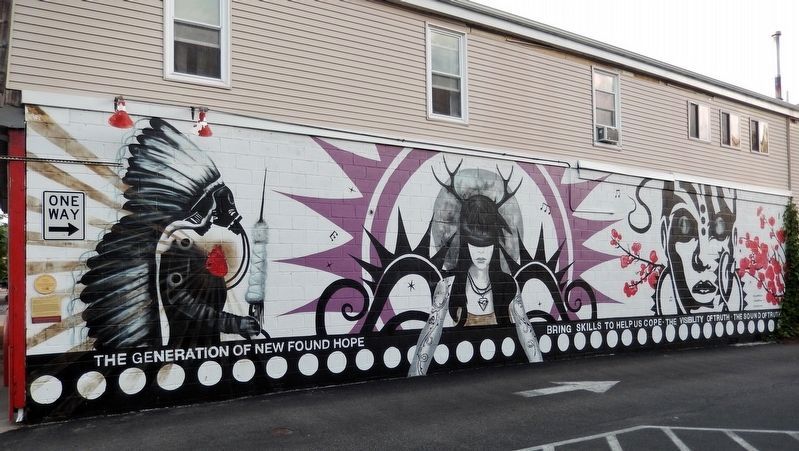
Guest artist Virgil Ortiz collaborated with students in Visibility of Truth mural, bringing attention to the little-known Pueblo Revolt of 1680. Led by Po’pay from Ohkay Owingeh Pueblo, the victory over the Spanish lasted twelve years and has remained an important and vital part of Pueblo history. In his work, Ortiz has created a mythology centering around a futuristic revolt in the year 2180 that restores sacred lands to the Pueblo peoples, highlighting the cultural significance of the 1680 Pueblo Revolt. Students studied artworks and ceramic characters by Ortiz in The Rockwell Museum collection, and added elements to the design that symbolize their hopes for changes needed in society, such as equality for all peoples. Three figures from the 2180 revolt appear left to right: Kootz, Lead Runner of the Venetian Soldiers; Tahu, Leader of the Blind Archers and twin sister of Kootz; and Translator Spirit, time traveler and narrator.
“We stand in the balance of power, honest future starts this hour, justice and hope, redirect your rage - share the power of real change.” —student design team
HSLC Student Designers: Christian
this page online
Painted by: All 2016 HSLC students
Artists in Residence: Virgil Ortiz with Bradford Leiby under the creative direction of former Director of Education, Gigi Alvaré
This project was made possible by grants from The Triangle Fund, Great Circle Foundation Inc. and William G. McGowan Charitable Fund.
The Alley Art Project, established in 2008, is a partnership between The Rockwell Museum and the High School Learning Center (HSLC) of the Corning-Painted Post Area School District. Each year, students create murals with professional artists and museum educators using The Rockwell's own fine art collection as inspiration. The program supports students through the vigorous process of designing and producing public art - while cultivating a sense of pride, ownership and connection to the community.
Erected 2016 by Art Alley Project.
Topics. This historical marker is listed in these topic lists: Arts, Letters, Music • Education • Indigenous Peoples and Communities. A significant historical year for this entry is 1680.
Location. 42° 8.972′ N, 77° 3.639′ W.
Photographed by Cosmos Mariner, June 8, 2021
2. Visibility of Truth Marker
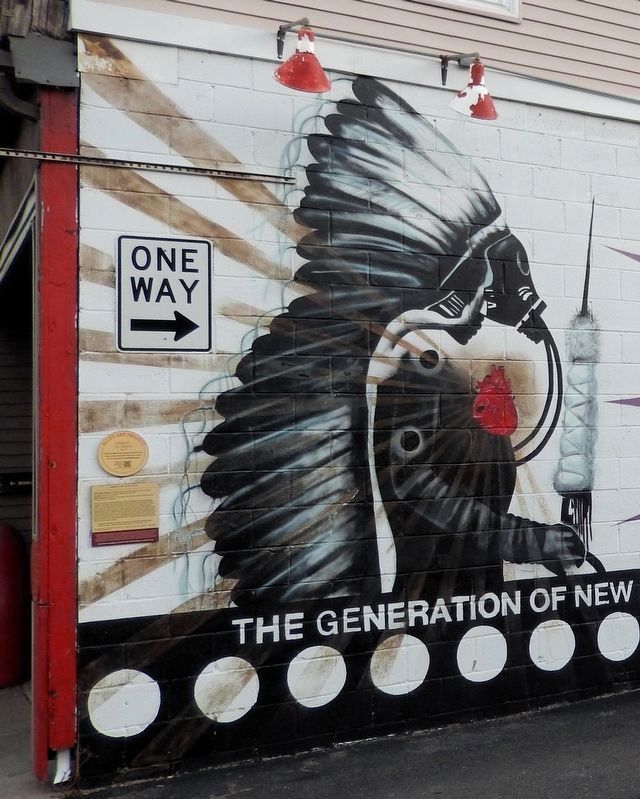
The marker is at the southwest corner of the building and the left edge of the mural.

Regionally, this marker is in Upstate New York, specifically in Western New York, and in the Southern Tier. It is also in the American Northeast, in the Mid-Atlantic, in Appalachia, and specifically in Northern Appalachia. Globally, it is in North America, the Western Hemisphere, the Western World, and the Anglosphere. Historically, it finds itself in what was once the Haudenosaunee (Iroquois) Confederacy, New Netherland, and one of the original Thirteen Colonies.
Other nearby markers. At least 8 other markers are within walking distance of this marker: Benjamin Patterson Inn (approx. 0.2 miles away); Water Street Memorial (approx. 0.2 miles away); “Little Joe” Thermometer Draw Tower (approx. 0.3 miles away); Steuben Glass Works (approx. 0.4 miles away);
Photographed by Cosmos Mariner, June 8, 2021
3. Visibility of Truth Marker – Art Alley Project Site #8
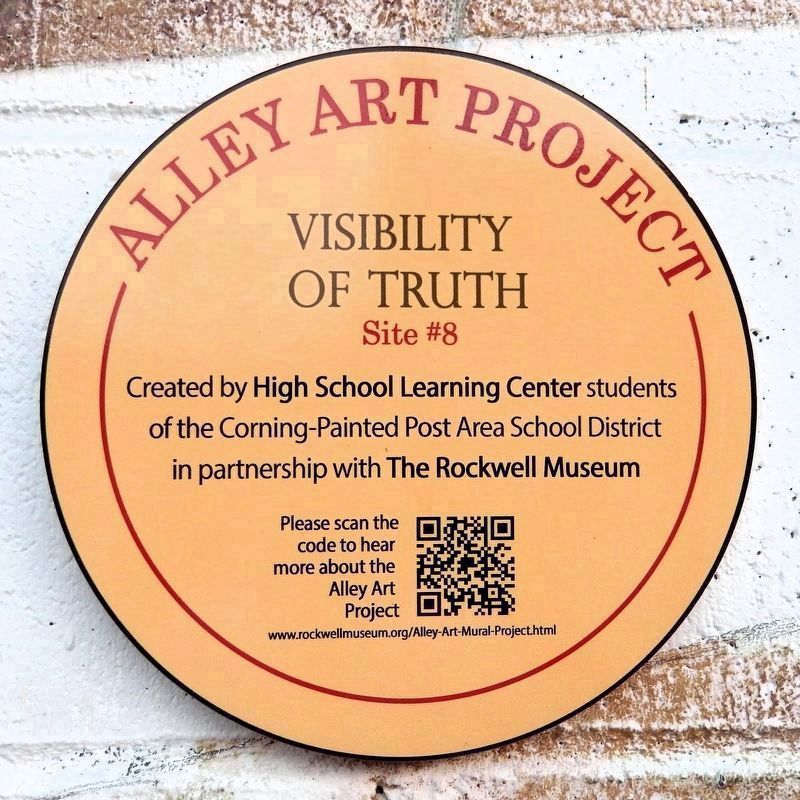
Created by High School Learning Center students of the Corning-Painted Post Area School District in partnership with The Rockwell Museum.
Also see . . .
1. Pueblo Revolt of 1680 (Wikipedia).
Excerpt: The Pueblo Revolt of 1680, also known as Popé's Rebellion or Po’pay’s Rebellion, was an uprising of most of the Indigenous Pueblo people against the Spanish colonists in the province of Santa Fe de Nuevo México, larger than present-day New Mexico. Persistent Spanish policies, coupled with incidents of brutality and cruelty such as those that occurred in 1599 and resulted in the Ácoma Massacre, stoked animosity and gave rise to the eventual Revolt of 1680. The persecution and mistreatment of Pueblo people who adhered to traditional religious practices was the most despised of these. Scholars consider it the first Native American religious traditionalist revitalization movement. The Spaniards were resolved to abolish pagan forms of worship and replace them with Christianity. The Pueblo Revolt killed 400 Spaniards(Submitted on September 23, 2026, by Cosmos Mariner of Cape Canaveral, Florida.)and drove the remaining 2,000 settlers out of the province. The Spaniards returned to New Mexico twelve years later.Photographed by Cosmos Mariner, June 8, 20214. Visibility of Truth Marker & MuralThe mural spans the south side of the building.
2. Rockwell Museum — Art Alley Project.
Excerpt: The organizations work together with the support of guest artists in developing stunning murals inspired by The Rockwell’s collection. The murals are designed and painted by area high school and college students who earn credits toward their high school diploma or college transcript while working with Rockwell educators, cultivating a sense of pride, ownership, and connection to the Corning community.(Submitted on September 23, 2026, by Cosmos Mariner of Cape Canaveral, Florida.)
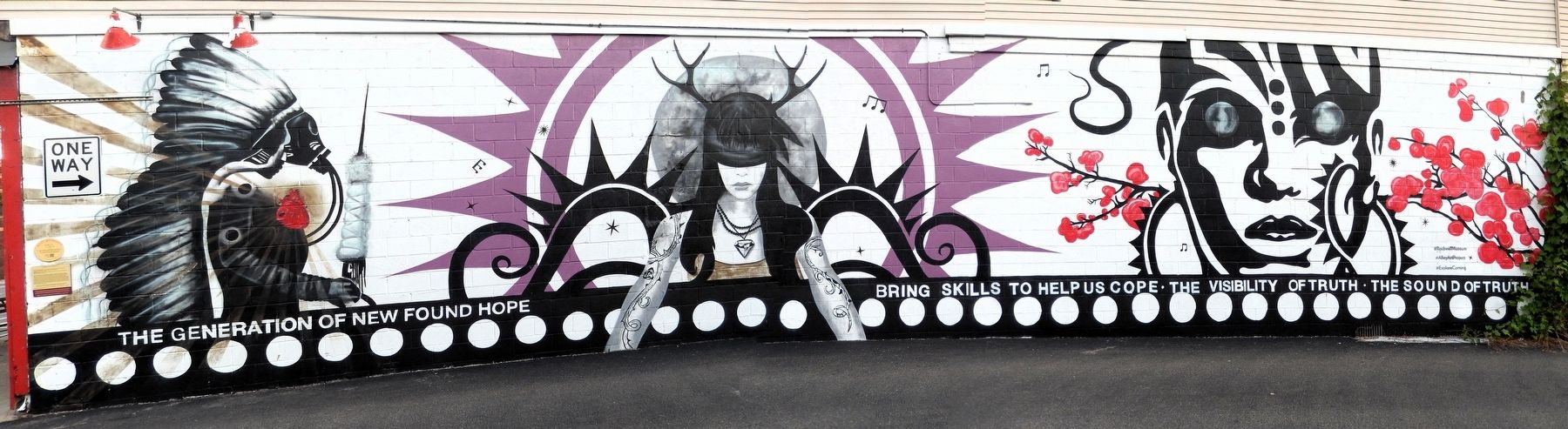
Photographed by Cosmos Mariner, June 8, 2021
5. Visibility of Truth Mural
Credits. This page was last revised on September 23, 2026. It was originally submitted on September 21, 2026, by Cosmos Mariner of Cape Canaveral, Florida. This page has been viewed 7 times since then. Photos: 1, 2, 3, 4, 5. submitted on September 23, 2026, by Cosmos Mariner of Cape Canaveral, Florida.
