Elora in Centre Wellington in Wellington County, Ontario — Central Canada (North America)
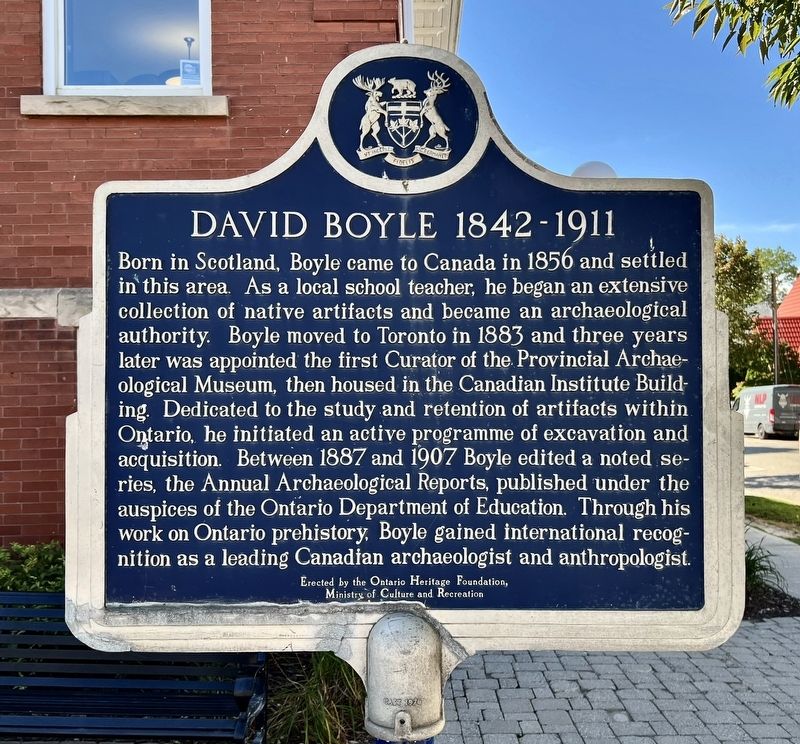
David Boyle 1842-1911
Photographed by Tim Boyd, September 25, 2026
1. David Boyle 1842-1911 Marker
Erected 1976 by Ontario heritage Foundation.
Topics and series. This historical marker is listed in this topic list: Anthropology & Archaeology. In addition, it is included in the Canada, Ontario Heritage Trust series list. A significant historical year for this entry is 1856.
Location. 43° 41.027′ N, 80° 25.872′ W. Marker is in Centre Wellington,
this page online

Regionally, this marker is in the Huron-Perth-Waterloo-Wellington Area and in Southwestern Ontario. It is also in Central Canada. Globally, it is in North America, the Western Hemisphere, the Western World, and the Anglosphere. Historically, it finds itself in what was once a British colony, the Viceroyalty of New France, the Haudenosaunee (Iroquois) Confederacy, and Rupert’s Land.
Other nearby markers. At least 8 other markers are within walking distance of this marker: Upper Geddes Street (a few steps from this marker); The Village Drinking Fountain (within shouting distance of this marker); The Village Centre (within shouting distance of this marker); The Founder of Elora (within shouting distance of this marker); Elora Cenotaph (within shouting distance of this marker); Liquor Store (about 120 meters away, measured
Photographed by Tim Boyd, September 25, 2026
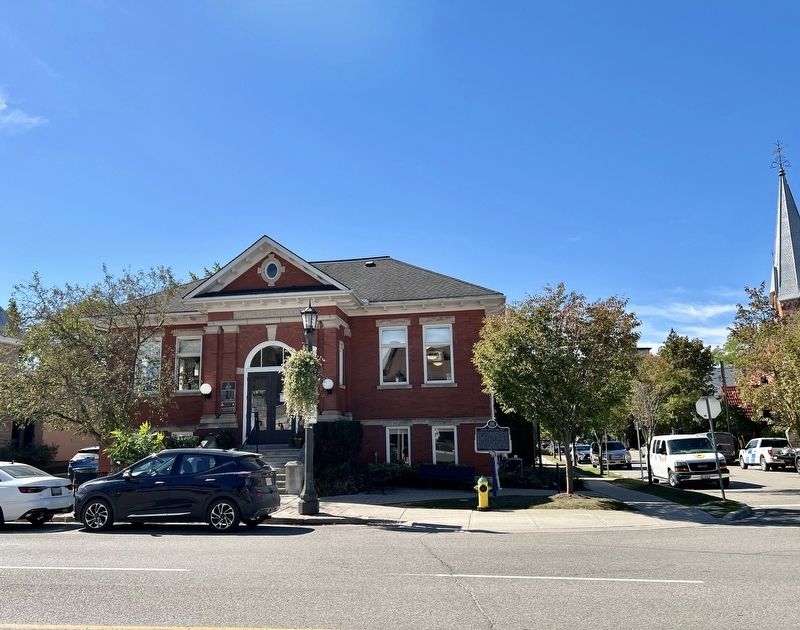
2. David Boyle 1842-1911 Marker
Also see . . . Boyle, David (dictionary of Canadian Biography).
At the Canadian Institute Museum, Boyle assembled an outstanding collection of Indian artefacts representative of southern Ontario, as he would continue to do when he later obtained provincial appointments. Beginning in 1887, he published its “Annual archæological report,” the first periodical in Canada devoted primarily to archaeology. Together, the museum’s collection and the reports provided a foundation of data and insight upon which scientific archaeology could be based. Boyle also undertook a vastly greater amount of fieldwork in Ontario than had ever been conducted before, including site inventories, systematic field explorations, and excavations. His excavation techniques and interpretation of findings compared favourably with the best work of his peers in North America. By modern standards, however, his efforts seem rudimentary.(Submitted on September 27, 2026, by Tim Boyd of Hamilton, Ontario.)
September 27, 2026
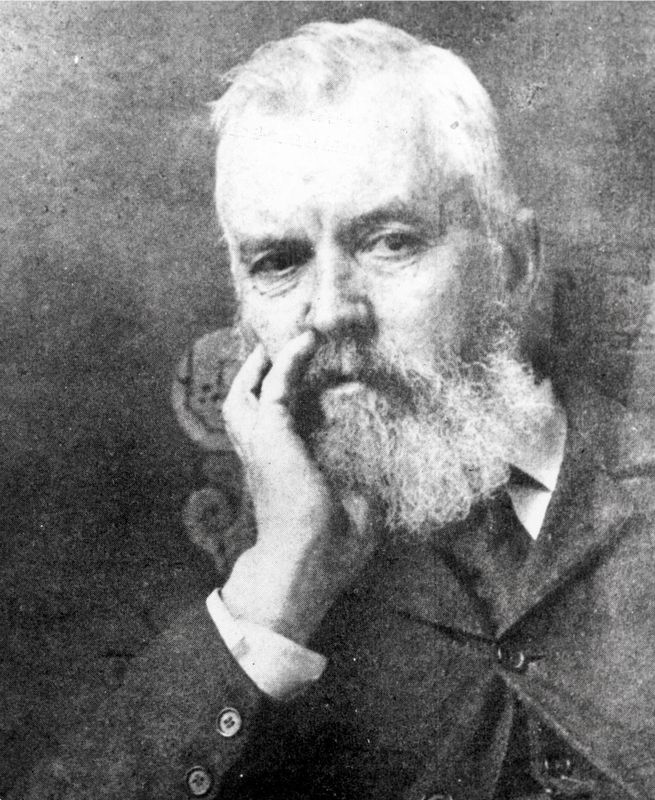
3. David Boyle cs 1900
Wellington County Archives (public domain)
Credits. This page was last revised on September 27, 2026. It was originally submitted on September 27, 2026, by Tim Boyd of Hamilton, Ontario. This page has been viewed 12 times since then. Photos: 1, 2, 3. submitted on September 27, 2026, by Tim Boyd of Hamilton, Ontario. • Andrew Ruppenstein was the editor who published this page.
