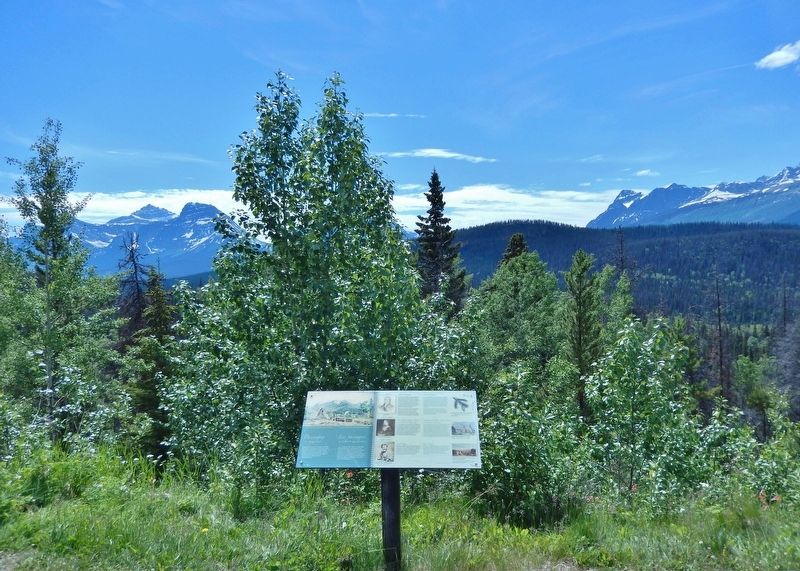
Near Jasper in Jasper National Park, Alberta — Canada’s Prairie Region (North America)
Passengers on the fur trade
⎯⎯⎯
Les passagers de la traite des fourrures
Photographed by Cosmos Mariner, July 6, 2022
1. Passengers on the fur trade / Les passagers de la traite des fourrures Marker

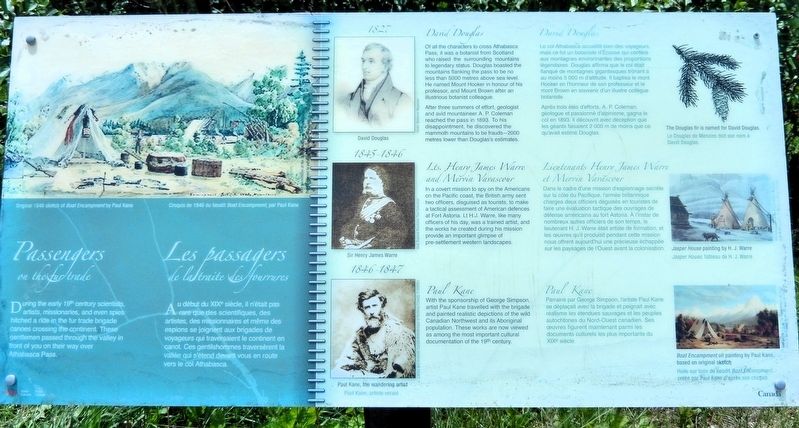
1827 — David Douglas
Of all the characters to cross Athabasca Pass, it was a botanist from Scotland who raised the surrounding mountains to legendary status. Douglas boasted the mountains flanking the pass to be no less than 5000 metres above sea level. He named Mount Hooker in honour of his professor, and Mount Brown after an illustrious botanist colleague.
After three summers of effort, geologist and avid mountaineer A. P. Coleman reached the pass in 1893. To his disappointment, he discovered the mammoth mountains to be frauds — 2000 metres lower than Douglas's estimates.
1845-1846 — Lts. Henry James Warre and Mervin Vavasour
In a covert mission to spy on the Americans on the Pacific coast, the British army sent two officers, disguised as tourists, to make a tactical assessment of American defences at Fort Astoria. Lt H.J. Warre, like many officers of his day, was
this page online
1846-1847 — Paul Kane
With the sponsorship of George Simpson, artist Paul Kane travelled with the brigade and painted realistic depictions of the wild Canadian Northwest and its Aboriginal population. These works are now viewed as among the most important cultural documentation of the 19th century.
[background image caption] Original 1846 sketch of Boat Encampment by Paul Kane
[image captions]
• The Douglas Fir is named for David Douglas.
• Jasper House painting by H. J. Warre
• Boat Encampment oil painting by Paul Kane, based on original sketch
1827 — David Douglas
Le col Athabasca accueillit bien des voyageurs, mais ce fut un botaniste d'Écosse qui conféra aux montagnes environnantes des proportions légendaires.
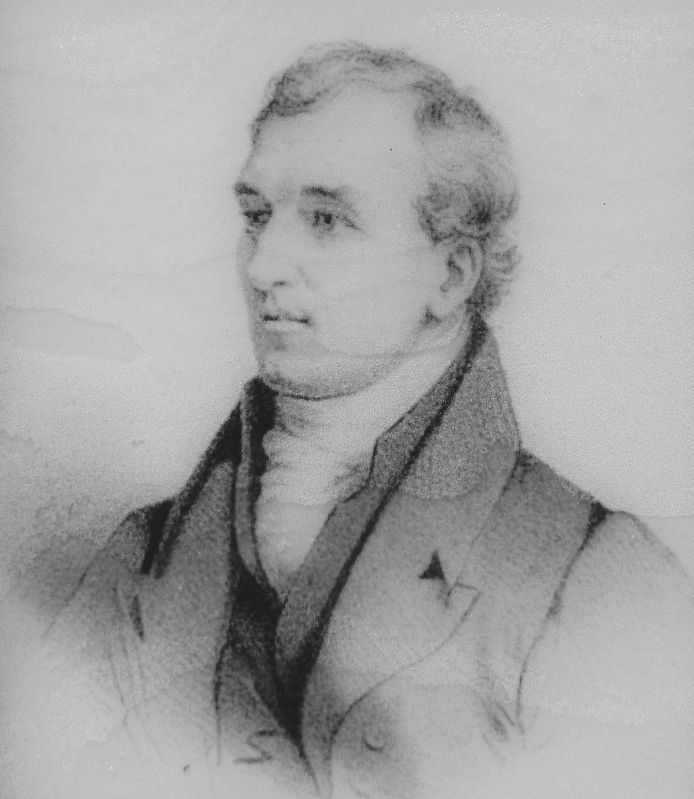
Courtesy Curtis’ Botanical Magazine
2. Marker detail: David Douglas
Après trois étés d'efforts, A. P. Coleman, géologue et passionné d'alpinisme, gagna le col en 1893. Il découvrit avec déception que les géants faisaient 2 000 m de moins que ce qu'avait estimé Douglas.
1845-1846 — Lts. Henry James Warre and Mervin Vavasour
Dans le cadre d'une mission d'espionnage secrète sur la côte du Pacifique, l'armée britannique chargea deux officiers déguisés en touristes de es faire une évaluation tactique des ouvrages de défense américains au fort Astoria. A l’instar de nombreux autres officiers de son temps, le lieutenant H. J. Warre était artiste de formation, et les œuvres qu’il produisit pendant cette mission nous offrent aujourd’hui une précieuse échappée sur les paysages de l’Ouest avant la colonisation.
1846-1847 — Paul Kane
Parraine par George Simpson, l’artiste Paul Kane se déplaçait avec la brigade et peignait avec réalisme les étendues sauvages et les peuples autochtones du Nord-Ouest
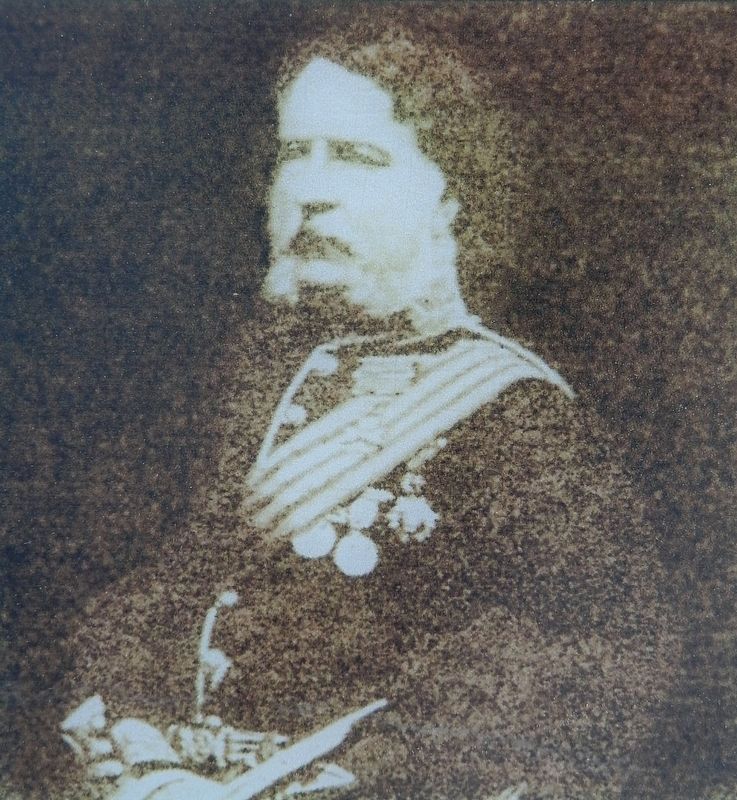
New Zealand Electronic Text Collection
3. Marker detail: Sir Henry James Warre
[légende de l'image de fond] Croquis de 1846 du lieudit Boat Encampment, par Paul Kane
[légendes d'images]
• Le Douglas de Menzies doit son nom à David Douglas.
• Jasper House, tableau de H. J. Warre
• Huile sur toile du lieudit Boat Encampment, créée par Paul Kane d’après son croquis
Erected by Parks Canada / Parcs Canada.
Topics. This historical marker is listed in these topic lists: Arts, Letters, Music • Exploration • Indigenous Peoples and Communities • Industry & Commerce.
Location. 52° 43.029′ N, 117° 52.49′ W. Marker is near Jasper, Alberta, in Jasper National Park. It is on Icefields Parkway (Provincial Highway 93) 24 kilometers south of Yellowhead Highway (Provincial Highway 16), on the right when traveling south. The marker is at the Athabasca Pass Lookout wayside. Touch for map. Marker is in this post office area: Jasper AB T0E 1E0, Canada. Touch for directions.

Regionally, this marker is in the Canadian Rockies. It is also in the Prairies.
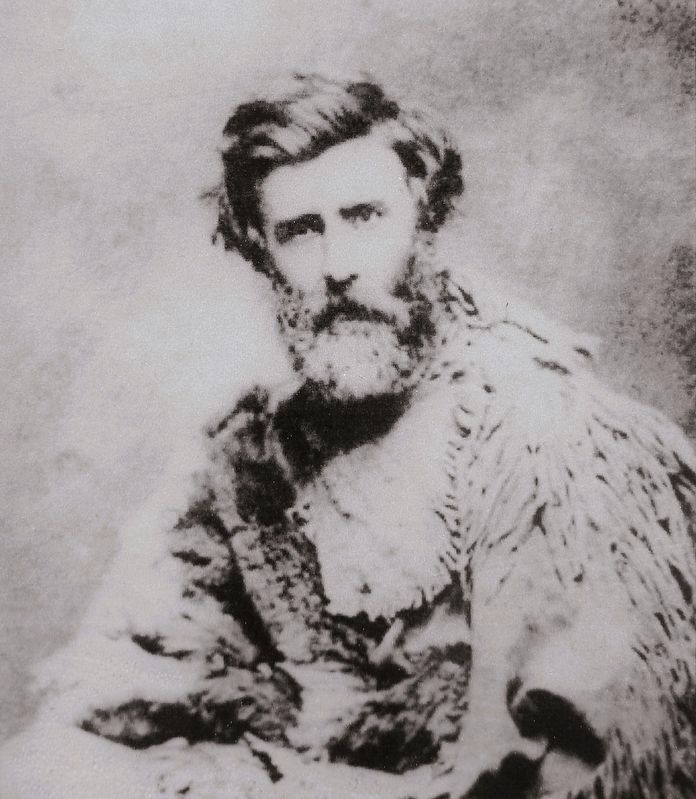
Library and Archives Canada, C-000261
4. Marker detail: Paul Kane
Wandering Artist / artiste errant
Other nearby markers. At least 7 other markers are within 24 kilometers of this marker, measured as the crow flies: New Trade Route Over the Rockies / Une nouvelle route de commerce à travers les Rocheuses (here, next to this marker); Athabasca Pass National Historic Site / Lieu historique national du Col-Athabasca (here, next to this marker); David Thompson (a few steps from this marker); a different marker also named David Thompson (a few steps from this marker); Henry House (approx. 22.2 kilometers away); First People / Les premiers habitants (approx. 22.7 kilometers away); ‘Unknown’ Lands / Terra incognita (approx. 22.9 kilometers away).
Also see . . .
1. David Douglas (1799–1834) (Wikipedia).
Excerpt: Scottish botanist best known as the namesake of the Douglas fir. He worked as a gardener, and explored the Scottish Highlands, North America and Hawaii, where he died. In the spring of 1826, David Douglas(Submitted on October 4, 2026, by Cosmos Mariner of Cape Canaveral, Florida.)was compelled to climb a peak (Mount Brown, of the mythical pair Hooker and Brown) near Athabasca Pass to take in the view. In so doing, he was perhaps one of the first Europeans to be a “mountaineer” in North America. He introduced the Douglas fir into cultivation in 1827. Other notable introductions include Sitka spruce, sugar pine, western white pine, ponderosa pine, lodgepole pine, Monterey pine, grand fir, noble fir and several other conifers that transformed the British landscape and timber industry.Photographed by Cosmos Mariner, July 6, 20225. Passengers on the fur trade / Les passagers de la traite des fourrures Marker
2. Sir Henry James Warre KCB (1819–1898) (Wikipedia).
Excerpt: Educated at the Royal Military College, Sandhurst, Warre was commissioned into the 54th Regiment of Foot in 1837. He became aide-de-camp to Sir Richard Downes Jackson, Commander-in-Chief of the Forces in British North America in 1839. A staff appointment in Canada led to his official investigation of the river route from Montreal to the Red River Settlement, which he traversed by canoe a distance of 2,300 miles.(Submitted on October 4, 2026, by Cosmos Mariner of Cape Canaveral, Florida.)
Subsequently, in 1845 he was sent on a military reconnaissance mission, riding through the Rockies, with Mervin Vavasour to the Oregon Country to prepare for a potential Anglo-American war over the territory. During the trip he made paintings and sketches of the region and reported on possible military preparations.
3. Paul Kane (1810–1871) (Wikipedia).
Excerpt: Irish-born Canadian painter whose paintings and especially field sketches were known as one of the first visual documents of Western indigenous life. Paul Kane grew up in York, Upper Canada (now Toronto), and trained himself by copying European masters on a “Grand Tour” study trip through Europe. He undertook two voyages through the Canadian northwest in 1845, and from 1846 to 1848. The first trip took him from Toronto to Sault Ste. Marie and back. Having secured the support of the Hudson's Bay Company, he set out on a second, much longer voyage from Toronto across the Rocky Mountains to Fort Vancouver (present-day Vancouver, Washington) and Fort Victoria (present day Victoria, British Columbia).(Submitted on October 4, 2026, by Cosmos Mariner of Cape Canaveral, Florida.)
On both trips Kane sketched and painted First Nations and Métis peoples. Upon his return to Toronto, he produced more than one hundred oil paintings from these sketches. The oil paintings he completed in his studio are considered a part of Canadian heritage, although he often embellished them considerably, departing from the accuracy of his field sketches in favour of more dramatic scenes. Kane's work followed the tenets of salvage ethnography.
Credits. This page was last revised on October 4, 2026. It was originally submitted on October 3, 2026, by Cosmos Mariner of Cape Canaveral, Florida. This page has been viewed 6 times since then. Photos: 1, 2, 3, 4, 5. submitted on October 4, 2026, by Cosmos Mariner of Cape Canaveral, Florida.
