Delos in Mykonos, The Aegean, Greece — Ελλάδα (Southeastern Europe, Balkan Peninsula)
The House with the Dionysus
Photographed by James Hulse, September 23, 2026
1. The House with the Dionysus Marker

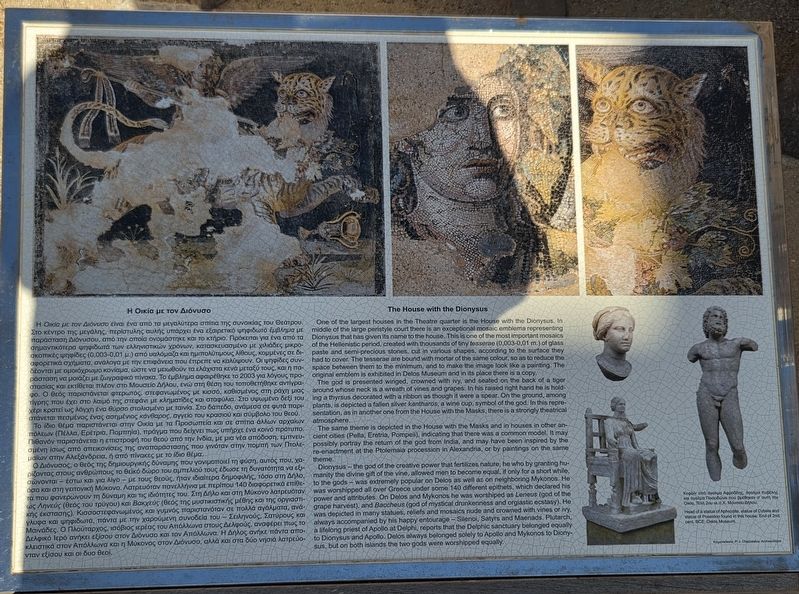
Η Οικία με τον Διόνυσο είναι ένα από τα μεγαλύτερα σπίτια της συνοικίας του Θεάτρου. Στο κέντρο της μεγάλης, περίστυλης αυλής υπάρχει ένα εξαιρετικό ψηφιδωτό έμβλημα με παράσταση Διονύσου, από την οποία ονομάστηκε και το κτήριο. Πρόκειται για ένα από τα σημαντικότερα ψηφιδωτά των ελληνιστικών χρόνων, κατασκευασμένο με χιλιάδες μικροσκοπικές ψηφίδες (0,003–0,01 μ.) από υαλόμαζα και ημιπολύτιμους λίθους, κομμένες σε διαφορετικά σχήματα, ανάλογα με την επιφάνεια που έπρεπε να καλύψουν. Οι ψηφίδες συνδέονται με ομοιόχρωμο κονίαμα, ώστε να μειωθούν τα ελάχιστα κενά μεταξύ τους, και η παράσταση να μοιάζει με ζωγραφικό πίνακα. Το έμβλημα αφαιρέθηκε το 2003 για λόγους προστασίας και εκτίθεται πλέον στο Μουσείο Δήλου, ενώ στη θέση του τοποθετήθηκε αντίγραφο. Ο θεός παριστάνεται φτερωτός, στεφανωμένος με κισσό, καθισμένος στη ράχη μιας τίγρης που έχει στο λαιμό της στεφάνι με κληματίδες και σταφύλια. Στο υψωμένο δεξί του χέρι κρατεί ως λόγχη ένα θύρσο στολισμένο με ταινία. Στο δάπεδο, ανάμεσα σε φυτά παριστάνεται πεσμένος ένας ασημένιος κάνθαρος, αγγείο του κρασιού και σύμβολο του θεού.
Το ίδιο θέμα παριστάνεται στην Οικία με τα Προσωπεία και σε σπίτια άλλων αρχαίων πόλεων (Πέλλα,
this page online
Ο Διόνυσος, ο θεός της δημιουργικής δύναμης που γονιμοποιεί τη φύση, αυτός που, χαρίζοντας στους ανθρώπους το θεϊκό δώρο του αμπελιού, τους έδωσε τη δυνατότητα να εξισώνονται – έστω και για λίγο – με τους θεούς, ήταν ιδιαίτερα δημοφιλής, τόσο στη Δήλο, όσο και στη γειτονική Μύκονο. Λατρευόταν πανελλήνια με περίπου 140 διαφορετικά επίθετα που φανερώνουν τη δύναμη και τις ιδιότητές του. Στη Δήλο και στη Μύκονο λατρευόταν ως Ληνεύς (θεός του τρύγου) και Βακχεύς (θεός της μυστικιστικής μέθης και της οργιαστικής έκστασης). Κισσοστεφανωμένος και γυμνός παριστανόταν σε πολλά αγάλματα, ανάγλυφα και ψηφιδωτά, πάντα με τη χαρούμενη συνοδεία του – Σειληνούς, Σατύρους και Μαινάδες. Ο Πλούταρχος, ισόβιος ιερέας του Απόλλωνα στους Δελφούς, αναφέρει πως το Δελφικό Ιερό ανήκει εξίσου στον Διόνυσο και τον Απόλλωνα. Η Δήλος ανήκε πάντα αποκλειστικά στον Απόλλωνα και η Μύκονος στον Διόνυσο, αλλά και στα δύο νησιά λατρεύονταν εξίσου
Photographed by James Hulse, September 23, 2026
2. The House with the Dionysus Marker
Κεφαλή από άγαλμα Αφροδίτης, άγαλμα Κυβέλης και άγαλμα Ποσειδώνα που βρέθηκαν σ’ αυτή την Οικία. Τέλη 2ου αι. π.Χ. Μουσείο Δήλου.
Κείμενα: P. J. Chatzidakis, Αρχαιολόγος
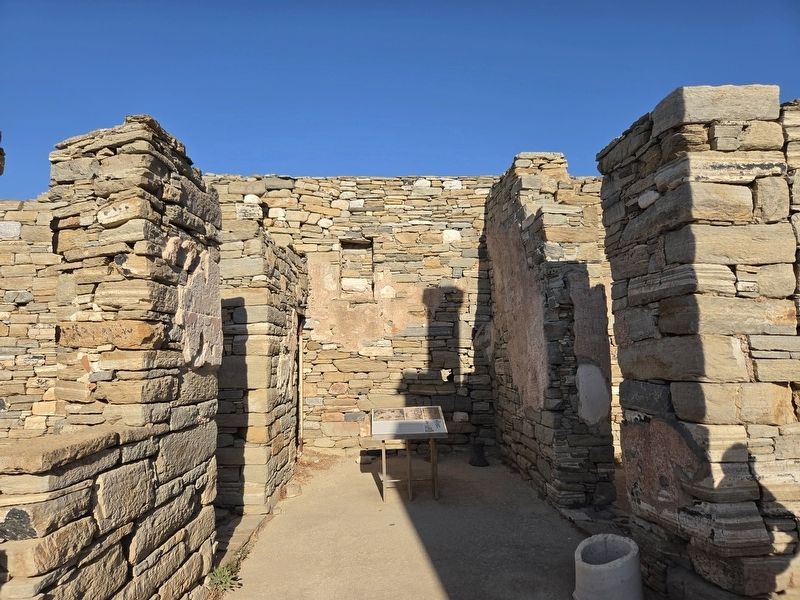
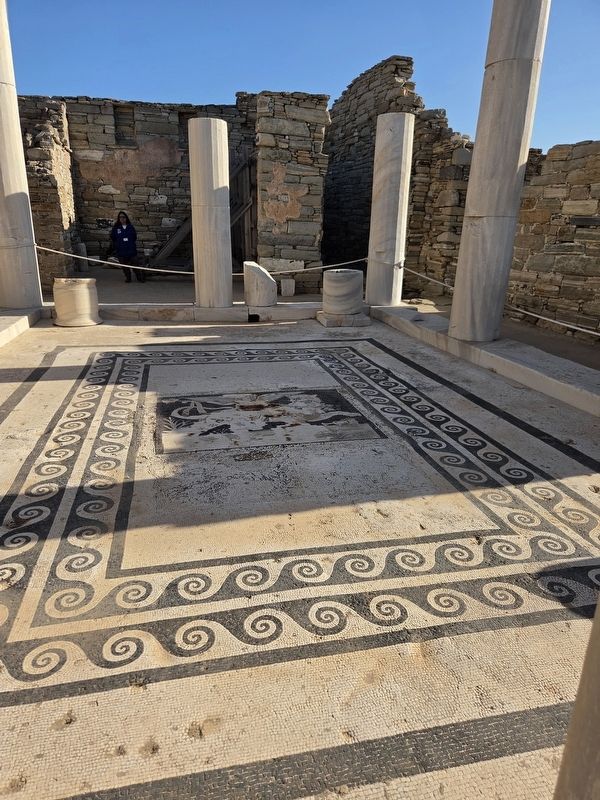
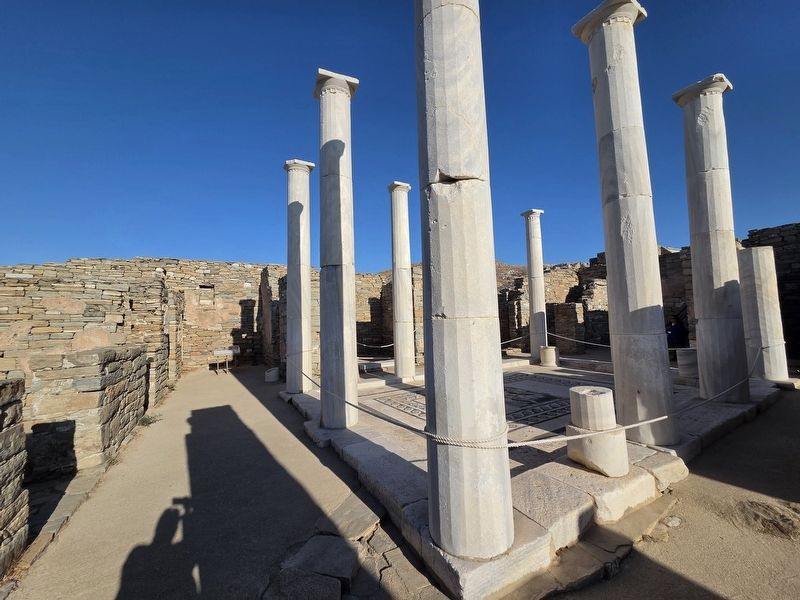
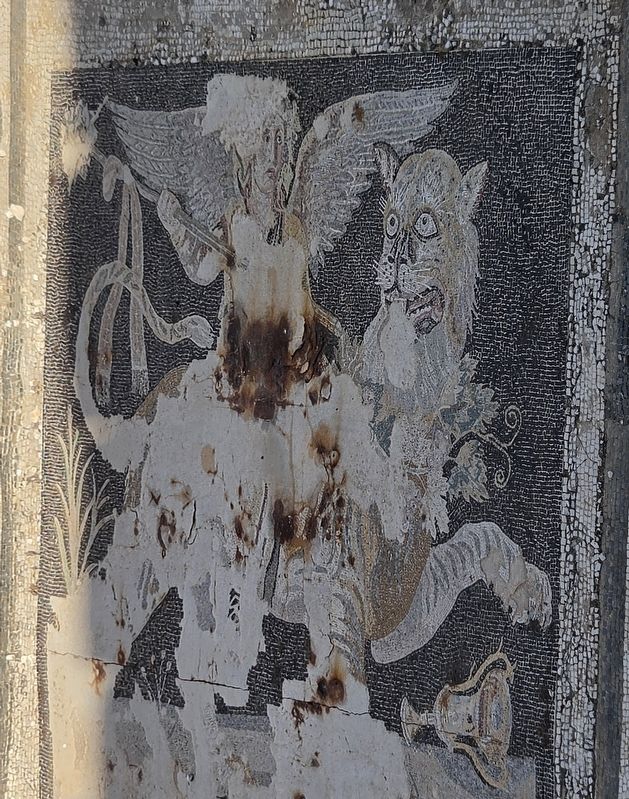
One of the largest houses in the Theatre Quarter is the House with the Dionysus. In the middle of the large peristyle court there is an exceptional mosaic emblema representing Dionysus that has given its name to the house. This is one of the most important mosaics of the Hellenistic period, created with thousands of tiny tesserae (0.003–0.01 m.) of glass paste and semi-precious stones, cut in various shapes, according to the surface they had to cover. The tesserae are bound with mortar of the same colour, so as to reduce the space between them to the minimum, and to make the image look like a painting. The original emblem is exhibited in Delos Museum and in its place there is a copy.
The god is presented winged, crowned with ivy, and seated on the back of a tiger around whose neck is a wreath of vines and grapes. In his raised right hand he is holding a thyrsus decorated with a ribbon as though it were a spear. On the ground, among plants, is depicted a fallen silver kantharos, a wine cup, symbol of the god. In this representation, as in another one from the House with the Masks, there is a strongly theatrical atmosphere.
The same theme is depicted in the House with the Masks and in houses in other ancient cities (Pella, Eretria, Pompeii), indicating that there was a common model. It may possibly portray the return of the god from India, and may have been inspired by the re-enactment at the Ptolemaia procession in Alexandria, or by paintings on the same theme.
Dionysus – the god of the creative power that fertilizes nature, he who by granting humanity the divine gift of the vine, allowed men to become equal, if only for a short while, to the gods – was extremely popular on Delos as well as on neighboring Mykonos. He was worshipped all over Greece under some 140 different epithets, which declared his power and attributes. On Delos and Mykonos he was worshipped as Leneus (god of the grape harvest), and Baccheus (god of mystical drunkenness and orgiastic ecstasy). He was depicted in many statues, reliefs and mosaics nude and crowned with vines or ivy, always accompanied by his happy entourage – Silenoi, Satyrs and Maenads. Plutarch, a lifelong priest of Apollo at Delphi, reports that the Delphic sanctuary belonged equally to Dionysus and Apollo. Delos always belonged solely to Apollo and Mykonos to Dionysus, but on both islands the two gods were worshipped equally.
Head of a statue of Aphrodite, statue of Cybele and statue of Poseidon found in this house. End of 2nd cent. BCE. Delos Museum.
Text: P. J. Chatzidakis, Archaeologist
Erected by Hellenic Ministry of Culture.
Topics. This historical marker is listed in this topic list: Anthropology & Archaeology. A significant historical year for this entry is 2003.
Location. 37° 23.883′ N, 25° 16.037′ E. Marker is in Delos, The Aegean, in Mykonos. It is on Odos Hvris Onomasia. Touch for map. Marker is in this post office area: Delos, The Aegean 846 00, Greece. Touch for directions.

Regionally, it is in Europe, the European Union, the Schengen Area, a coastal Mediterranean country, and the Western World. Historically, it finds itself in what was once the Byzantine Empire, the Ottoman Empire, and specifically the Roman Empire.
Other nearby markers. At least 8 other markers are within walking distance of this marker: The House of Cleopatra (within shouting distance of this marker); The House with the Trident – Delian Houses (within shouting distance of this marker); The Theatre Quarter (about 90 meters away, measured in a direct line); Delos Theatre (about 120 meters away); Portico of Philip V (about 180 meters away); Delos (about 210 meters away); The Oikos and the Colossus of the Naxians (approx. 0.2 kilometers away); Temple of the Delians, or Great Temple (approx. 0.3 kilometers away). Touch for a list and map of all markers in Delos.
More about this marker. The marker is at the Archaeological Site of Delos, which you can reach by boat from Mykonos. Admission to the site and the round-trip boat fare are charged separately.
Photographed by James Hulse
3. The House with the Dionysus - Floor Mosaic
Photographed by James Hulse, September 23, 2026
4. The House with the Dionysus and Marker
Photographed by James Hulse, September 23, 2026
5. The House with the Dionysus Marker
Closeup of the floor mosaic
Credits. This page was last revised on October 4, 2026. It was originally submitted on October 4, 2026, by James Hulse of Medina, Texas. This page has been viewed 6 times since then. Photos: 1, 2, 3, 4, 5. submitted on October 4, 2026, by James Hulse of Medina, Texas.
