Delos in Mykonos, The Aegean, Greece — Ελλάδα (Southeastern Europe, Balkan Peninsula)
The Poros Temple
Πώρινος Ναός
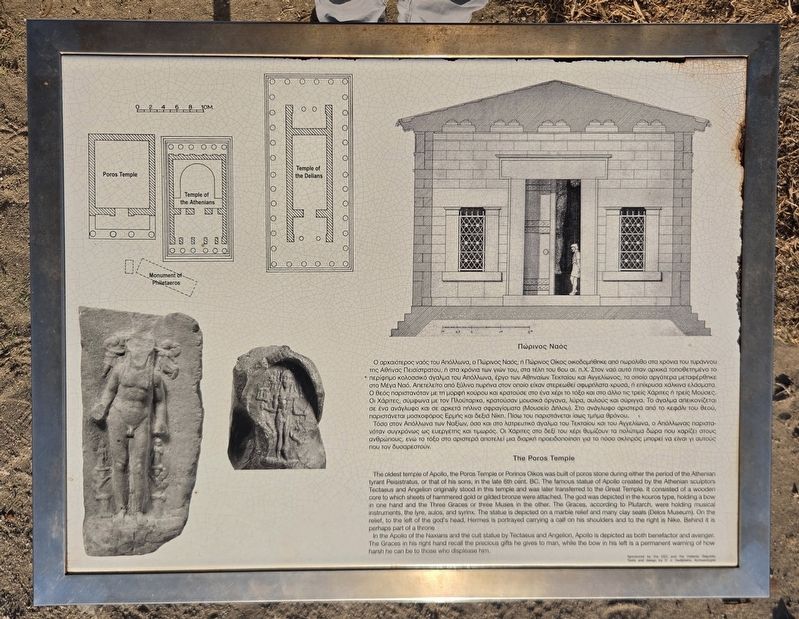
Photographed by James Hulse, September 23, 2026
1. The Poros Temple Marker

Ο αρχαιότερος ναός του Απόλλωνα, ο Πώρινος Ναός, ή Πώρινος Οίκος οικοδομήθηκε από πωρόλιθο στα χρόνια του τυράννου της Αθήνας Πεισίστρατου, ή στα χρόνια των γιών του, στα τέλη του 6ου αι. π.Χ. Στον ναό αυτό ήταν αρχικά τοποθετημένο το περίφημο κολοσσικό άγαλμα του Απόλλωνα, έργο των Αθηναίων Τεκταίου και Αγγελίωνα, το οποίο αργότερα μεταφέρθηκε στο Μέγα Ναό. Απετελείτο από ξύλινο πυρήνα στον οποίο είχαν στερεωθεί σφυρήλατα χρυσά, ή επίχρυσα χάλκινα ελάσματα.
Ο θεός παριστανόταν με τη μορφή κούρου και κρατούσε στο ένα χέρι το τόξο και στο άλλο τις τρεις Χάριτες ή τρεις Μούσες. Οι Χάριτες, σύμφωνα με τον Πλούταρχο, κρατούσαν μουσικά όργανα, λύρα, αυλούς και σύριγγα. Το άγαλμα απεικονίζεται σε ένα ανάγλυφο και σε αρκετά πήλινα σφραγίσματα (Μουσείο Δήλου). Στο ανάγλυφο αριστερά από το κεφάλι του θεού, παριστάνεται μοσχοφόρος Ερμής και δεξιά Νίκη. Πίσω του παριστάνεται ίσως τμήμα θρόνου.
Τόσο στον Απόλλωνα των Ναξίων, όσο και στο λατρευτικό άγαλμα του Τεκταίου και του Αγγελίωνα, ο Απόλλωνας παριστανόταν συγχρόνως ως ευεργέτης και τιμωρός. Οι Χάριτες στο δεξί του χέρι θυμίζουν τα πολύτιμα δώρα που χαρίζει στους ανθρώπους, ενώ το τόξο στο αριστερό αποτελεί μια διαρκή προειδοποίηση
this page online
Χρηματοδοτήθηκε από την ΕΟΚ και την Ελληνική Δημοκρατία.
Κείμενα και σχεδιασμός: P. J. Hadjidakis, Αρχαιολόγος
The oldest temple of Apollo, the Poros Temple or Porinos Oikos was built of poros stone during either the period of the Athenian tyrant Peisistratus, or that of his sons, in the late 6th cent. BC. The famous statue of Apollo created by the Athenian sculptors Tectaeus and Angelion originally stood in this temple and was later transferred to the Great Temple. It consisted of a wooden core to which sheets of hammered gold or gilded bronze were attached. The god was depicted in the kouros type, holding a bow in one hand and the Three Graces or three Muses in the other. The Graces, according to Plutarch, were holding musical instruments, the lyre, aulos, and syrinx. The statue is depicted on a marble relief and many clay seals (Delos Museum). On the relief, to the left of the god’s head, Hermes is portrayed carrying a calf on his shoulders and to the right is Nike. Behind it is perhaps part of a throne.
In the Apollo of the Naxians and the cult statue by Tectaeus and Angelion, Apollo is depicted as both benefactor and avenger. The Graces in his right hand recall the precious gifts he gives to man, while the bow in his left is a permanent warning of how harsh he can be to those who displease him.
Sponsored by the EEC and the Hellenic Republic.
Texts and design by P. J. Hadjidakis, Archaeologist
Erected by EEC and the Hellenic Republic.
Topics. This historical marker is listed in this topic list: Anthropology & Archaeology.
Location. 37° 24.04′ N, 25° 16.007′ E. Marker is in Delos, The Aegean, in Mykonos. It is on Odos Hvris Onomasia. Touch for map. Marker is in this post office area: Delos, The Aegean 846 00, Greece. Touch for directions.

Regionally, it is in Europe, the European Union, the Schengen Area, a coastal Mediterranean country, and the Western World. Historically, it finds itself in what was once the Byzantine Empire, the Ottoman Empire, and specifically the Roman Empire.
Other nearby markers. At least 8 other markers are within walking distance of this marker: Temple of the Athenians (a few steps from this marker); Temple of the Delians, or Great Temple (a few steps from this marker); The Oikos and the Colossus of the Naxians (within shouting distance of this marker); Agora of the Italians (about 90 meters away, measured in a direct line); Portico of Philip V (about 90 meters away); The Lions of the Naxians (about 150 meters away); The Theatre Quarter (about 210 meters away); Delos (approx. 0.3 kilometers away). Touch for a list and map of all markers in Delos.
More about this marker. The marker is at the Archaeological Site of Delos, which you can reach by boat from Mykonos. Admission to the site and the round-trip boat fare are charged separately.
Photographed by James Hulse, September 23, 2026
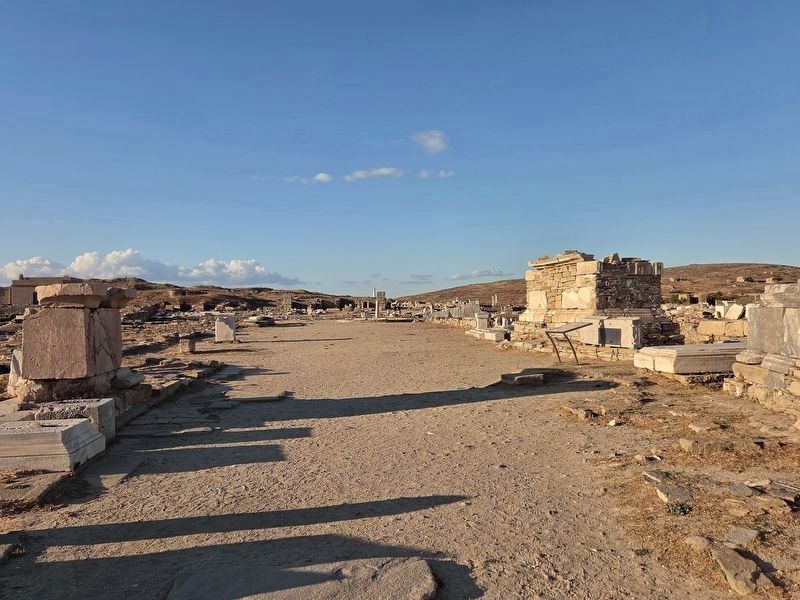
2. The Poros Temple and Marker - Right Side
Looking north.
Photographed by James Hulse, September 23, 2026
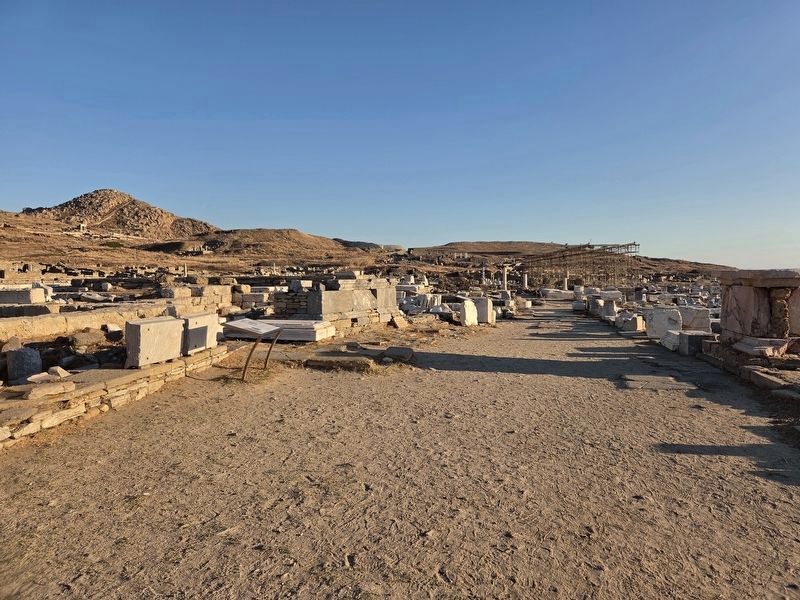
3. The Poros Temple Marker (Left)
Looking south.
Credits. This page was last revised on October 5, 2026. It was originally submitted on October 4, 2026, by James Hulse of Medina, Texas. This page has been viewed 7 times since then. Photos: 1, 2, 3. submitted on October 5, 2026, by James Hulse of Medina, Texas.
