Delos in Mykonos, The Aegean, Greece — Ελλάδα (Southeastern Europe, Balkan Peninsula)
The Lions of the Naxians
Photographed by James Hulse, September 23, 2026
1. The Lions of the Naxians Marker

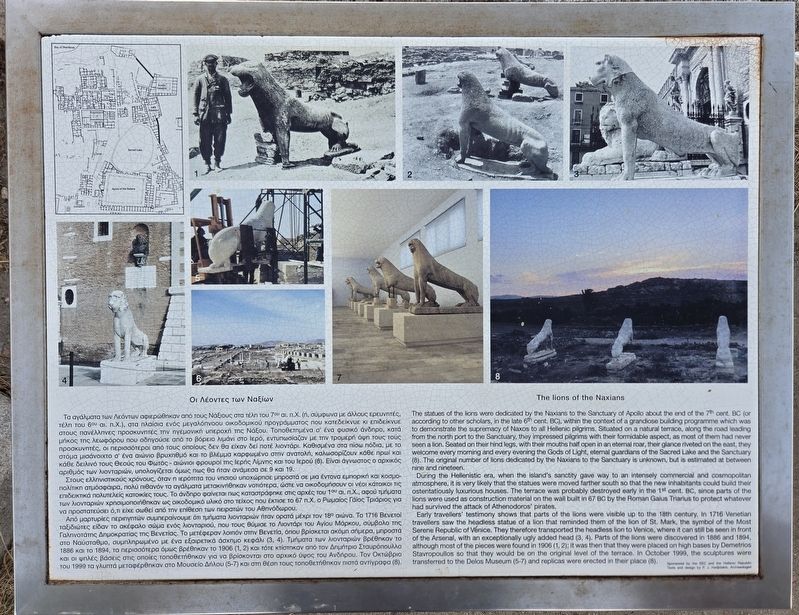
Τα αγάλματα των Λεόντων αφιερώθηκαν από τους Νάξιους στα τέλη του 7ου αι. π.Χ. (ή, σύμφωνα με άλλους ερευνητές, τέλη του 6ου αι. π.Χ.), στα πλαίσια ενός μεγαλόπνοου οικοδομικού προγράμματος που κατεδείκνυε κι επιδείκνυε στους πανέλληνες προσκυνητές την ηγεμονική υπεροχή της Νάξου. Τοποθετημένα σ’ ένα φυσικό άνδηρο, κατά μήκος της Λεωφόρου που οδηγούσε από το βόρειο λιμάνι στο Ιερό, εντυπωσίαζαν με την τρομερή όψη τους τους προσκυνητές, οι περισσότεροι από τους οποίους δεν θα είχαν δει ποτέ λιοντάρι. Καθισμένα στα πίσω πόδια, με το στόμα μισάνοιχτο σ’ ένα αιώνιο βρυχηθμό και το βλέμμα καρφωμένο στην ανατολή, καλωσορίζουν κάθε πρωί και κάθε δειλινό τους Θεούς του Φωτός - αιώνιοι φρουροί της Ιερής Λίμνης και του Ιερού (8). Είναι άγνωστος ο αρχικός αριθμός των λιονταριών, υπολογίζεται όμως πως θα ήταν ανάμεσα σε 9 και 19.
Στους ελληνιστικούς χρόνους, όταν η ιερότητα του νησιού υποχώρησε μπροστά σε μια έντονα εμπορική και κοσμοπολίτικη ατμόσφαιρα, πολύ πιθανόν τα αγάλματα μετακινήθηκαν νοτιότερα, ώστε να οικοδομήσουν οι νέοι κάτοικοι τις επιδεικτικά πολυτελείς κατοικίες τους. Το άνδηρο φαίνεται πως καταστράφηκε στις αρχές του 1ου αι. π.Χ., αφού τμήματα των λιονταριών χρησιμοποιήθηκαν
this page online
Από μαρτυρίες περιηγητών συμπεραίνουμε ότι τμήματα λιονταριών ήταν ορατά μέχρι τον 18ο αιώνα. Το 1716 Βενετοί ταξιδιώτες είδαν το ακέφαλο σώμα ενός λιονταριού, που τους θύμισε το Λιοντάρι του Αγίου Μάρκου, σύμβολο της Γαληνοτάτης Δημοκρατίας της Βενετίας. Το μετέφεραν λοιπόν στην Βενετία, όπου βρίσκεται ακόμη σήμερα, μπροστά στο Ναύσταθμο, συμπληρωμένο με ένα εξαιρετικά άσχημο κεφάλι (3, 4). Τμήματα των λιονταριών βρέθηκαν το 1886 και το 1894, τα περισσότερα όμως βρέθηκαν το 1906 (1, 2) και τότε κτίστηκαν από τον Δημήτριο Σταυρόπουλλο και οι ψηλές βάσεις στις οποίες τοποθετήθηκαν για να βρίσκονται στο αρχικό ύψος του Ανδήρου. Τον Οκτώβριο του 1999 τα γλυπτά μεταφέρθηκαν στο Μουσείο Δήλου (5-7) και στη θέση τους τοποθετήθηκαν πιστά αντίγραφα (8).
Χρηματοδοτήθηκε από την ΕΟΚ και την Ελληνική Δημοκρατία.
Κείμενα και σχεδιασμός: P. J. Hadjidakis, Αρχαιολόγος
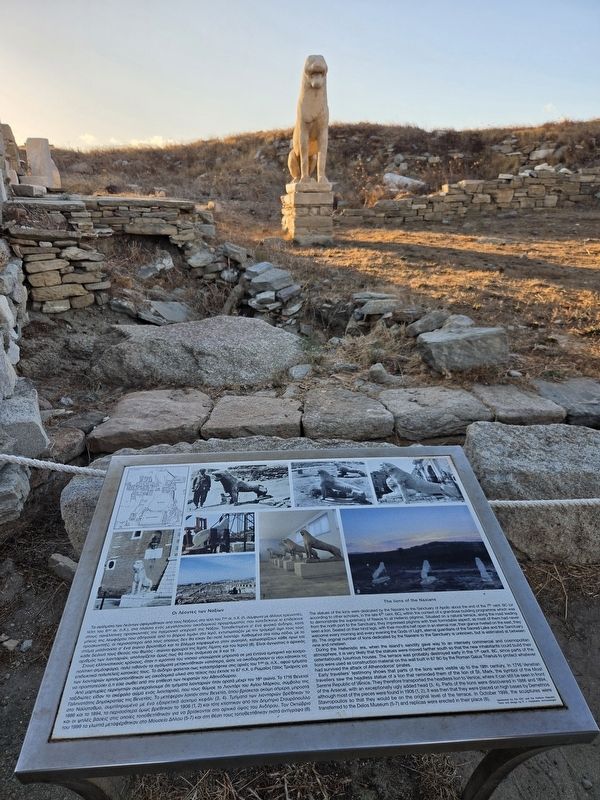
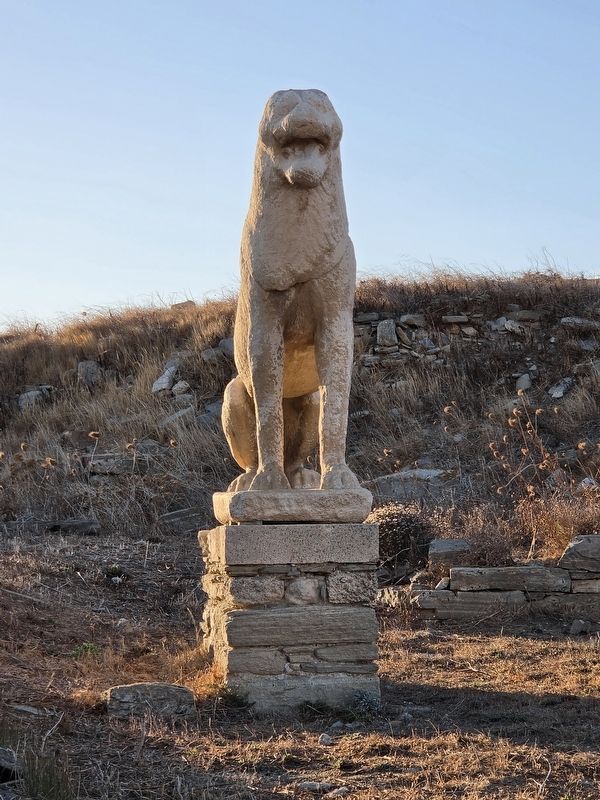
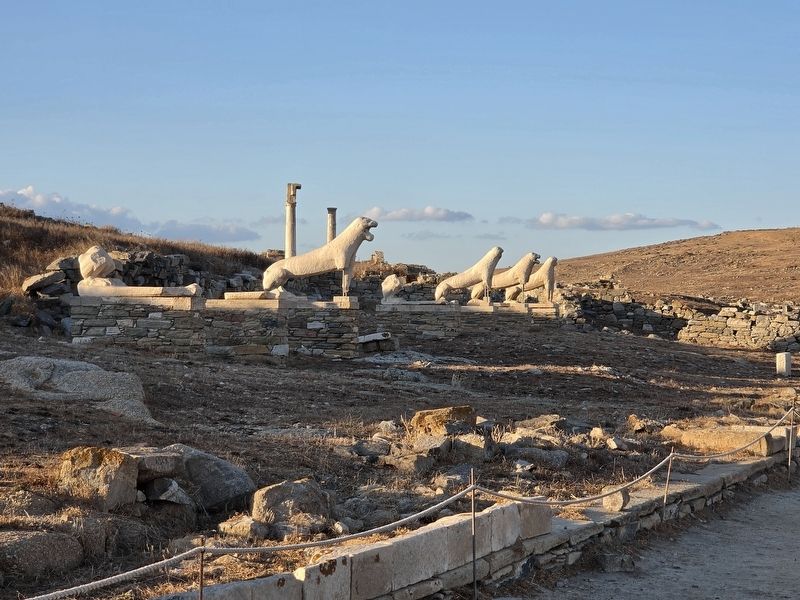
The statues of the lions were dedicated by the Naxians to the Sanctuary of Apollo about the end of the 7th cent. BC (or according to other scholars, in the late 6th cent. BC), within the context of a grandiose building programme which was to demonstrate the supremacy of Naxos to all Hellenic pilgrims. Situated on a natural terrace, along the road leading from the north port to the Sanctuary, they impressed pilgrims with their formidable aspect, as most of them had never seen a lion. Seated on their hind legs, with their mouths half open in an eternal roar, their glance riveted on the east, they welcome every morning and every evening the Gods of Light, eternal guardians of the Sacred Lake and the Sanctuary (8). The original number of lions dedicated by the Naxians to the Sanctuary is unknown, but is estimated at between nine and nineteen.
During the Hellenistic era, when the island’s sanctity gave way to an intensely commercial and cosmopolitan atmosphere, it is very likely that the statues were moved farther south so that the new inhabitants could build their ostentatiously luxurious houses. The terrace
Photographed by James Hulse
2. The Lions of the Naxians Marker
Early travellers’ testimony shows that parts of the lions were visible up to the 18th century. In 1716 Venetian travellers saw the headless statue of a lion that reminded them of the lion of St. Mark, the symbol of the Most Serene Republic of Venice. They therefore transported the headless lion to Venice, where it can still be seen in front of the Arsenal, with an exceptionally ugly added head (3, 4). Parts of the lions were discovered in 1886 and 1894, although most of the pieces were found in 1906 (1, 2); it was then that they were placed on high bases by Demetrios Stavropoullos so that they would be on the original level of the terrace. In October 1999, the sculptures were transferred to the Delos Museum (5-7) and replicas were erected in their place (8).
Sponsored by the EEC and the Hellenic Republic.
Texts and design by P. J. Hadjidakis, Archaeologist
Erected by EEC and the Hellenic Republic.
Topics. This historical marker is listed in this topic list: Anthropology & Archaeology. A significant historical year for this entry is 67 BCE.
Location. 37° 24.123′ N, 25° 16.013′ E. Marker is in Delos, The Aegean, in Mykonos. It is on Odos Hvris Onomasia. Touch for map. Marker is in this post office area: Delos, The Aegean 846 00, Greece. Touch for directions.

Regionally, it is in Europe, the European Union, the Schengen Area, a coastal Mediterranean country, and the Western World. Historically, it finds itself in what was once the Byzantine Empire, the Ottoman Empire, and specifically the Roman Empire.
Other nearby markers. At least 8 other markers are within walking distance of this marker: Agora of the Italians (within shouting distance of this marker); The Poros Temple (about 150 meters away, measured in a direct line); Temple of the Athenians (about 150 meters away); Temple of the Delians, or Great Temple (about 180 meters away); The Oikos and the Colossus of the Naxians (about 180 meters away); Portico of Philip V (approx. 0.3 kilometers away); The Theatre Quarter (approx. 0.4 kilometers away); Delos (approx. 0.4 kilometers away). Touch for a list and map of all markers in Delos.
More about this marker. The marker is at the Archaeological Site of Delos, which you can reach by boat from Mykonos. Admission to the site and the round-trip boat fare are charged separately.
Photographed by James Hulse
3. The Lions of the Naxians Marker
Photographed by James Hulse, September 23, 2026
4. The Lions of the Naxians Marker
Credits. This page was last revised on October 5, 2026. It was originally submitted on October 4, 2026, by James Hulse of Medina, Texas. This page has been viewed 7 times since then. Photos: 1, 2, 3, 4. submitted on October 5, 2026, by James Hulse of Medina, Texas.
