Delos in Mykonos, The Aegean, Greece — Ελλάδα (Southeastern Europe, Balkan Peninsula)
Delos
Δήλος
Photographed by James Hulse, September 23, 2026
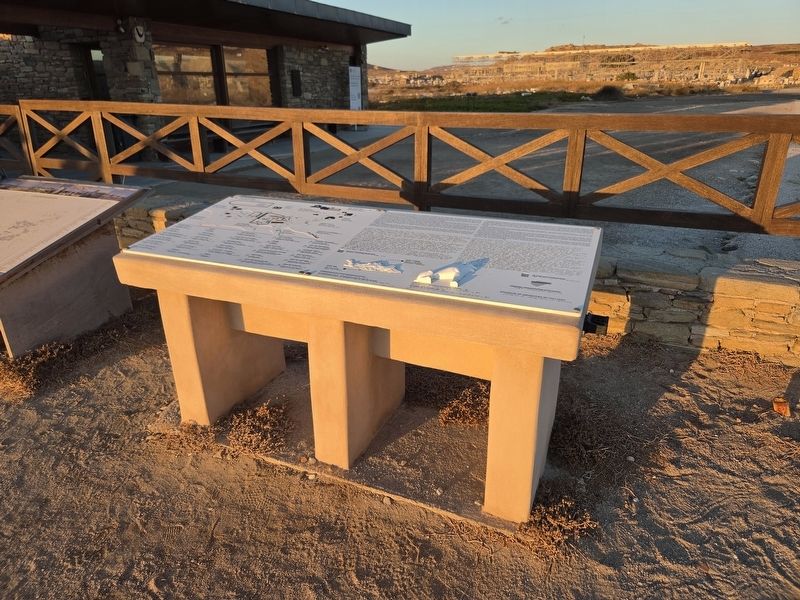
1. Delos Marker

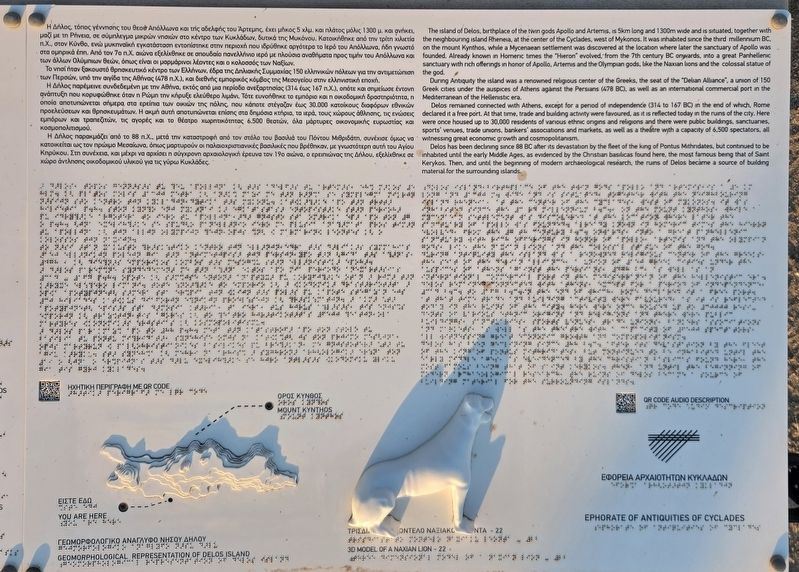
Η Δήλος, τόπος γέννησης του θεού Απόλλωνα και της αδελφής του Άρτεμης, έχει μήκος 5 χλμ. και πλάτος μόλις 1300 μ. και ανήκει, μαζί με τη Ρήνεια, σε σύμπλεγμα μικρών νησιών στο κέντρο των Κυκλάδων, δυτικά της Μυκόνου. Κατοικήθηκε από την τρίτη χιλιετία π.Χ., στον Κύνθο, ενώ μυκηναϊκή εγκατάσταση εντοπίστηκε στην περιοχή που ιδρύθηκε αργότερα το Ιερό του Απόλλωνα, ήδη γνωστό στα ομηρικά έπη. Από τον 7ο π.Χ. αιώνα εξελίχθηκε σε σπουδαίο πανελλήνιο ιερό με πλούσια αναθήματα προς τιμήν του Απόλλωνα και των άλλων Ολύμπιων θεών, όπως είναι οι μαρμάρινοι λέοντες και ο κολοσσός των Ναξίων.
Το νησί ήταν ξακουστό θρησκευτικό κέντρο των Ελλήνων, έδρα της Δηλιακής Συμμαχίας 150 ελληνικών πόλεων για την αντιμετώπιση των Περσών, υπό την αιγίδα της Αθήνας (478 π.Χ.), και διεθνής εμπορικός κόμβος της Μεσογείου στην ελληνιστική εποχή.
Η Δήλος παρέμεινε συνδεδεμένη με την Αθήνα, εκτός από μια περίοδο ανεξαρτησίας (314 έως 167 π.Χ.), οπότε και σημείωσε έντονη ανάπτυξη που κορυφώθηκε όταν η Ρώμη την κήρυξε ελεύθερο λιμάνι. Τότε ευνοήθηκε το εμπόριο και η οικοδομική δραστηριότητα, η οποία αποτυπώνεται σήμερα στα ερείπια των οικιών της πόλης, που κάποτε στέγαζαν έως 30.000 κατοίκους διαφόρων εθνικών προελεύσεων και θρησκευμάτων.
this page online
Η Δήλος παρακμάζει από το 88 π.Χ., μετά την καταστροφή από τον στόλο του βασιλιά του Πόντου Μιθριδάτη, συνέχισε όμως να κατοικείται ως τον πρώιμο Μεσαίωνα, όπως μαρτυρούν οι παλαιοχριστιανικές βασιλικές που βρέθηκαν, με γνωστότερη αυτή του Αγίου Κηρύκου. Στη συνέχεια, και μέχρι να αρχίσει η σύγχρονη αρχαιολογική έρευνα τον 19ο αιώνα, ο ερειπιώνας της Δήλου, εξελίχθηκε σε χώρο άντλησης οικοδομικού υλικού για τις γύρω Κυκλάδες.
The island of Delos, birthplace of the twin gods Apollo and Artemis, is 5km long and 1300m wide and is situated, together with the neighbouring island Rheneia, at the center of the Cyclades, west of Mykonos. It was inhabited since the third millennium BC, on the mount Kynthos, while a Mycenaean settlement was discovered at the location where later the sanctuary of Apollo was founded. Already known in Homeric times the “Hieron” evolved, from the 7th century BC onwards, into a great Panhellenic sanctuary with rich offerings in honor of Apollo, Artemis and the Olympian gods, like the Naxian lions and the colossal statue of the god.
During Antiquity the island was a renowned religious center of the Greeks, the seat of the “Delian Alliance”, a union of 150 Greek cities under the auspices of Athens against the Persians (478 BC), as well as an international commercial port in the Mediterranean of the Hellenistic era.
Delos remained connected with Athens, except for a period of independence (314 to 167 BC) in the end of which, Rome declared it a free port. At that time, trade and building activity were favoured, as it is reflected today in the ruins of the city. Here were once housed up to 30,000 residents of various ethnic origins and religions and there were public buildings, sanctuaries, sports’ venues, trade unions, bankers’ associations and markets, as well as a theatre with a capacity of 6,500 spectators, all witnessing great economic growth and cosmopolitanism.
Delos has been declining since 88 BC after its devastation by the fleet of the king of Pontus Mithridates, but continued to be inhabited until the early Middle Ages, as evidenced by the Christian basilicas found here, the most famous being that of Saint Kerykos. Then, and until the beginning of modern archaeological research, the ruins of Delos became a source of building material for the surrounding islands.
Erected by Ephorate of Antiquities of Cyclades.
Topics. This historical marker is listed in this topic list: Anthropology & Archaeology. A significant historical year for this entry is 478 BCE.
Location. 37° 23.928′ N, 25° 15.904′ E. Marker is in Delos, The Aegean, in Mykonos. It is on Odos Hvris Onomasia. Touch for map. Marker is in this post office area: Delos, The Aegean 846 00, Greece. Touch for directions.

Regionally, it is in Europe, the European Union, the Schengen Area, a coastal Mediterranean country, and the Western World. Historically, it finds itself in what was once the Byzantine Empire, the Ottoman Empire, and specifically the Roman Empire.
Other nearby markers. At least 8 other markers are within walking distance of this marker: The Theatre Quarter (about 150 meters away, measured in a direct line); Portico of Philip V (about 180 meters away); The House with the Dionysus (about
Photographed by James Hulse, September 23, 2026
2. Delos Marker - Right Panel
More about this marker. The marker is at the Archaeological Site of Delos, which you can reach by boat from Mykonos. Admission to the site and the round-trip boat fare are charged separately.
Photographed by James Hulse, September 23, 2026
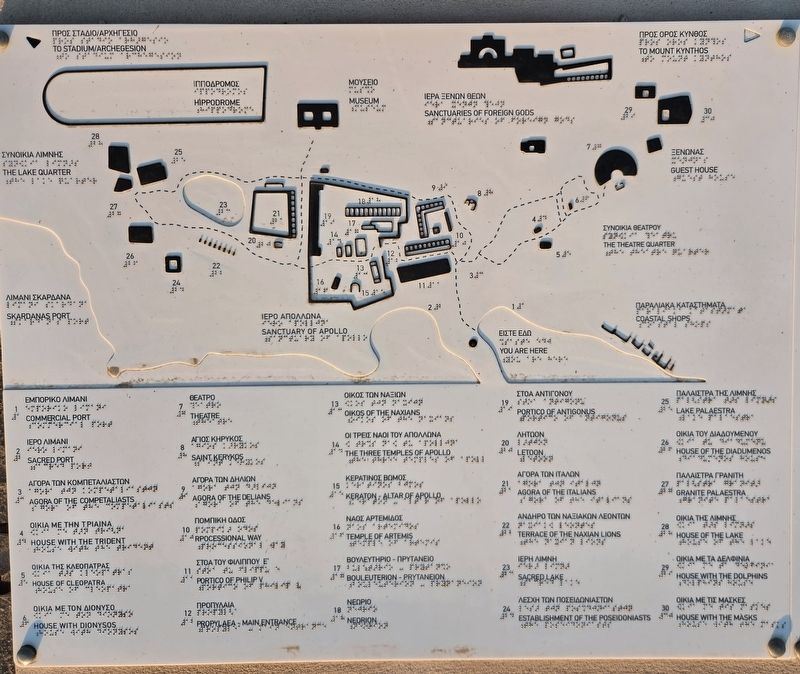
3. Delos Marker - Left Panel Map
Photographed by James Hulse, September 23, 2026
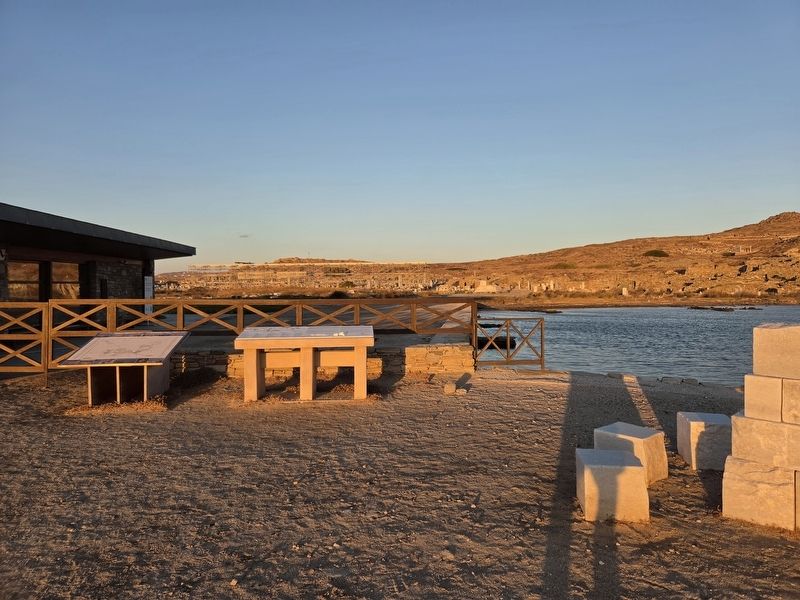
4. Delos Marker
The marker is located at the entrance gate to the site next to the boat docks.
Photographed by James Hulse, September 23, 2026
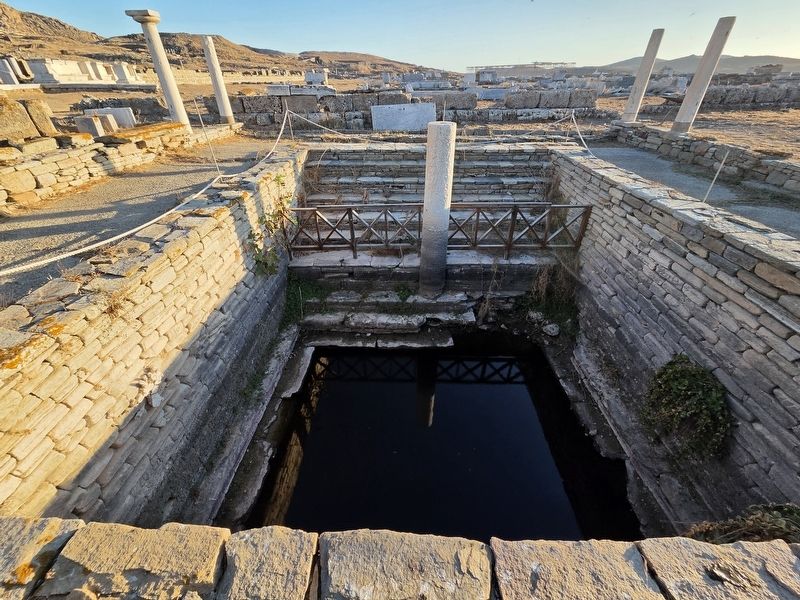
5. Delos Site — Water System
Photographed by James Hulse, September 23, 2026
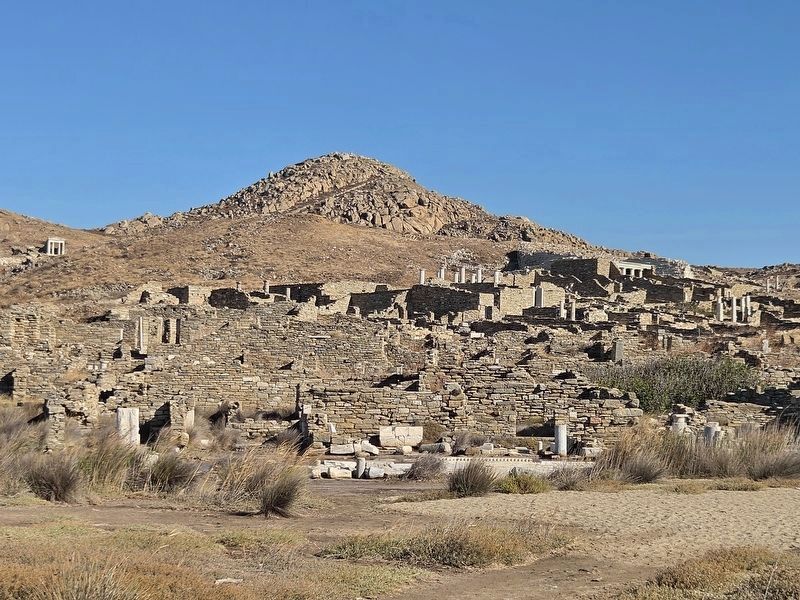
6. Delos Site - Main View from the entrance
Credits. This page was last revised on October 5, 2026. It was originally submitted on October 4, 2026, by James Hulse of Medina, Texas. This page has been viewed 6 times since then. Photos: 1, 2, 3, 4, 5, 6. submitted on October 5, 2026, by James Hulse of Medina, Texas.
