Golden in Columbia-Shuswap, British Columbia — Canada’s West Coast (North America)
Horse Drawn Hay Mower
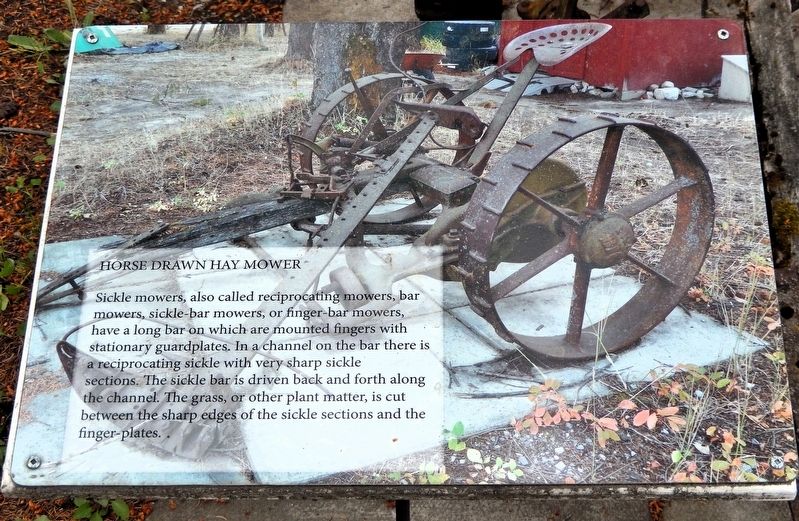
Photographed by Cosmos Mariner, July 3, 2022
1. Horse Drawn Hay Mower Marker
Sickle mowers, also called reciprocating mowers, bar mowers, sickle-bar mowers, or finger-bar mowers, have a long bar on which are mounted fingers with stationary guardplates. In a channel on the bar there is a reciprocating sickle with very sharp sickle sections. The sickle bar is driven back and forth along the channel. The grass, or other plant matter, is cut between the sharp edges of the sickle sections and the finger-plates.
Topics. This historical marker is listed in this topic list: Agriculture.
Location. 51° 17.503′ N, 116° 57.653′ W. Marker is in Golden, British Columbia, in Columbia-Shuswap. It can be reached from the intersection of 11 Avenue South and 14 Street South, on the right when traveling north. The marker and hay mower are on the Golden & District Museum grounds. Touch for map. Marker is at or near this postal address: 1302 11 Avenue South, Golden BC V0A 1H0, Canada. Touch for directions.

Regionally, this marker is in the BC Interior and in Thompson-Okanagan. Globally, it is in North America, in the Rocky Mountains, on the Ring of Fire,
this page online
Other nearby markers. At least 8 other markers are within walking distance of this marker: Horse Drawn Hay Tedder (a few steps from this marker); Manure Spreader (a few steps from this marker); Dig For Victory (within shouting distance of this marker); Riverboat Tales (within shouting distance of this marker); Skiing: resort, backcountry & heli-skiing (approx. half a kilometer away); History of Mountain Tourism in Golden (approx. 0.7 kilometers away); War Memorial (approx. 0.7 kilometers away); Rivers & Railways (approx. 0.7 kilometers away). Touch for a list and map of all markers in Golden.
Also see . . . A Short History of the Horse-Drawn Mower (SmallFarmersJournal.com).
(by Lynn R. Miller) Excerpt: The horse drawn sickle-bar mower has only been in popular use since shortly after the U.S. Civil War (1860’s). Earliest crude production models started to appear around 1845. Many refinements were made and the basic style of the “push-pull” frame came(Submitted on October 11, 2026, by Cosmos Mariner of Cape Canaveral, Florida.)into being at the end of the nineteenth century. The late model, enclosed gear units began to appear in the 1920’s. “International” still made the HD mowers until just after the end of WWII. The enclosed gear, late model John Deere, Case, Oliver, David Bradley, and McCormick Deering International mowers had a zenith of popular manufacture and use that lasted just short of 25 years. Millions of farmers with millions of mowers, built to have a serviceable life of 100 plus years, all pushed into the fence rows.Photographed by Cosmos Mariner, July 3, 20222. Horse Drawn Hay Mower Marker
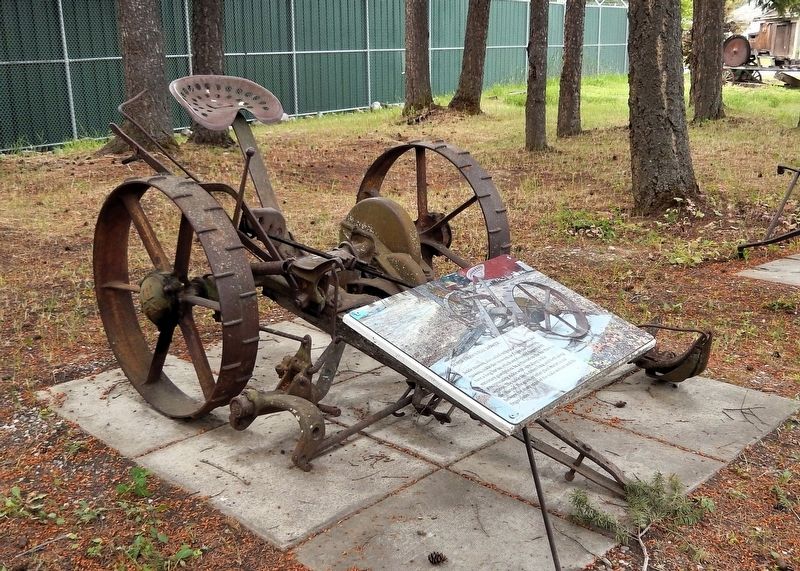
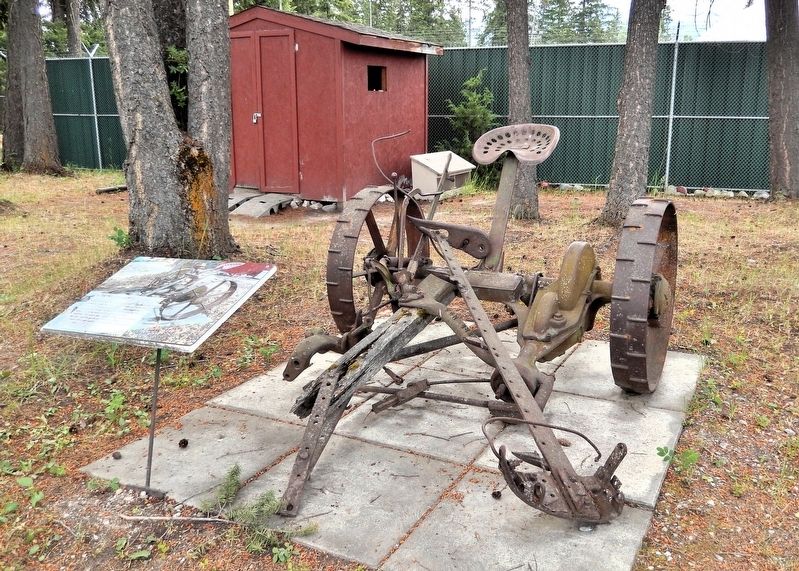
Photographed by Cosmos Mariner, July 3, 2022
3. Horse Drawn Hay Mower
Credits. This page was last revised on October 11, 2026. It was originally submitted on October 10, 2026, by Cosmos Mariner of Cape Canaveral, Florida. This page has been viewed 6 times since then. Photos: 1, 2, 3. submitted on October 11, 2026, by Cosmos Mariner of Cape Canaveral, Florida.
