Dinkelsbühl in Ansbach, Bavaria, Germany — Central Europe
Restitutionsedikt und Lübecker Friede
1625 - 1630 Dänisch - Niedersächsischer Krieg
⎯⎯⎯
The Edict of Restitution and the Peace of Lübeck
1625 - 1630 Danish - Lower Saxon War
| — | 1629 | — |

Photographed by James Hulse, September 14, 2026
1. Restitutionsedikt und Lübecker Friede / The Edict of Restitution and the Peace of Lübeck Marker

Kaiser Ferdinand II. erlässt am 6. März eine Verordnung, nach welcher der geistliche Besitzstand im Reich wieder auf den Stand von 1552 gebracht werden soll. Durch Enteignungen und Rückübertragungen würde der ehemals katholische Besitz wiederhergestellt werden. Die Protestanten wehren sich mit allen Mitteln. Auch die katholischen Kurfürsten fürchten ein zu starkes Anwachsen der kaiserlichen Macht. Umsetzung erfährt es vor allem in Württemberg, Baden-Durlach und Franken. Besonders betroffen sind die Reichsstädte.
Die Ambitionen des dänischen Königs sind endgültig gescheitert. Er schließt mit dem „Heiligen Römischen Reich Deutscher Nation“ in Lübeck den Vertrag, dass der dänische König sich nur im Reich einmischt, falls er als Herzog von Holstein und als Reichsfürst betroffen ist. Streitigkeiten sollen durch Verhandlungen beigelegt werden. Auf Schadenersatz wird verzichtet. Viele kleine Gebiete in Norddeutschland fallen an den Kaiser zurück. Dänemark scheidet aus dem Krieg aus.
© Johannes Munique
The Edict of Restitution and the Peace of Lübeck
On
this page online
The Danish king’s ambitions have finally failed. In Lübeck, he concludes a treaty with the Holy Roman Empire of the German Nation stipulating that he will intervene in imperial affairs only when directly affected in his capacity as Duke of Holstein and an imperial prince. Disputes are to be settled through negotiation. Claims for compensation are waived. Many small territories in northern Germany revert to the emperor. Denmark withdraws from the war.
Erected by SHW Komplett, VR-Bank Feuchtwangen-Dinkelsbühl eG and Getreue des Königs Gustav Adolf 1632 e.V.
Topics. This historical marker is listed in this topic list: Wars, Non-US. A significant historical date for this entry is March 6, 1552.
Location. 49° 4.287′ N,

Photographed by James Hulse
2. Restitutionsedikt und Lübecker Friede / The Edict of Restitution and the Peace of Lübeck Marker

Regionally, this marker is in German Franconia and on the Romantic Road. Globally, it is in Europe, the European Union, Atlantic Europe, Central Europe, the Schengen Area, Western Europe, and the Western World. Historically, it finds itself in what was once the Holy Roman Empire and also the former West Germany.
Other nearby markers. At least 8 other markers are within walking distance of this marker: 10 Jahre Krieg – Das Jahr ohne Sommer / 10 years of war – The year without a summer (within shouting distance of this marker); Lore-Statue (within shouting distance of this marker); Der Kriegseintritt Schwedens / Sweden Enters the War (within shouting distance of this marker); Zerstörung Magdeburgs und Schlacht bei Breitenfeld / Magdeburg and the Battle of Breitenfeld (about 120 meters away, measured in a direct line); Dänemark und die Protestanten verlieren an Boden / Denmark and the Protestants lose ground
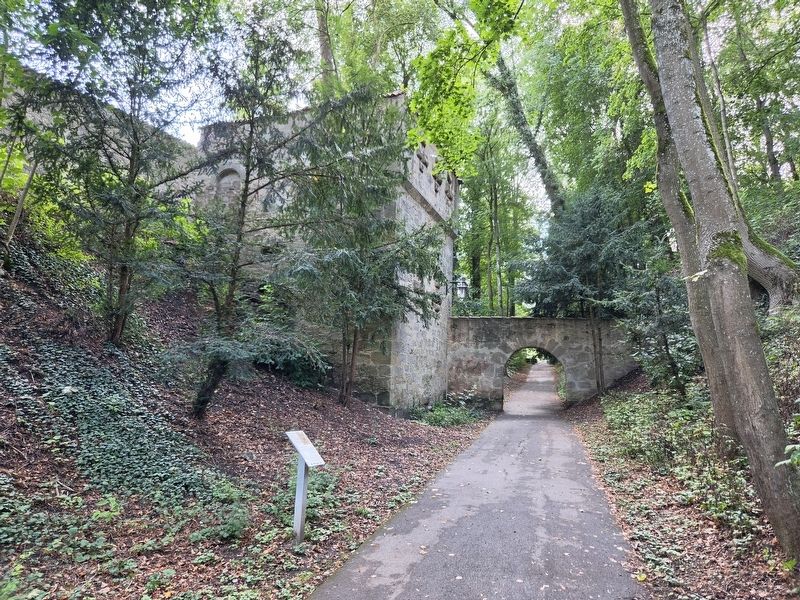
Photographed by James Hulse, September 14, 2026
3. Restitutionsedikt und Lübecker Friede / The Edict of Restitution and the Peace of Lübeck Marker
Credits. This page was last revised on October 11, 2026. It was originally submitted on October 11, 2026, by James Hulse of Medina, Texas. This page has been viewed 3 times since then. Photos: 1, 2, 3. submitted on October 11, 2026, by James Hulse of Medina, Texas.
