Rapid City in Pennington County, South Dakota — The American Midwest (Upper Plains)
Native Prairie Restoration
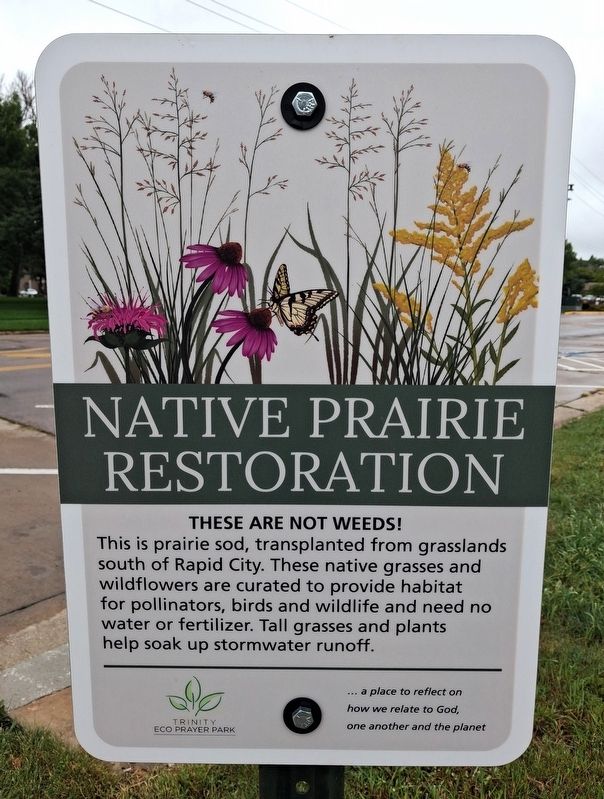
These Are Not Weeds!
Photographed by William Fischer, Jr., September 20, 2026
1. Native Prairie Restoration Marker
This is prairie sod, transplanted from grasslands south of Rapid City. These native grasses and wildflowers are curated to provide habitat for pollinators, birds and wildlife and need no water or fertilizer. Tall grasses and plants help soak up stormwater runoff.
TRINITY ECO PRAYER PARK
... a place to reflect on how we relate to God, one another and the planet
Erected by Trinity Lutheran Church, West Dakota Water Development District, and the City of Rapid City.
Topics. This historical marker is listed in this topic list: Environment.
Location. 44° 4.756′ N, 103° 13.429′ W. Marker is in Rapid City, South Dakota, in Pennington County. It is at the intersection of St. Joseph Street (Business Interstate 90) and 4th Street, on the right when traveling east on St. Joseph Street. Touch for map. Marker is at or near this postal address: 405 St Joseph Street, Rapid City SD 57701, United States of America. Touch for directions.

Regionally, this marker is in West River and in the Badlands. It is also in the American Black Hills, in the Lewis & Clark Corridor,
this page online
Other nearby markers. At least 8 other markers are within walking distance of this marker: Barack Obama (here, next to this marker); Richard M. Nixon (within shouting distance of this marker); Grover Cleveland (within shouting distance of this marker); Rutherford B. Hayes (within shouting distance of this marker); George W. Bush (about 400 feet away, measured in a direct line); James Garfield (about 400 feet away); William McKinley (about 400 feet away); Benjamin Harrison (about 400 feet away). Touch for a list and map of all markers in Rapid City.
Regarding Native Prairie Restoration. Although limited in historical information, the markers provide context for the relationship between the environment and people, and how people can correct past environmental abuse.
Photographed by William Fischer, Jr., September 20, 2026
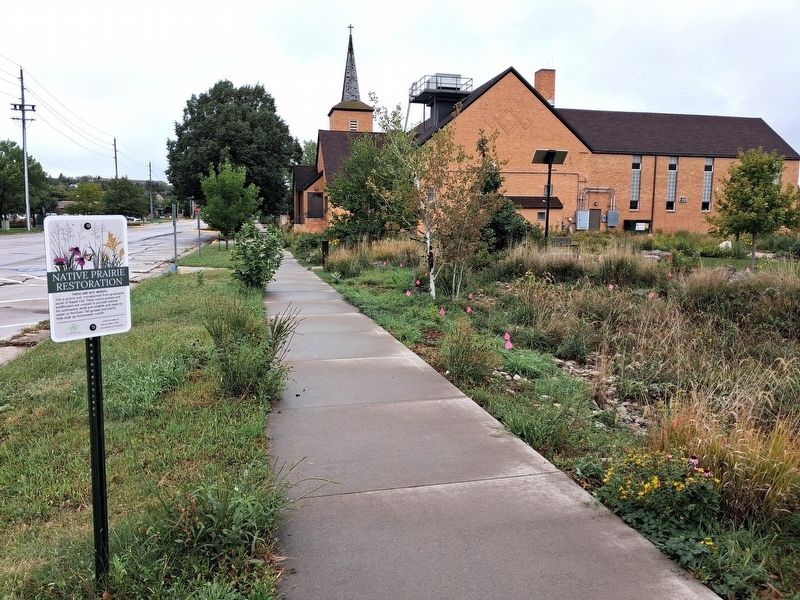
2. Native Prairie Restoration Marker
Photographed by William Fischer, Jr., September 20, 2026
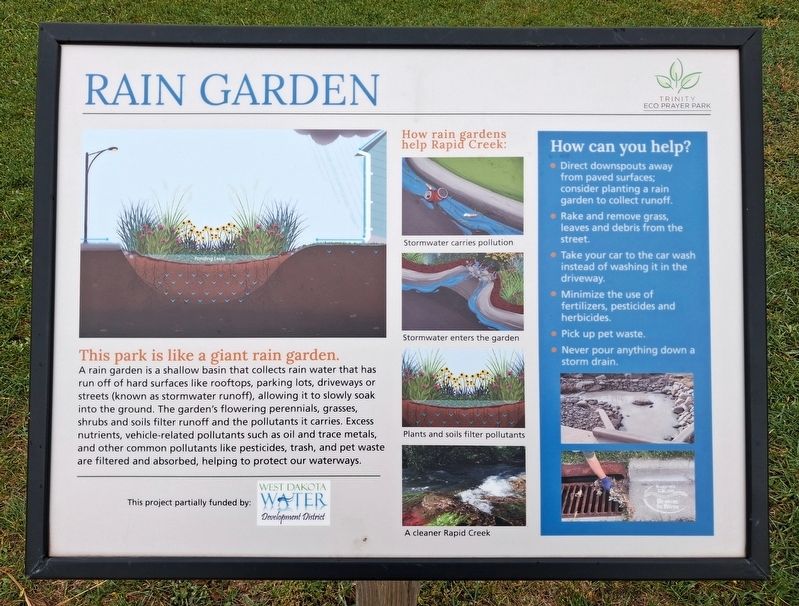
3. Rain Garden Marker
Photographed by William Fischer, Jr., September 20, 2026
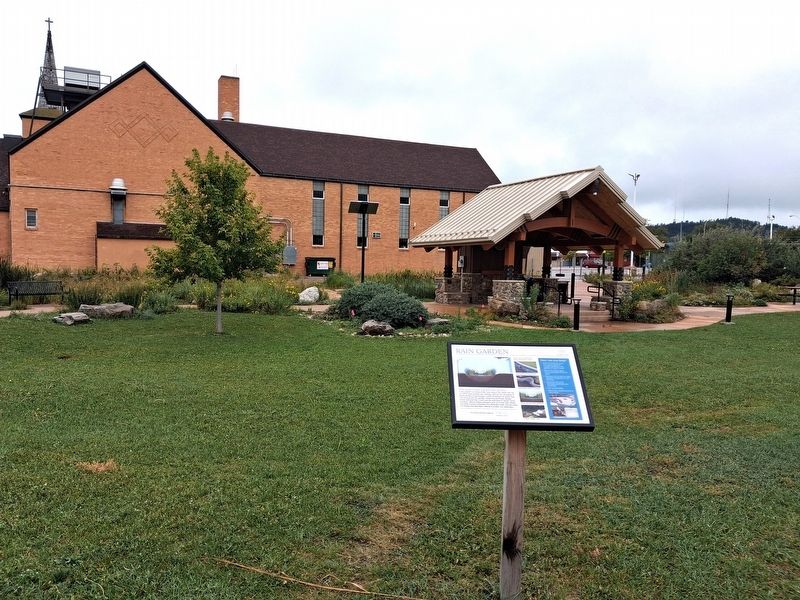
4. Rain Garden and Marker
Credits. This page was last revised on October 15, 2026. It was originally submitted on October 15, 2026, by William Fischer, Jr. of Reynoldsburg, Ohio. This page has been viewed 4 times since then. Photos: 1, 2, 3, 4. submitted on October 15, 2026, by William Fischer, Jr. of Reynoldsburg, Ohio.
