Glen Allen in Henrico County, Virginia — The American South (Mid-Atlantic)
Virginia Estelle Randolph (1870-1958)
Photographed by Devry Becker Jones (CC0), October 18, 2026
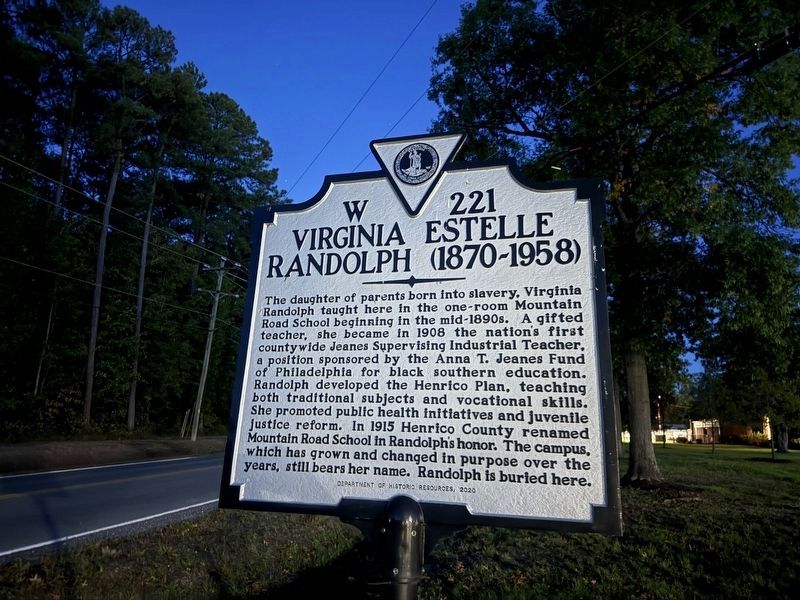
1. Virginia Estelle Randolph (1870-1958) Marker
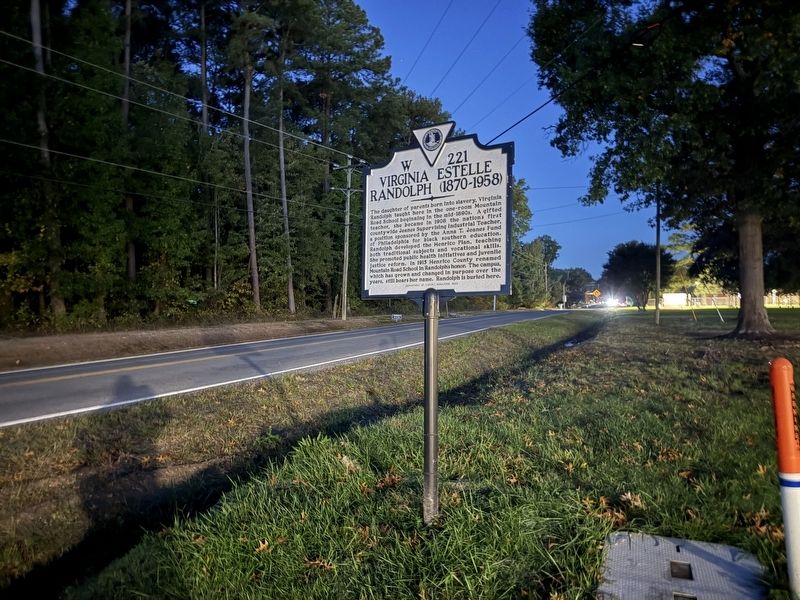
The daughter of parents born into slavery, Virginia Randolph taught here in the one-room Mountain Road School beginning in the mid-1890s. A gifted teacher, she became in 1908 the nation's first countywide Jeanes Supervising Industrial Teacher, a position sponsored by the Anna T. Jeanes Fund of Philadelphia for black southern education. Randolph developed the Henrico Plan, teaching both traditional subjects and vocational skills. She promoted public health initiatives and juvenile justice reform. In 1915 Henrico County renamed Mountain Road School in Randolph's honor. The campus, which has grown and changed in purpose over the years, still bears her name. Randolph is buried here.
Erected 2020 by Department of Historic Resources. (Marker Number W-221.)
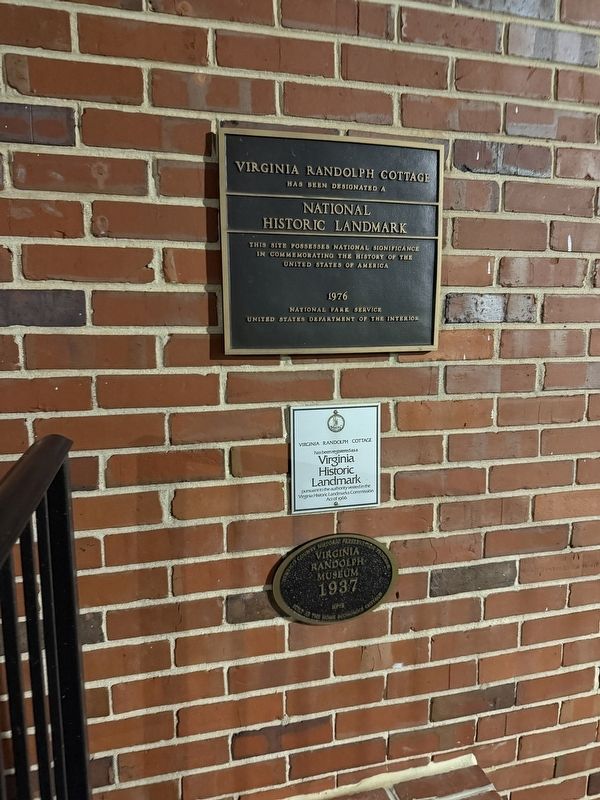
Topics and series. This historical marker is listed in these topic lists: African Americans • Education • Landmarks • Women. In addition, it is included in the National Historic Landmarks, and the Virginia Department of Historic Resources (DHR) series lists. A significant historical year for this entry is 1908.
Location. 37° 39.675′ N, 77° 28.944′ W. Marker
this page online

Regionally, this marker is in the Piedmont, in Central Virginia, and in the Richmond Metropolitan Area. It is also in the American South, specifically in the Upper South, and on the Eastern Seaboard. Globally, it is in the North Atlantic Region, North America, the Western Hemisphere, the Western World, and the Anglosphere. Historically, it finds itself in what was once the territory of the Mississippian Culture, one of the original Thirteen Colonies, one of the Confederate States of America, and the Antebellum South.
Other nearby markers. At least 8 other markers are within 2 miles of this marker, measured as the crow flies: American Legion Post 244 (approx. 0.8 miles away); Wickham's Line (approx. 0.9 miles away); Walkerton (approx. one mile away); Glen Allen School (approx. 1.1 miles away); Forest Lodge Belvedere (approx. 1.1 miles away); Forest Lodge
Photographed by Devry Becker Jones (CC0), October 18, 2026
2. Virginia Estelle Randolph (1870-1958) Marker
Another marker is no longer nearby. Virginia Estelle Randolph (was within shouting distance of this marker but has been replaced with another marker now near it).
Also see . . . National Register of Historic Places Nomination form for the Virginia E. Randolph Museum.
This form was prepared by James Sheire, with the Office of Archeology and Historic Preservation with the National Park Service, U.S. Department of the Interior on July 31, 1974. The statement of significance is on page 3:
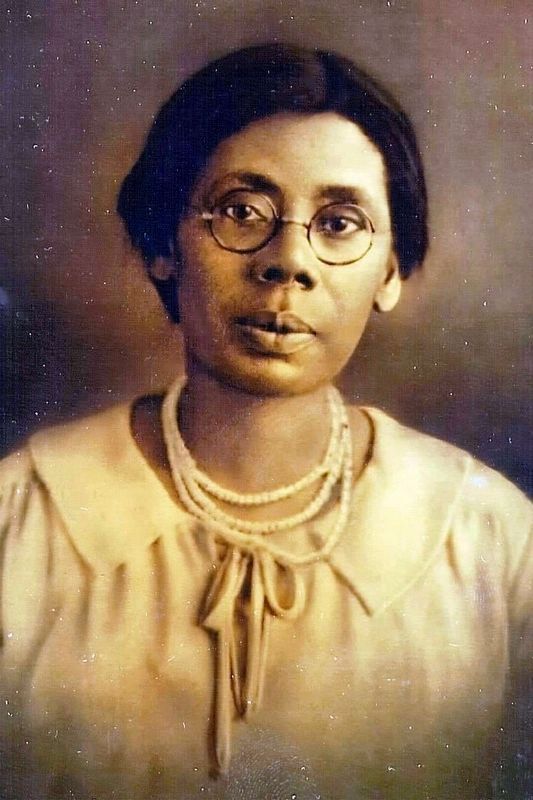
Virginia E. Randolph was born June 8, 1874, in Richmond, Virginia. Unfortunately, little is known of her life outside her association with the public school system in Henrico County, Virginia. She has not been the subject of a biography. Miss Randolph was the third of four children. Both of her parents were former slaves. Her father died when she was a child, leaving her mother to raise the family. As a slave Mrs. Randolph had worked in the home of a Richmond College(Submitted on October 18, 2026, by Devry Becker Jones of Washington, District of Columbia.)professor. Here she learned the value of education which she passed on to her children. Virginia later remembered that her mother, who was away from the home three days out of seven, taught her children the value of improving their lives by education and by using all the meger resources at their disposal. The lesson later became a part of Virginia's approach to education.via Encyclopedia Virginia, unknown3. Virginia Estelle Randolph
Virginia Randolph's education was typical for the period. She entered the Baker Elementary School at the age of six. When she was eight she was forced to go to work part time, but she continued attending school in the mornings and evenings. In 1890, at the age of 16, she graduated from the Normal Department of the Armstrong High School in Richmond. Miss Randolph immediately started on the teaching career which would dominate her life.
After teaching for two years in Goochland County, Virginia, she returned to Henrico County to the Mountain Road School where she would remain for the next fifteen years.
In 1908 the superintendent of Negro instruction in Henrico County called on Miss Randolph to introduce a new type of teacher supervision in Henrico County. Although reluctant to give up her work at har school, which she had developed into one of the finest in the county, Miss Randolph decided to accept the position. In so doing she became the first Jeanes Supervising Industrial Worker and the model for a type of teacher supervision which would spread throughout the South and eventually to countries in Africa, Asia, and Latin America.
In addition to her work as a Jeanes Supervisor, Virginia Randolph continued her interest in the Virginia Randolph Training School. She divided her time and energies between these two positions until her retirement in 1949.
Photographed by Bernard Fisher, December 10, 2009
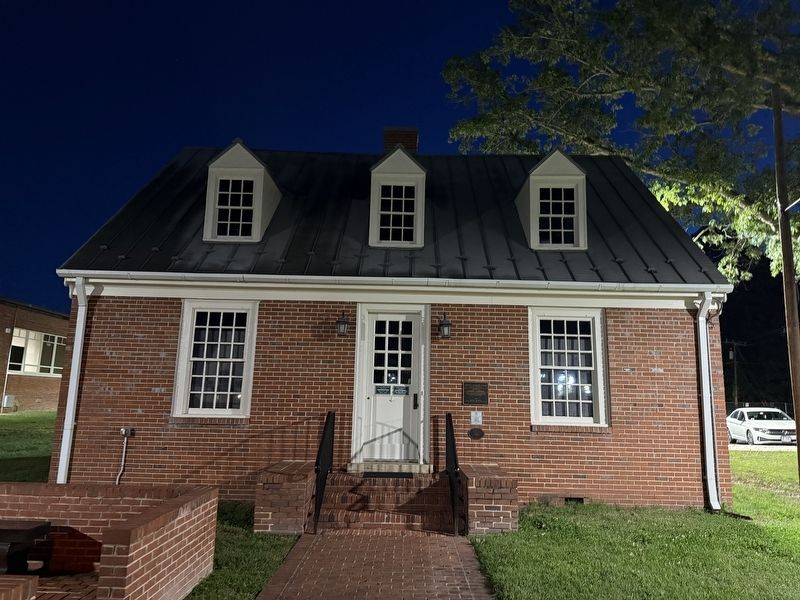
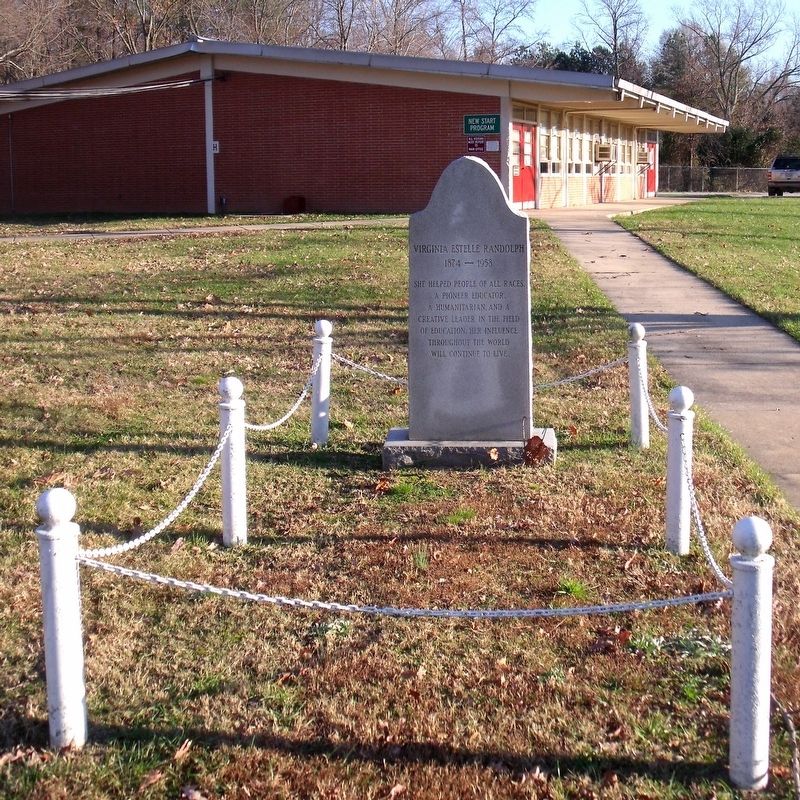
6. Virginia Estelle Randolph 1874-1958
She helped people of all races. A pioneer educator, a humanitarian, and a creative leader in the field of education. Her influence throughout the world will continue to live.
Credits. This page was last revised on October 18, 2026. It was originally submitted on October 18, 2026, by Devry Becker Jones of Washington, District of Columbia. This page has been viewed 8 times since then. Photos: 1, 2. submitted on October 18, 2026, by Devry Becker Jones of Washington, District of Columbia. 3. submitted on January 19, 2026, by Larry Gertner of New York, New York. 4, 5. submitted on October 18, 2026, by Devry Becker Jones of Washington, District of Columbia. 6. submitted on December 11, 2009, by Bernard Fisher of Richmond, Virginia.
Editor’s want-list for this marker. Clear, daylight photo of the marker and its context. • Can you help?
