Cheyenne in Laramie County, Wyoming — The American West (Mountains)
USDA Explorers, Irrigation Ditches And Civilian Conservation Corps
Photographed by William Fischer, Jr., September 28, 2026
1. USDA Explorers, Irrigation Ditches And Civilian Conservation Corps Marker
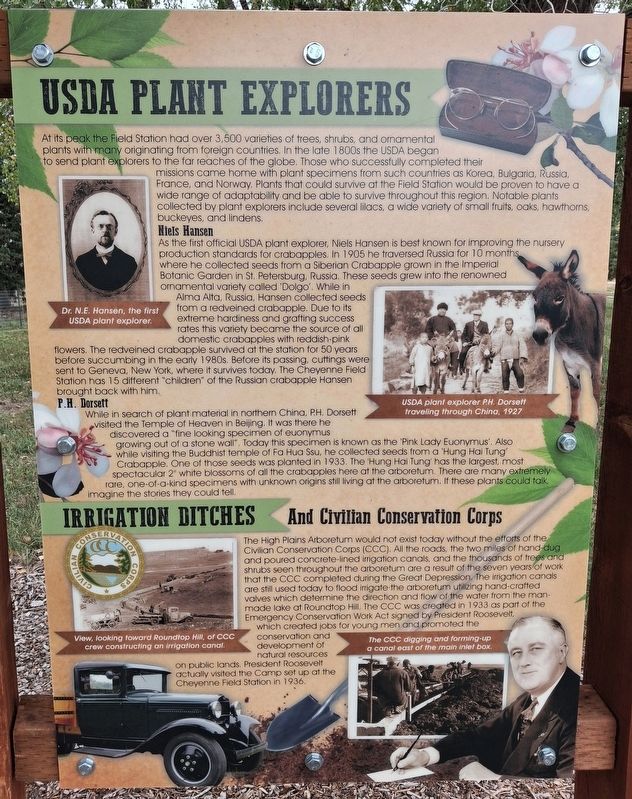
USDA PLANT EXPLORERS
At its peak the Field Station had over 3,500 varieties of trees, shrubs, and ornamental plants with many originating from foreign countries. In the late 1800s the USDA began to send plant explorers to the far reaches of the globe. Those who successfully completed their missions came home with plant specimens from such countries as Korea, Bulgaria, Russia, France, and Norway. Plants that could survive at the Field Station would be proven to have a wide range of adaptability and be able to survive throughout this region. Notable plants collected by plant explorers include several lilacs, a wide variety of small fruits, oaks, hawthorns, buckeyes, and lindens.
Niels Hansen
As the first official USDA plant explorer, Niels Hansen is best known for improving the nursery production standards for crabapples. In 1905 he traversed Russia for 10 months where he collected seeds from a Siberian Crabapple grown in the Imperial Botanic Garden in St. Petersburg, Russia. These seeds grew into the renowned ornamental variety called 'Dolgo'. While in Alma Alta, Russia, Hansen collected seeds from a redveined
this page online
[Photo caption] Dr. N.E. Hansen, the first USDA plant explorer.
P.H. Dorsett
While in search of plant material in northem China, P.H. Dorsett visited the Temple of Heaven in Beijing. It was there he discovered a "fine looking specimen of euonymus growing out of a stone wall. Today this specimen is known as the Pink Lady Euonymus. Also while visiting the Buddhist temple of Fa Hua Ssu, he collected seeds from a Hung Hai Tung Crabapple. One of those seeds was planted in 1933. The Hung Hai Tung has the largest, most spectacular 2 white blossoms of all the crabapples here at the arboretum. There are many extremely rare, one-of-a-kind specimens with unknown origins still living at
Photographed by William Fischer, Jr., September 28, 2026
2. USDA Explorers, Irrigation Ditches And Civilian Conservation Corps Marker
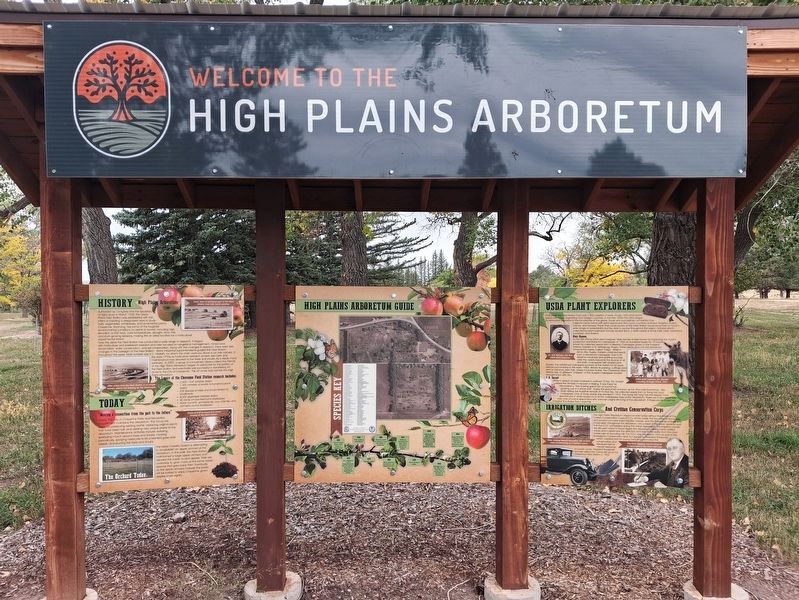
Right marker in kiosk
[Photo caption] USDA plant explorer P.H. Dorsett traveling through China, 1927
IRRIGATION DITCHES And Civilian Conservation Corps
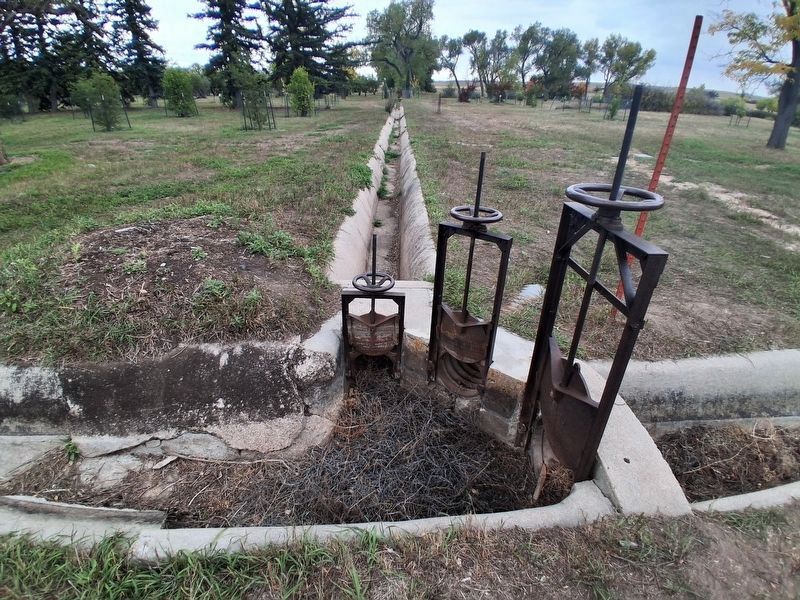
The High Plains Arboretum would not exist today without the efforts of the Civilian Conservation Corps (CCC). All the roads, the two miles of hand dug and poured concrete-lined irrigation canals, and the thousands of trees and shrubs seen throughout the arboretum are a result of the seven years of work that the CCC completed during the Great Depression. The irrigation canals are still used today to flood irrigate the arboretum utilizing hand-crafted valves which determine the direction and flow of the water from the man-made lake at Roundtop Hill. The CCC was created in 1933 as part of the Emergency Conservation Work Act signed by President Roosevelt, which created jobs for young men and promoted the conservation and development of natural resources on public lands. President Roosevelt actually visited the Camp set up at the Cheyenne Field Station in 1936.
[Photo captions read]
• View, looking toward Roundtop Hill,
Photographed by William Fischer, Jr., September 28, 2026
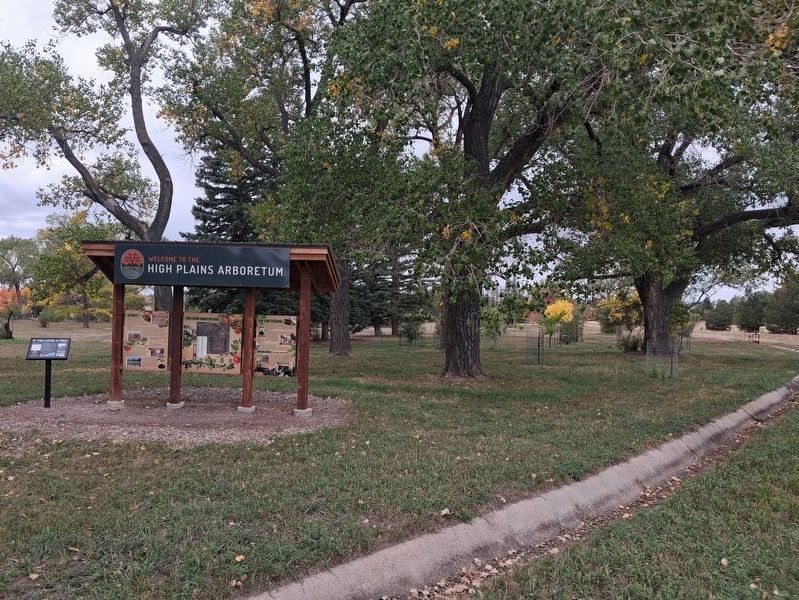
3. Welcome to the High Plains Arboretum Marker Kiosk
CCC Irrigation Ditch in foreground
• The CCC digging and forming-up a canal east of the main inlet box.
• [Uncaptioned photo of Franklin Delano Roosevelt]
Erected by City of Cheyenne.
Topics and series. This historical marker is listed in these topic lists: Charity & Public Work • Environment • Horticulture & Forestry • Settlements & Settlers. In addition, it is included in the Civilian Conservation Corps (CCC) series list. A significant historical year for this entry is 1905.
Location. 41° 10.92′ N, 104° 53.813′ W. Marker is in Cheyenne, Wyoming, in Laramie County. It is at the intersection of Hildredth Road and Howard Lane, on the left when traveling north on Hildredth Road. Marker is at the High Plains Arboretum. Touch for map. Marker is at or near this postal address: 8601 Hildreth Road, Cheyenne WY 82009, United States of America. Touch for directions.

Regionally, this marker is in the Laramie Basin. It is also in the American Mountain West, on the Great Plains, and specifically on the High Plains. Globally, it is in North America, the Western Hemisphere, the Western World, and the Anglosphere.
Photographed by William Fischer, Jr., September 28, 2026
4. Civilian Conservation Corps Irrigation Ditch
With hand operated valves
Other nearby markers. At least 8 other markers are within walking distance of this marker: Welcome to the High Plains Arboretum (here, next to this marker); If You Were A Tree (here, next to this marker); Cheyenne Privet (within shouting distance of this marker); Kentucky Coffeetree (within shouting distance of this marker); Dwarf Russian Almond (about 300 feet away, measured in a direct line); Apple Orchard (about 400 feet away); Apache Plume (about 400 feet away); Cheyenne Early Lilac (about 500 feet away). Touch for a list and map of all markers in Cheyenne.
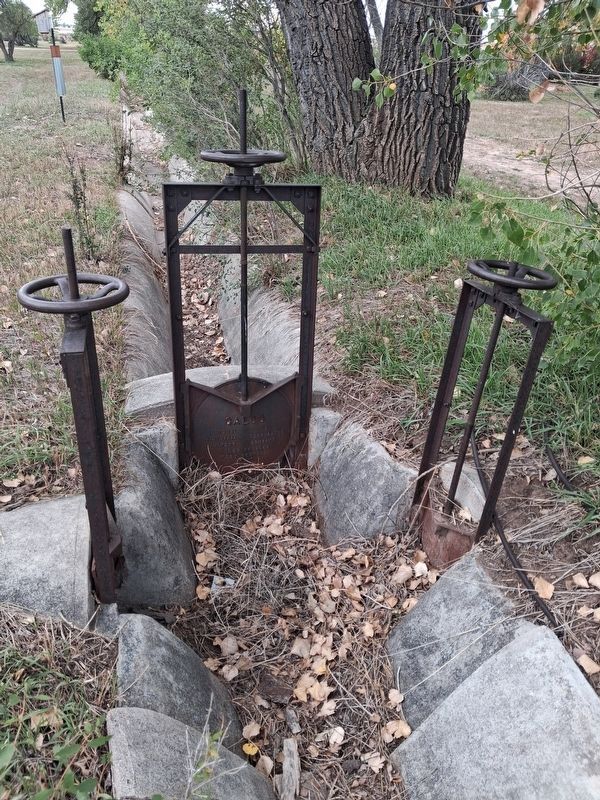
Photographed by William Fischer, Jr., September 28, 2026
5. Civilian Conservation Corps Irrigation Ditch and Valves
Credits. This page was last revised on November 2, 2026. It was originally submitted on November 2, 2026, by William Fischer, Jr. of Reynoldsburg, Ohio. This page has been viewed 8 times since then. Photos: 1, 2, 3, 4, 5. submitted on November 2, 2026, by William Fischer, Jr. of Reynoldsburg, Ohio.
