Hôtel de Ville in Marseille in Bouches-du-Rhône, Provence-Alpes-Côte d’Azur, France — Western Europe
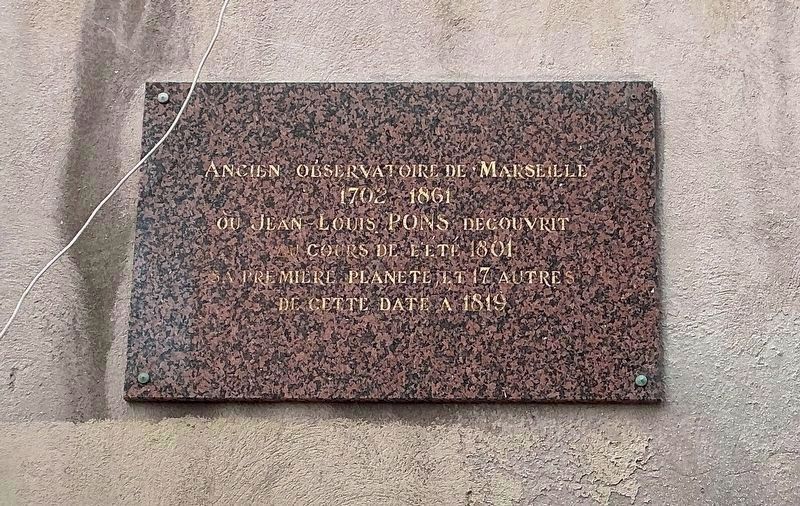
Ancien Observatoire de Marseille
Photographed by Roger W. Sinnott, September 18, 2026
1. Ancien Observatoire de Marseille Marker

Où Jean-Louis Pons découvrit
au cours de l'été 1801
sa première planète et 17 autres
de cette date à 1819.
1702 – 1861
summer of 1801, and 17 others from that date through 1819.
Topics and series. This historical marker is listed in these topic lists: Air & Space • Science & Medicine. In addition, it is included in the Astronomical Observatories series list. A significant historical year for this entry is 1801.
Location. 43° 17.862′ N, 5° 22.031′ E. Marker is in Marseille, Provence-Alpes-Côte d’Azur, in Bouches-du-Rhône. It is in Hôtel de Ville. It is at the intersection of Montée des Accoules and Rue de Refuge on Montée des Accoules. Touch for map. Marker is in this post office area: Marseille, Provence-Alpes-Côte d’Azur 13002, France. Touch for directions.

Regionally, it is in the North Atlantic Region, Europe, the European Union, Atlantic Europe, the Schengen Area, Western Europe, a coastal Mediterranean country, and the Western World. Historically, it finds itself
this page online
Other nearby markers. At least one other marker is within walking distance of this marker: Civilization Plaque (approx. 0.6 kilometers away in Provence-Alpes-Côte d'Azur).
More about this marker. Marker is on the left side of Montée des Accoules when traveling west. It is in the Panier district of the city.
Regarding Ancien Observatoire de Marseille. In the early 1860s, Marseille Observatory moved to its current Palais Longchamp site. The former building was replaced by the École Communale de Filles (Girls’ Municipal School) and later the École Élémentaire d'Application des Accoules (Accoules Elementary School).
Although the marker says planète (planet), each of Pons’s discoveries was actually a comète (comet). He is renowned for finding more comets visually than any other astronomer, before or since. After 1819 he moved to Italy and worked at observatories at Lucca and then Florence. The Smithsonian Astrophysical Observatory Catalogue of Cometary Orbits (2005) lists Pons as the discoverer of 26 comets, but he was an independent discoverer of many more.
Thanks
Photographed by Roger W. Sinnott, September 18, 2026
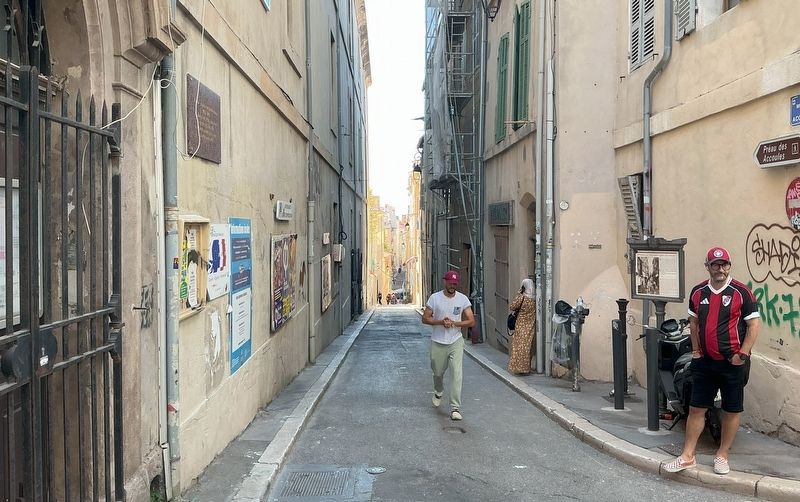
2. Wide View Looking West Down Montée des Accoules
The marker is on the wall at left.
Additional keywords. astronomy, comets
Photographed by Roger W. Sinnott, September 18, 2026
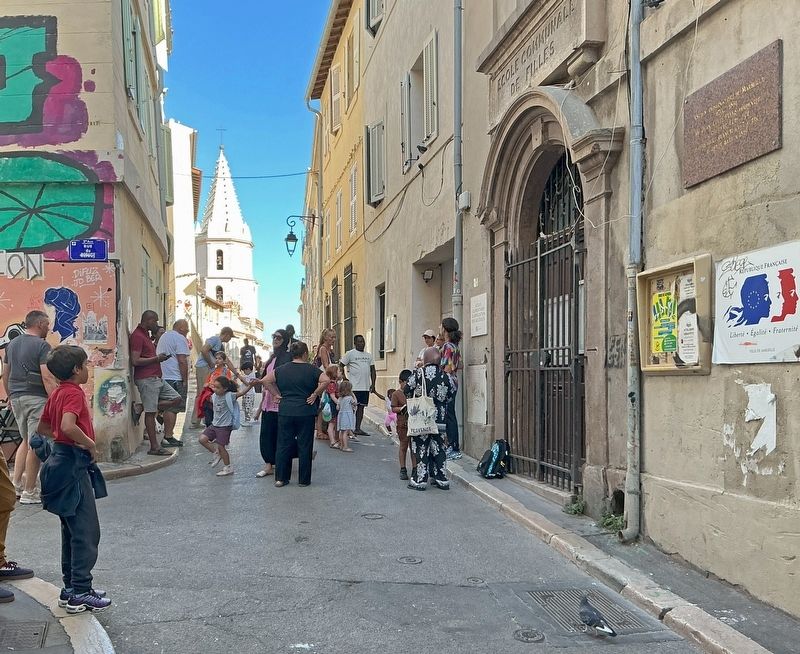
3. Parents Picking up Their Children
End of the day at the Accoules Elementary School, where Marseille Observatory once stood. This view looks east along Montée des Accoules, with Rue de Refuge entering from the left.
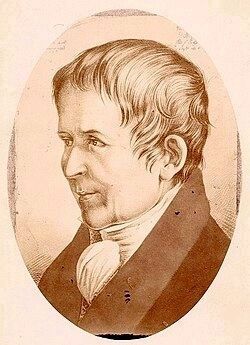
4. Jean-Louis Pons (1761 – 1831)
From Wikimedia Commons.
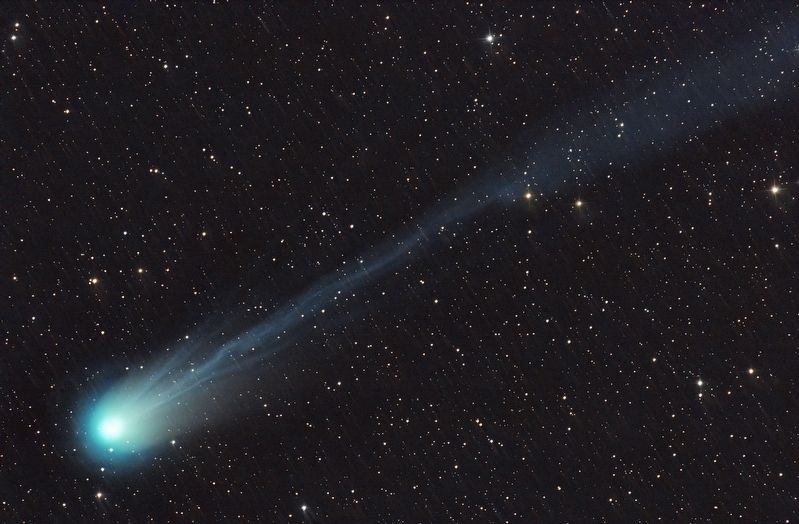
March 7, 2024
5. Periodic Comet Pons-Brooks
Initially spotted by Pons in 1812, this comet was recovered by American astronomer W. R. Brooks during its 1883 return. It appeared again in 2024 when Taavi Niittee (Tõrva Astronomy Club, Estonia) captured this stunning image. Wikimedia Commons.
Credits. This page was last revised on November 6, 2026. It was originally submitted on November 4, 2026, by Roger W. Sinnott of Norwell, Massachusetts. This page has been viewed 27 times since then. Photos: 1, 2, 3, 4, 5. submitted on November 4, 2026, by Roger W. Sinnott of Norwell, Massachusetts. • Andrew Ruppenstein was the editor who published this page.
