
Seward in Kenai Peninsula Borough, Alaska — Northwest (North America)
Seward, Gateway to the Iditarod
Photographed by Leslie Eudy, July 23, 2026
1. Seward, Gateway to the Iditarod Marker
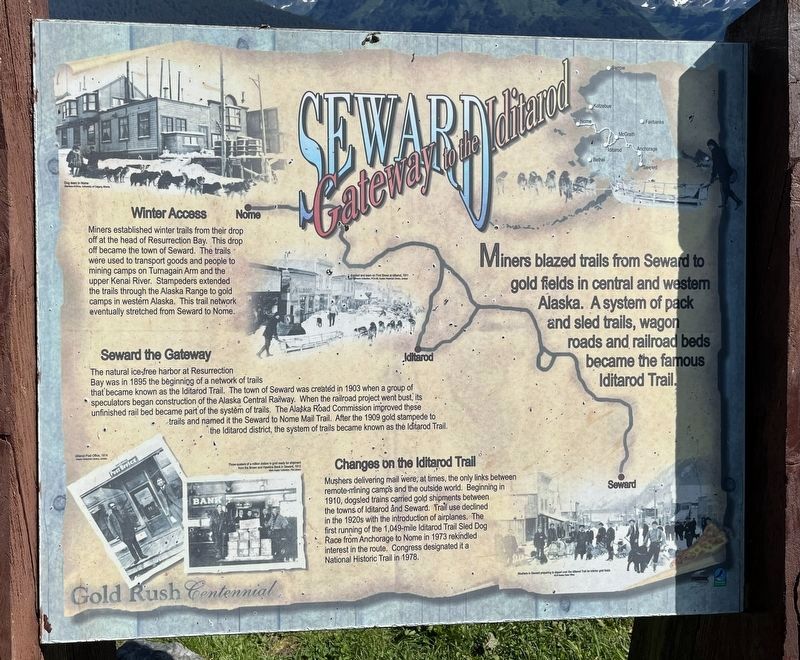
Seward, Gateway to the Iditarod
Miners blazed trails from Seward to gold fields in central and western Alaska. A system of pack and sled trails, wagon roads, and railroad beds became the famous Iditarod Trail.
Winter Access
Miners established winter trails from their drop off at the head of Resurrection Bay. This drop off became the town of Seward. The trails were used to transport goods and people to mining camps on Turnagain Arm and the upper Kenia River. Stampeders extended the trails through the Alaska Range to gold camps in western Alaska. This trail network eventually stretched from Seward to Nome.
Seward the Gateway
The natural ice-free harbor at Resurrection Bay was in 1895 the beginning of a network of trails that became known as the Iditarod Trail. The town of Seward was created in 1903 when a group of speculators began construction of the Alaska Central Railway. When the railroad project went bust, its unfinished rail bed became part of the system of trails. The Alaska Road Commission improved these trails and named it the Seward to Nome Mail Trail. After the 1909 gold stampede to Iditarod district,
this page online
Changes on the Iditarod Trail
Mushers delivering mail were, at times, the only links between remote mining camps and the outside world. Beginning in 1910, dogsled trains carried gold shipments between the towns of Iditarod and Seward. Trail use declined in the 1920s with the introduction of airplanes. The first running of the 1,049-mile Iditarod Sled Dog Race from Anchorage to Nome in 1973 rekindled interest in the route. Congress designated it a National Historic Trail in 1978
Topics. This historical marker is listed in these topic lists: Exploration • Roads & Vehicles • Settlements & Settlers.
Location. 60° 6.096′ N, 149° 26.122′ W. Marker is in Seward, Alaska, in Kenai Peninsula Borough. It is on Sea Otter Trail, on the right when traveling north. On Sea Otter Trail South of Branson Pavilion. Touch for map. Marker is in this post office area: Seward AK 99664, United States of America. Touch for directions.

Regionally, this marker is in the Alaska Railroad Corridor, in the Alutiiq (Sugpiaq) Region, in the Athabascan
Photographed by Leslie Eudy, July 23, 2026
2. Seward, Gateway to the Iditarod Marker Wide View
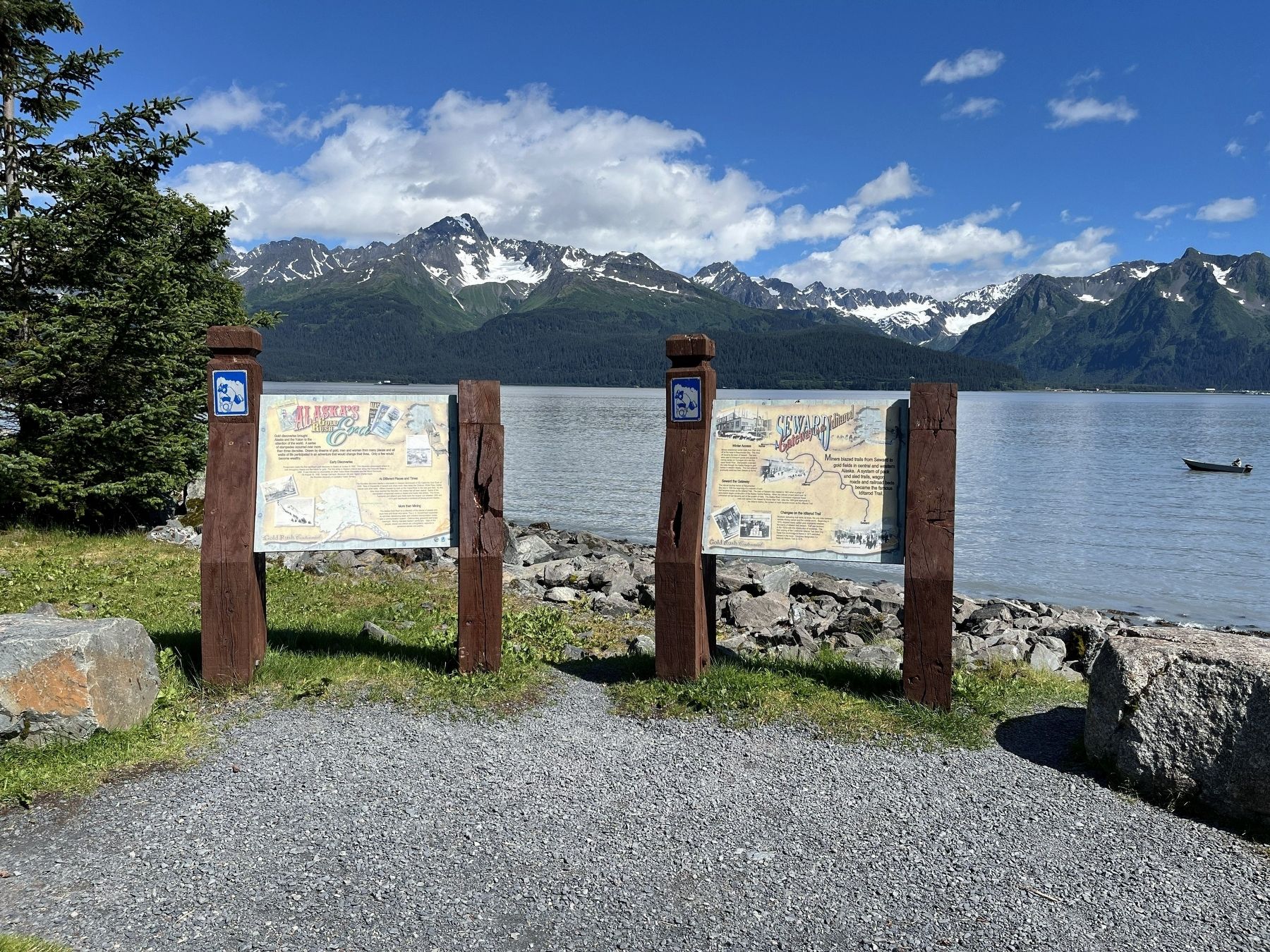
Marker on the right
Other nearby markers. At least 8 other markers are within walking distance of this marker: Alaska’s Gold Rush Era (here, next to this marker); The Phoenix / The Iditarod Trail (within shouting distance of this marker); Founders Monument (within shouting distance of this marker); Fourth Avenue Wharf - A Bustling Terminal (within shouting distance of this marker); Lee Poleske (within shouting distance of this marker); Old Order to New Territory (approx. ¼ mile away); On the Edge of the Frontier (approx. ¼ mile away); Resurrection Bay - 1964 Earthquake (approx. half a mile away). Touch for a list and map of all markers in Seward.
Credits. This page was last revised on November 18, 2026. It was originally submitted on November 15, 2026, by Leslie Eudy of Golden, Colorado. This page has been viewed 2 times since then. Photos: 1, 2. submitted on November 15, 2026, by Leslie Eudy of Golden, Colorado. • Andrew Ruppenstein was the editor who published this page.
