
Lawford in Essex, England, United Kingdom — Northwestern Europe (the British Isles)
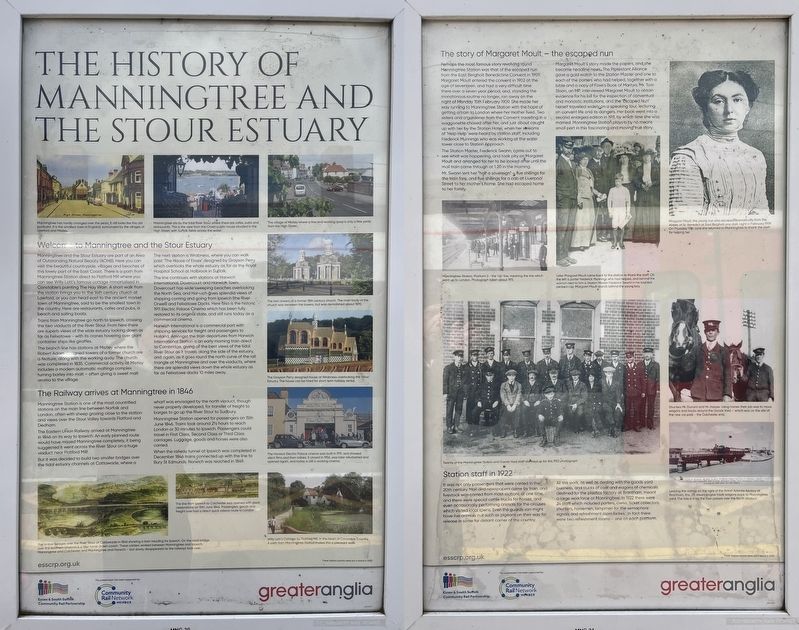
The History of Manningtree and the Stour Estuary
Photographed by Ray Gurganus, April 21, 2026
1. The History of Manningtree and the Stour Estuary Marker
Welcome to Manningtree and the Stour Estuary
Manningtree and the Stour Estuary are part of an Area of Outstanding Natural Beauty (AONB). Here you can visit the beautiful countryside, villages and beaches of this lovely part of the East Coast. There is a path from Manningtree Station direct to Flatford Mill where you can see Willy Lott's famous cottage immortalised in Constable's painting The Hay Wain. A short walk from the station brings you to the 14th century church at Lawford, or you can head east to the ancient market town of Manningtree, said to be the smallest town in the country. Here are restaurants, cafes and pubs, a beach and sailing boats.
Trains from Manningtree go north to Ipswich, crossing the two viaducts of the River Stour. From here there are superb views of the wide estuary looking down as far as Felixstowe - with its cranes hovering over giant container ships like giraffes.
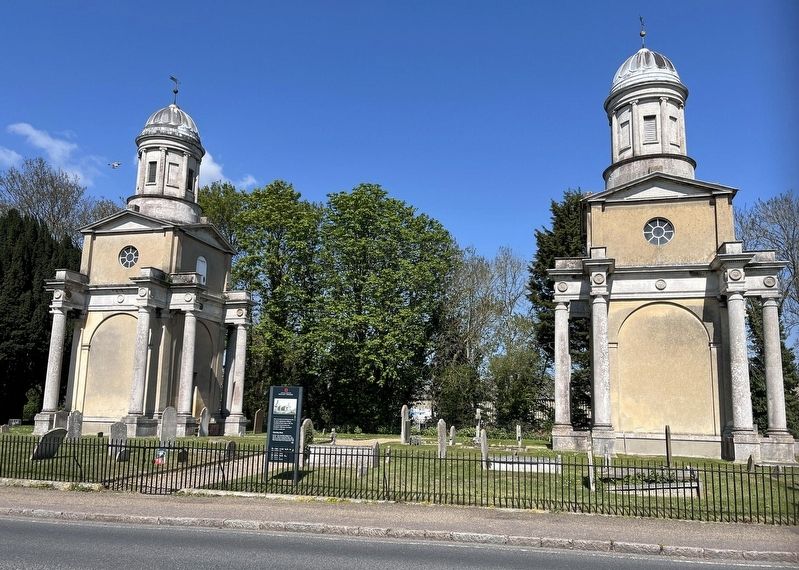
The branch line has stations at Mistley where the Robert Adam designed towers of a former church are a feature, along with the working quay. The church was completed in 1835. Commercial activity at Mistley includes a modern
this page online
The next station is Wrabness, where you can walk past 'The House of Essex' designed by Grayson Perry which overlooks the whole estuary as far as the Royal Hospital School at Holbrook in Suffolk.
The line continues with stations at Harwich International, Dovercourt and Harwich Town. Dovercourt has wide sweeping beaches overlooking the North Sea, and Harwich gives splendid views of shipping coming and going from Ipswich (the River Orwell) and Felixstowe Docks. Here also is the historic 1911 Electric Palace Cinema which has been fully restored to its original state, and still runs today as a commercial cinema.
Harwich International is a commercial port with shipping services for freight and passengers to Holland. Amongst the train departures from Harwich International Station is an early morning train direct to Cambridge, giving all the best views of the tidal River Stour as it travels along the side of the estuary, and again, as it goes round the north curve of the rail triangle at Manningtree and over the viaducts, where there
Photographed by Ray Gurganus, April 21, 2026
2. The twin towers of a former 18th century church.
The main body of the church was between the towers, but was demolished about 1870.
The Railway arrives at Manningtree in 1846
Manningtree Station is one of the most countrified. stations on the main line between Norfolk and London, often with sheep grazing close to the station and views over the Stour Valley towards Flatford and Dedham.
The Eastern Union Railway arrived at Manningtree in 1846 on its way to Ipswich. An early planned route would have missed Manningtree completely, it being suggested it went across the River Stour on a huge viaduct near Flatford Mill!
But it was decided to build two smaller bridges over the tidal estuary channels at Cattawade, where a wharf was envisaged by the north viaduct, though never properly developed, for transfer of freight to barges to go up the River Stour to Sudbury.
Manningtree Station opened for passengers on 15th June 1846. Trains took around 2½ hours to reach London or 30 minutes to Ipswich. Passengers could travel in First Class, Second Class or Third Class carriages. Luggage, goods and horses were also carried.
When the railway tunnel at Ipswich was completed in December
Picture from the marker
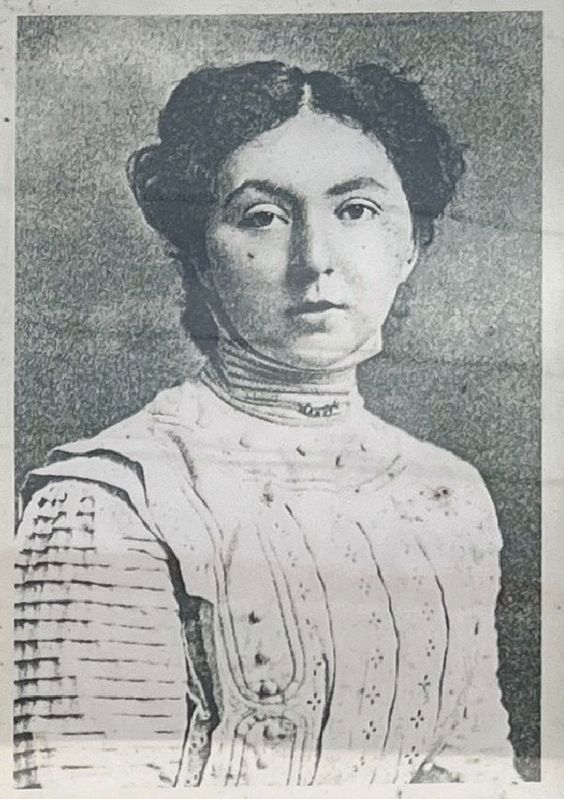
3. Margaret Moult
The story of Margaret Moult - the escaped nun
Perhaps the most famous story revolving round Manningtree Station was that of the escaped nun from the East Bergholt Benedictine Convent in 1909. Margaret Moult entered the convent in 1902 at the age of seventeen, and had a very difficult time there over a seven year period, and, standing the monotonous routine no longer, ran away on the night of Monday 15th February 1909. She made her way running to Manningtree Station with the hope of getting a train to London where her mother lived. Two sisters and a gardener from the Convent travelling in a waggonette chased after her, and just about caught up with her by the Station Hotel, when her screams of 'Help Help' were heard by station staff, including Frederick Munnings who was working at the water tower close to Station Approach.
The Station Master, Frederick Swann, came out to see what was happening, and took pity on Margaret Moult and arranged for her to be looked after until the mail train came through at 1.20 in the morning.
Mr. Swann lent
smiley.toerist, via Wikimedia Commons (CC ), March 29, 2024
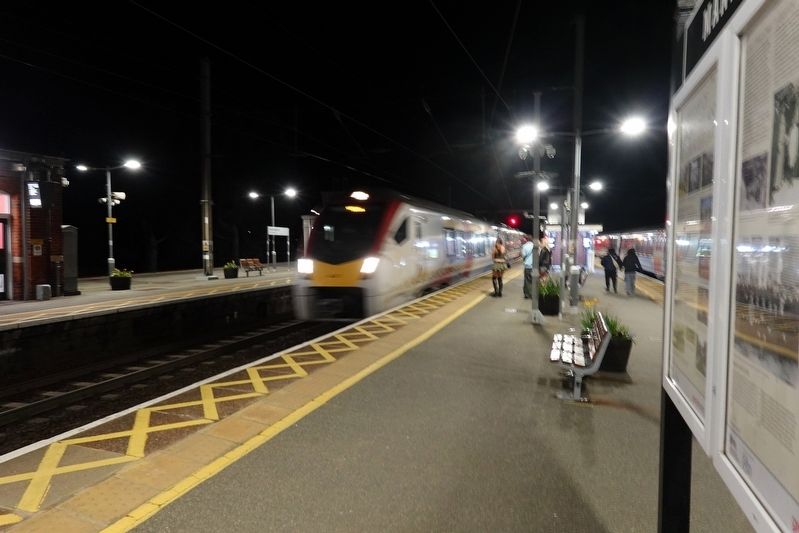
4. The History of Manningtree and the Stour Estuary Marker - platform view
Margaret Moult's story made the papers, and she became headline news. The. Protestant Alliance gave a gold watch to the Station Master and one to each of the porters who had helped, together with a bible and a copy of Foxe's Book of Martyrs. Mr. Tom Sloan, an MP, interviewed Margaret Moult to obtain evidence for his bill for the inspection of conventual and monastic institutions, and the 'Escaped Nun' herself travelled widely on a speaking tour, lecturing on convent life and its dangers. Her book went into a second enlarged edition in 1911, by which time she was married. Manningtree Station plays a by no means small part in this fascinating and moving true story.
Station staff in 1922
It was not only passengers that were carried in the 20th century. Mail and newspapers came by train, and livestock was carried from most stations at one time, and there were special cattle trucks for horses, and even occasionally performing animals for the circuses which visited local towns. Even the guards van might have live animals in it such as pigeons on their way for release in some far distant corner of the country.
All this work, as well as dealing with the goods yard business, and trucks of coal and wagons of chemicals destined for the plastics factory at Brantham, meant a large workforce at Manningtree. In 1922 there were 24 staff which included porters, clerks, ticket collectors, shunters, horsemen, lampmen for the semaphore signals and refreshment room ladies. In fact there were two refreshment rooms - one on each platform.
Erected by Greater Anglia.
Topics. This historical marker is listed in these topic lists: Industry & Commerce • Railroads & Streetcars • Religion & Religious Structures • Women.
Location. 51° 56.95′ N, 1° 2.73′ E. Marker is in Lawford, England, in Essex. It can be reached from A137. The marker is located on the platform of the Manningtree railway station. Touch for map. Marker is at or near this postal address: 144 A137, Lawford, England CO11 2LH, United Kingdom. Touch for directions.

Regionally, this marker is in the Greater South East. Globally, it is on the Atlantic Ocean, in the North Atlantic Region, in Europe, in Atlantic Europe, on one of the British Isles, in the Western World, and in the Anglosphere. Historically, it finds itself in what was once the Roman Empire.
Other nearby markers. At least 8 other markers are within 13 kilometers of this marker, measured as the crow flies: Walk in Constables Footsteps (within shouting distance of this marker); Manningtree (within shouting distance of this marker); Manningtree, Mistley, and Lawford (approx. 1.2 kilometers away); Mistley Towers (approx. 2.2 kilometers away); Mistley Cobble Wall (approx. 2.4 kilometers away); The History of Mistley (approx. 2.5 kilometers away); East Gate (approx. 11.5 kilometers away); Dr Ruth Bensusan-Butt MD (approx. 11.7 kilometers away). Touch for a list and map of all markers in Lawford.
Credits. This page was last revised on November 19, 2026. It was originally submitted on November 17, 2026, by Ray Gurganus of Washington, District of Columbia. This page has been viewed 7 times since then. Photos: 1, 2, 3. submitted on November 17, 2026, by Ray Gurganus of Washington, District of Columbia. 4. submitted on November 19, 2026. • Andrew Ruppenstein was the editor who published this page.
