
Near Oriskany in Oneida County, New York — The American Northeast (Mid-Atlantic)
Near This Spot
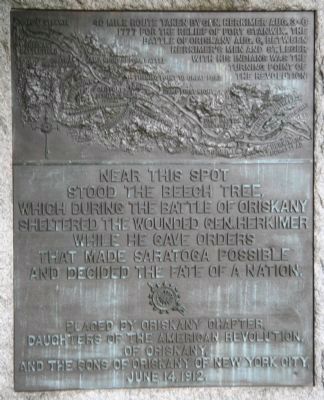
| — | 40 mile route taken by Gen. Herkimer Aug. 3-6, 1777 | — |
Photographed by Dale K. Benington, June 15, 2010
1. Near This Spot Marker
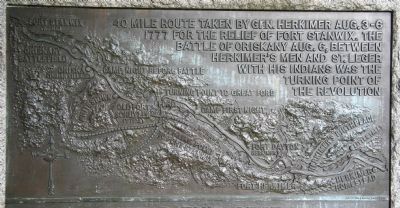
40 mile route taken by Gen. Herkimer Aug. 3-6, 1777 for the relief of Fort Stanwix. The Battle of Oriskany Aug. 6, between Herkimer's men and St. Leger with his Indians was the turning point of the Revolution.
Stood the beech tree,
Which during the Battle of Oriskany
Sheltered the wounded Gen. Herkimer
While he gave orders
That made Saratoga possible
And decided the fate of a nation.
Erected 1912 by Oriskany Chapter, Daughters of the American Revolution, of Oriskany, and the Sons of Oriskany of New York City. (Marker Number 14.)
Topics and series. This historical marker is listed in these topic lists: Indigenous Peoples and Communities • War, US Revolutionary. In addition, it is included in the Daughters of the American Revolution (DAR), and the General Herkimer's 40 Mile March series lists. A significant historical year for this entry is 1777.
Location. 43° 10.558′ N, 75° 22.147′ W. Marker is near Oriskany, New York, in Oneida County. It is on Rome Oriskany Road (New York State Route 69) 0.4 miles east of Monument Road, on the left when traveling east. Touch for map. Marker is in this
this page online

Regionally, this marker is in Upstate New York and in the Mohawk Valley. It is also in the American Northeast and in the Mid-Atlantic. Globally, it is in North America, the Great North Woods, the Western Hemisphere, the Western World, and the Anglosphere. Historically, it finds itself in what was once the Haudenosaunee (Iroquois) Confederacy, New Netherland, and one of the original Thirteen Colonies.
Other nearby markers. At least 8 other markers are within walking distance of this marker: The Ambush: August 6, 1777 (within shouting distance of this marker); Aftermath of a Tragedy (within shouting distance of this marker); The Military Road (within shouting distance of this marker); Ambush Started Here (about 300 feet away, measured in a direct line); Relief for Fort Stanwix (about 500 feet away); Welcome to Oriskany Battlefield (about 500 feet away); Site of The Battle of Oriskany (about 500 feet away); Here the Battle of Oriskany Was Fought (about 500 feet away). Touch for a list and map of all markers in Oriskany.
Other markers
Photographed by Dale K. Benington, June 15, 2010
2. Near This Spot Marker
Close-up view of the map on the top half of this historical marker.
More about this marker. This historical marker is part of a walking tour of the Oriskany Battlefield.
Regarding Near This Spot. This historical marker is part of a series of historical markers that mark the 40 mile route taken by Gen. Herkimer Aug. 3-6, 1777 for the relief of Fort Stanwix, that resulted in the Battle of Oriskany. Some historians believe that this battle, fought between Herkimer's Patriots with his Oneida allies and St. Leger's Loyalists with their Indian allies, was the turning point of the Revolutionary War.
Related markers. Click here for a list of markers that are related to this marker. To better understand the relationship, study each marker in the order shown.
Also see . . .
1. Battle of Oriskany.
Photographed by Dale K. Benington, June 15, 2010
3. Near This Spot Marker
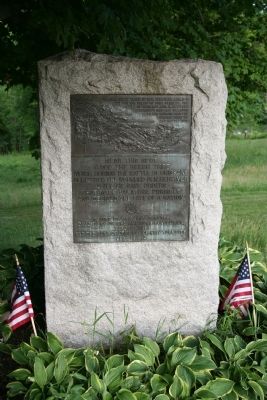
View of historical marker affixed to a stone marker at the site of the Oriskany Battlefield.
2. The Battle of Oriskany. This link is to a site that has a focus on the American Revolutionary War. (Submitted on June 20, 2010, by Dale K. Benington of Toledo, Ohio.)
3. Nicholas Herkimer, Hero of Oriskany. The Family Connection website entry (Submitted on June 20, 2010, by Dale K. Benington of Toledo, Ohio.)
Photographed by Dale K. Benington, June 15, 2010
4. Near This Spot Marker
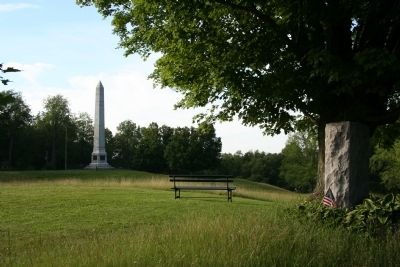
View looking northwest with the historical marker in the right foreground, and the Oriskany Battlefield Monument in the left background of the picture.
Photographed by Dale K. Benington, June 15, 2010
5. Near This Spot Marker
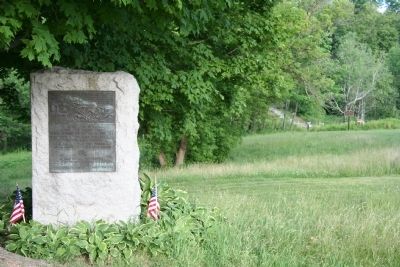
View looking east of the historical marker in the left foreground, and in the right background is a view of the ravine where the initial ambush took place as well as a view of the military road coming down into the ravine from the east side of Oriskany Creek.
Photographed by Dale K. Benington, June 15, 2010
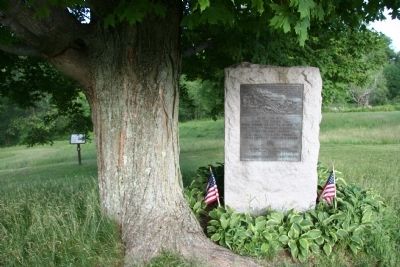
6. Near This Spot Marker
Close-up view of the historical marker at its location next to a tree, where reportedly General Herkimer found protection while he directed the battle.
Photographed by Dale K. Benington, June 15, 2010
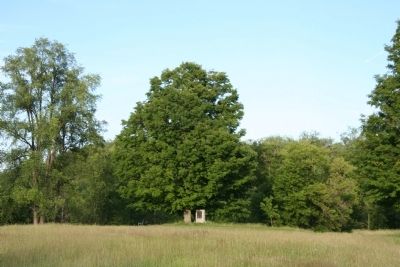
7. Near This Spot Marker
Distant view of the historical marker at its location next to a tree, where reportedly the seriously wounded General Herkimer found protection while he directed the battle.

Photographed by Bill Coughlin, July 30, 2014
8. Gen. Herkimer at the Battle of Oriskany
This bas relief from the Oriskany Monument shows a wounded Gen. Nicholas Herkimer directing the battle from under the tree.
Credits. This page was last revised on May 18, 2025. It was originally submitted on June 20, 2010, by Dale K. Benington of Toledo, Ohio. This page has been viewed 1,414 times since then and 43 times this year. Photos: 1, 2, 3, 4, 5, 6, 7. submitted on June 20, 2010, by Dale K. Benington of Toledo, Ohio. 8. submitted on August 3, 2014, by Bill Coughlin of Woodland Park, New Jersey.
