Anniston in Calhoun County, Alabama — The American South (East South Central)
Grace Episcopal Church
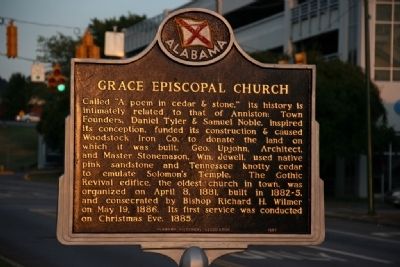
Photographed by Tim & Renda Carr, September 14, 2010
1. Grace Episcopal Church Marker
Erected 1987 by Alabama Historical Association.
Topics and series. This historical marker is listed in this topic list: Religion & Religious Structures. In addition, it is included in the Alabama Historical Association series list. A significant historical date for this entry is April 8, 1881.
Location. 33° 39.422′ N, 85° 49.542′ W. Marker is in Anniston, Alabama, in Calhoun County. It is on East 10th Street west of Leighton Avenue, on the left when traveling east. Touch for map. Marker is at or near this postal
this page online

Regionally, this marker is in East Alabama. It is also in the American South and specifically in the Deep South. Globally, it is in North America, a Gulf of Mexico state, the Western Hemisphere, the Western World, and the Anglosphere. Historically, it finds itself in what was once the original Cherokee Nation, the territory of the Mississippian Culture, one of the Confederate States of America, and the Antebellum South.
Other nearby markers. At least 8 other markers are within walking distance of this marker: Calhoun County World War I Memorial (about 300 feet away, measured in a direct line); Tyrus Raymond Cobb (about 400 feet away); Anniston Public Library Desegregation (about 600 feet away); Anniston Memorial Hospital (about 700 feet away); 15 E. 10th Street (approx. 0.2 miles away); Parker Memorial Baptist Church (approx. ¼ mile away); First Lot Sold (approx. ¼ mile away); 1005 Noble Street (approx. ¼ mile away). Touch for a list and map of all markers in Anniston.
Also see . . . History of Grace Church. (Submitted on September 15, 2010, by Timothy Carr of Birmingham, Alabama.)
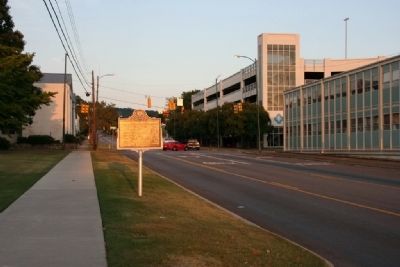
Photographed by Tim & Renda Carr, September 14, 2010
2. Grace Episcopal Church Marker (Street View)
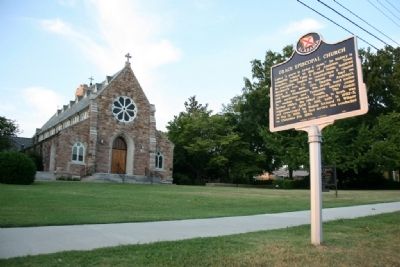
Photographed by Tim & Renda Carr, September 14, 2010
3. Grace Episcopal Church & Marker
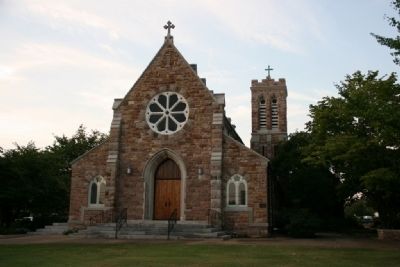
Photographed by Tim & Renda Carr, September 14, 2010
4. Grace Episcopal Church
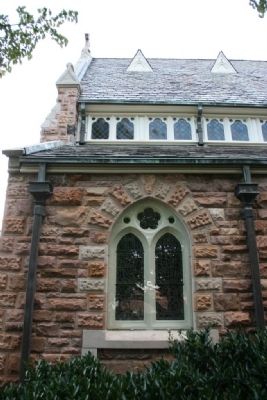
Photographed by Tim & Renda Carr, September 14, 2010
5. Detail Views of Grace Episcopal Church
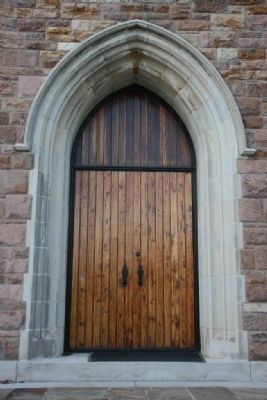
Photographed by Tim & Renda Carr, September 14, 2010
6. Grace Episcopal Church Sanctuary Door
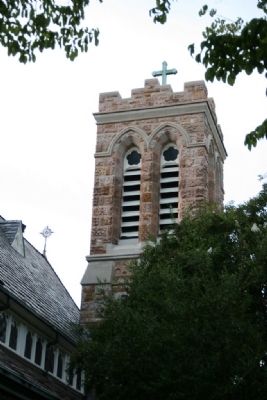
Photographed by Tim & Renda Carr, September 14, 2010
7. Grace Episcopal Church Bell Tower
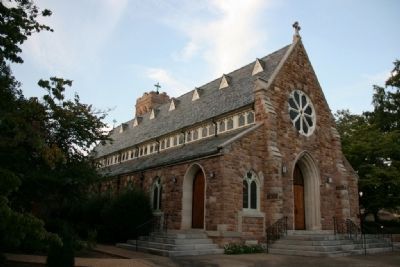
Photographed by Tim & Renda Carr, September 14, 2010
8. Grace Episcopal Church West View
Photographed by Tim & Renda Carr, September 14, 2010
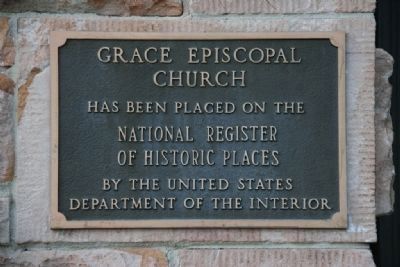
9. National Register of Historic Places Plaque
Grace Episcopal Church was placed on the National Register on October 3, 1985.
Credits. This page was last revised on June 16, 2016. It was originally submitted on September 15, 2010, by Timothy Carr of Birmingham, Alabama. This page has been viewed 1,666 times since then and 35 times this year. Photos: 1, 2, 3, 4, 5, 6, 7, 8, 9. submitted on September 15, 2010, by Timothy Carr of Birmingham, Alabama. • Syd Whittle was the editor who published this page.
