Near New Site in Prentiss County, Mississippi — The American South (East South Central)
Pharr Mounds
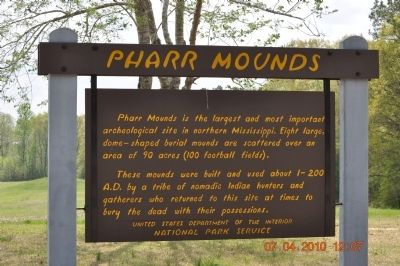
Photographed by Sandra Hughes, April 7, 2010
1. Pharr Mounds Marker
Erected by United State Department of the Interior National Park Service.
Topics and series. This historical marker is listed in this topic list: Indigenous Peoples and Communities. In addition, it is included in the Natchez Trace series list.
Location. 34° 28.27′ N, 88° 25.219′ W. Marker is near New Site, Mississippi, in Prentiss County. It is on Nachez Trace Parkway (at milepost 286.7), on the right when traveling east. Pharr Mounds are located on the Natchez Trace Parkway (milepost 286.7), about 23 miles northeast of Tupelo, Mississippi. Touch for map. Marker is in this post office area: New Site MS 38859, United States of America. Touch for directions.

Regionally, this marker is in andspecifically
this page online
Other nearby markers. At least 8 other markers are within 8 miles of this marker, measured as the crow flies: Donivan Slough (approx. 3.3 miles away); a different marker also named Donivan Slough (approx. 3.3 miles away); Tennessee - Tombigbee Waterway (approx. 6 miles away); Jamie L. Whitten Historic Landmark (approx. 6 miles away); River, Canal and Cut (approx. 6 miles away); Butler Dogtrot Cabin (approx. 6.8 miles away); a different marker also named Butler Dogtrot Cabin (approx. 6.8 miles away); Twentymile Bottom (approx. 7.9 miles away).
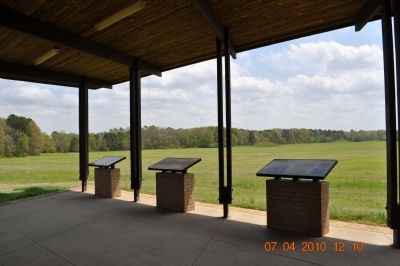
Photographed by Sandra Hughes, April 7, 2010
2. Pharr Mounds Marker
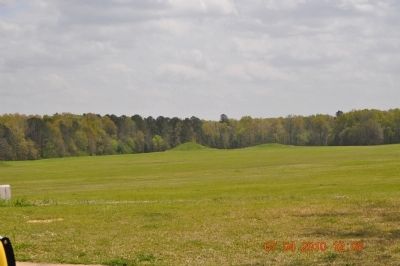
Photographed by Sandra Hughes, April 7, 2010
3. Pharr Mounds
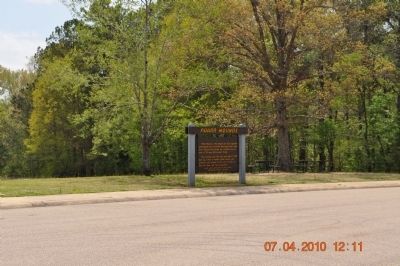
Photographed by Sandra Hughes, April 7, 2010
4. Pharr Mounds Marker
Photographed by Sandra Hughes, April 7, 2010
5. Pharr Mounds Marker
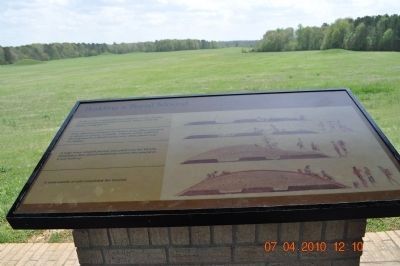
Photographed by Sandra Hughes, April 7, 2010
6. Building an Indian Mound
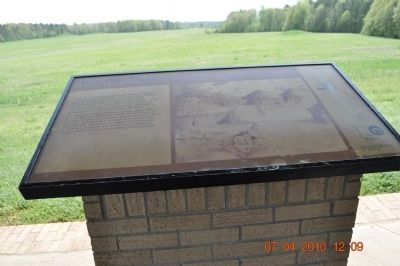
Photographed by Sandra Hughes, April 7, 2010
7. Who were they?
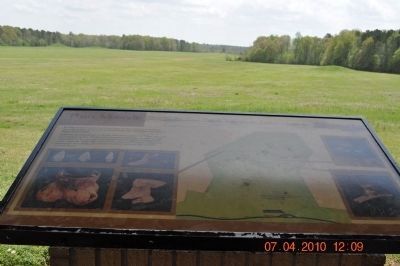
Photographed by Sandra Hughes, April 7, 2010
8. Pharr Mounds
Credits. This page was last revised on June 16, 2016. It was originally submitted on September 15, 2010, by Sandra Hughes Tidwell of Killen, Alabama, USA. This page has been viewed 1,999 times since then and 55 times this year. Photos: 1, 2, 3, 4, 5, 6, 7, 8. submitted on September 15, 2010, by Sandra Hughes Tidwell of Killen, Alabama, USA. • Craig Swain was the editor who published this page.
