Selma in Dallas County, Alabama — The American South (East South Central)
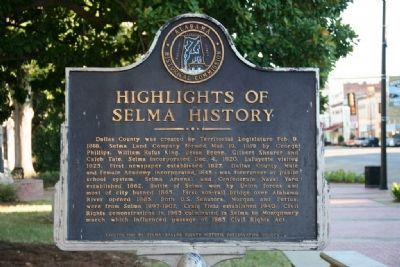
Highlights of Selma History
⎯⎯⎯
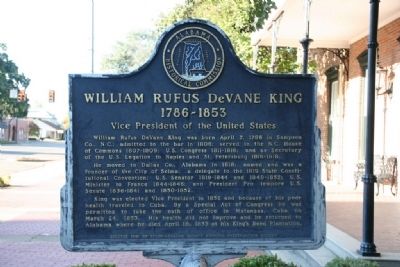
William Rufus DeVane King 1786-1853
Photographed by Tim & Renda Carr, November 6, 2010
1. Highlights of Selma History
1786-1853
Vice President of the United States
this page online
He moved to Dallas Co., Alabama in 1818; named and was a founder of the City of Selma; a delegate to the 1819 State Constitutional Convention; U.S. Senator 1819-1844 and 1848-1852; U.S. Minister to France 1844-1846; and President Pro tempore U.S. Senate 1836-1841 and 1850-1852.
King was elected Vice President in 1852 and because of his poor health traveled to Cuba. By a Special Act of Congress he was permitted to take the oath of office in Matanzas, Cuba on March 24, 1853. His health did not improve and he returned to Alabama where he died April 18, 1853 at his King’s Bend Plantation.
Erected 1981 by Alabama Historical Commission / Selma-Dallas County Historic Preservation Society.
Topics and series. This historical marker is listed in these topic lists: Bridges & Viaducts • Civil Rights • Government & Politics • Settlements & Settlers • War, US Civil. In addition, it is included in the Alabama Historical Commission, and the Lafayette’s Farewell Tour series lists. A significant historical date for this entry is April 7, 1786.
Location. 32° 24.589′ N, 87° 1.255′ W. Marker is in Selma, Alabama, in Dallas
Photographed by Tim & Renda Carr, November 6, 2010
2. William Rufus DeVane King 1786-1853 Marker

Regionally, this marker is in the American South, specifically in the Deep South, and in the Black Belt. Globally, it is in North America, a Gulf of Mexico state, the Western Hemisphere, the Western World, and the Anglosphere. Historically, it finds itself in what was once New Spain, the territory of the Mississippian Culture, one of the Confederate States of America, and the Antebellum South.
Other nearby markers. At least 8 other markers are within walking distance of this marker: VII In. Brooke Rifle (within shouting distance of this marker); St. Paul’s Episcopal Church Est. 1838 (about 400 feet away, measured in a direct line); In Memory of: The Reverend James J. Reeb (about 500 feet away); Votes for Women (about 600 feet away); Burning of Downtown (approx. 0.2 miles away); Sgt Robert Weakley Patton (approx. 0.2 miles away); Lieutenant John Tillman Melvin (approx. 0.2 miles away); The Sleeping Prophet (approx.
Photographed by Tim & Renda Carr, November 6, 2010
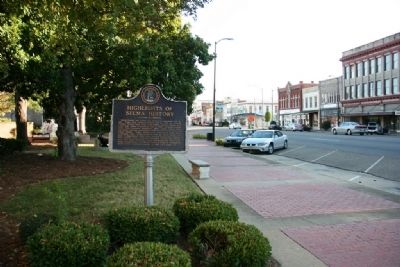
3. Highlights of Selma History / William Rufus DeVane King 1786-1853 Marker
Related marker. Click here for another marker that is related to this marker. An additional William R. King Marker and gravesite.
Photographed by Tim & Renda Carr, November 6, 2010
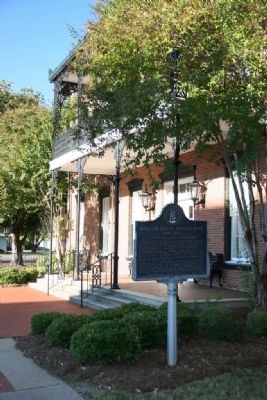
4. Highlights of Selma History / William Rufus DeVane King 1786-1853 Marker
Marker stands in front of Selma's City Hall.
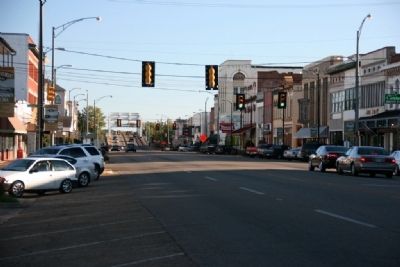
Photographed by Tim & Renda Carr, November 6, 2010
5. Looking South Along Broad Street (U.S. Highway 80)
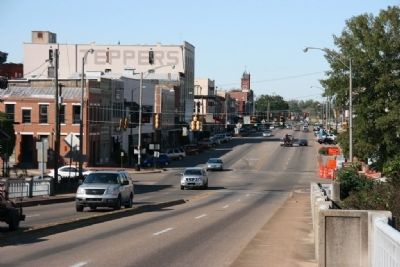
Photographed by Tim & Renda Carr, November 6, 2010
6. Looking North Along Broad Street (U.S. Highway 80)
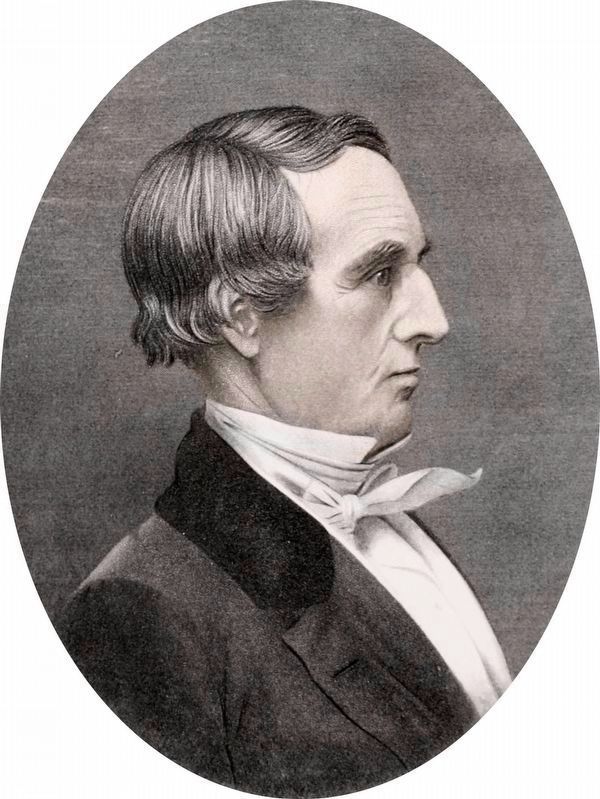
Public domain
7. William Rufus DeVane King
Engraved by W. H. Dougal after a Daguerreotype by Whitehurst, 1854. from Obituary Addresses on the Occasion of the Death of the Hon. William R. King, of Alabama, Vice President of the United States - United States 33d Congress, 1st session, 1853-1854.
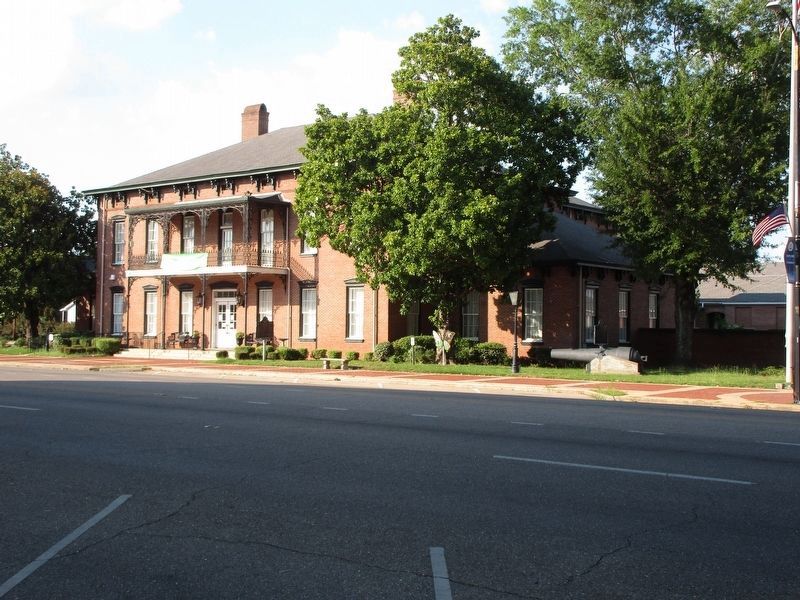
Photographed by Jeff Leichsenring, July 7, 2025
8. Highlights of Selma History / William Rufus DeVane King 1786-1853 Marker
Credits. This page was last revised on July 31, 2025. It was originally submitted on November 7, 2010, by Timothy Carr of Birmingham, Alabama. This page has been viewed 2,655 times since then and 92 times this year. Photos: 1. submitted on November 7, 2010, by Timothy Carr of Birmingham, Alabama. 2, 3, 4, 5, 6. submitted on November 8, 2010, by Timothy Carr of Birmingham, Alabama. 7. submitted on January 1, 2021, by Allen C. Browne of Silver Spring, Maryland. 8. submitted on July 30, 2025, by Jeff Leichsenring of Garland, Texas. • Craig Swain was the editor who published this page.
