Gallaudet in Northeast Washington in Washington, District of Columbia — The American Northeast (Mid-Atlantic)
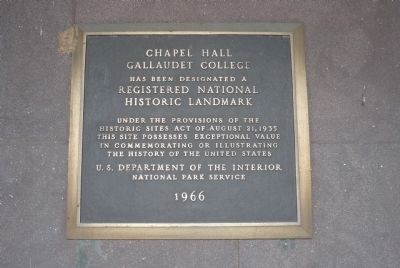
Chapel Hall
Gallaudet College
Photographed by Richard E. Miller, February 12, 2011
1. Chapel Hall Marker
Gallaudet College
has been designated a
Registered National
Historic Landmark
under the provisions of the
Historic Sites Act of August 21, 1935,
this site possesses exceptional value
in commemorating or illustrating
the history of the United States
U.S. Department of the Interior
National Park Service
1966
Erected 1966.
Topics and series. This historical marker is listed in these topic lists: Architecture • Education • Notable Places. In addition, it is included in the National Historic Landmarks series list.
Location. 38° 54.34′ N, 76° 59.7′ W. Marker is in Northeast Washington in Washington, District of Columbia. It is in Gallaudet. It is on Lincoln Circle Northeast north of Florida Avenue Northeast. Marker is at the main entrance to Chapel Hall, west of the University's main gate off Florida Avenue. Touch for map. Marker is at or near this postal address: 800 Florida Avenue Northeast, Washington DC 20002, United States of America. Touch for directions.

Regionally, this marker is in the Washington Metropolitan Area. It is also in the American
this page online
Other nearby markers. At least 8 other markers are within walking distance of this marker: Thomas Hopkins Gallaudet (within shouting distance of this marker); Site of the Rose Cottage (within shouting distance of this marker); Laurent Clerc (within shouting distance of this marker); Edward Miner Gallaudet (about 300 feet away, measured in a direct line); Leonard M. Elstad (about 300 feet away); Education for All (about 400 feet away); "Ole Jim" (about 500 feet away); Peikoff Alumni House (about 500 feet away). Touch for a list and map of all markers in Northeast Washington.
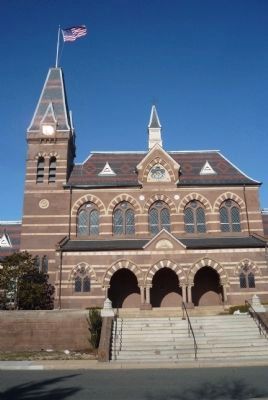
Regarding Chapel Hall. "Seventeen acres at the front of the campus are registered as the Gallaudet College Historic District in the National Register of Historic Places. The historic district includes Chapel Hall, College Hall, the houses on Faculty Row, and "Ole Jim." This area of campus and its original grounds were designed by Frederick Law Olmsted,
Photographed by Richard E. Miller, February 12, 2011
2. Chapel Hall, Gallaudet University
http://pr.gallaudet.edu/GallaudetHistory/page2.html
Also see . . .
1. Gallaudet University. Wikipedia entry (Submitted on February 15, 2011, by Richard E. Miller of Oxon Hill, Maryland.)
2. About Gallaudet. University website entry (Submitted on February 15, 2011, by Richard E. Miller of Oxon Hill, Maryland.)
Additional keywords. deafness; Columbia Institution for the Deaf; Gallaudet University.
Photographed by Richard E. Miller, February 12, 2011
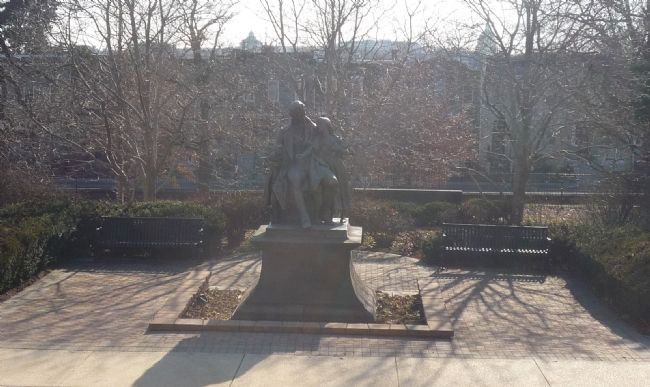
3. Thomas Hopkins Gallaudet Memorial
- view from the National Historic Landmark marker with the Library of Congress and the U.S. Capitol visible on the horizon.
Photographed by Richard E. Miller, February 12, 2011
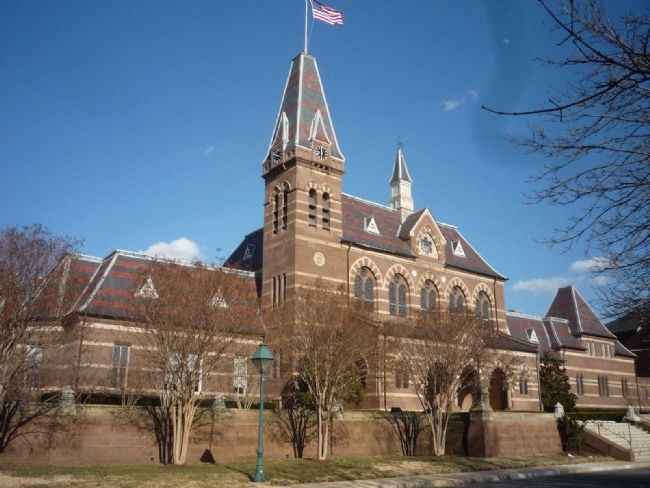
4. Chapel Hall
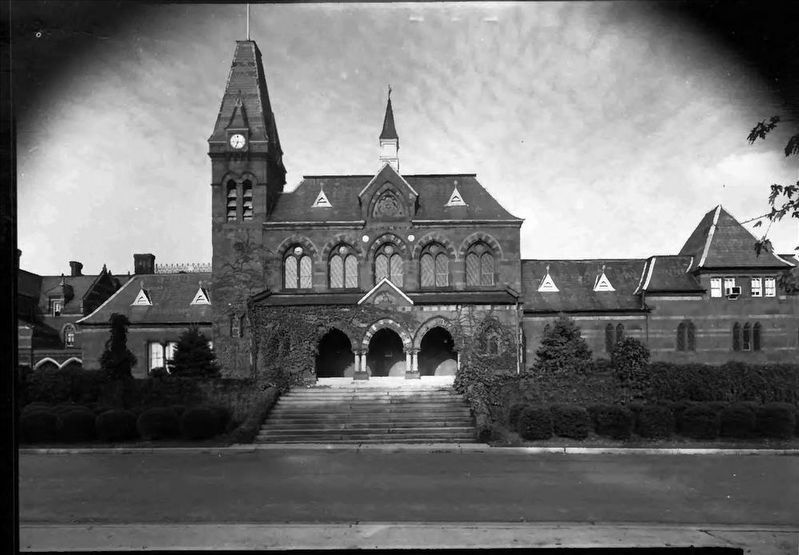
via NPS, unknown
5. Gallaudet College Historic District
National Register of Historic Places Nomination Form
Click for more information.
Click for more information.
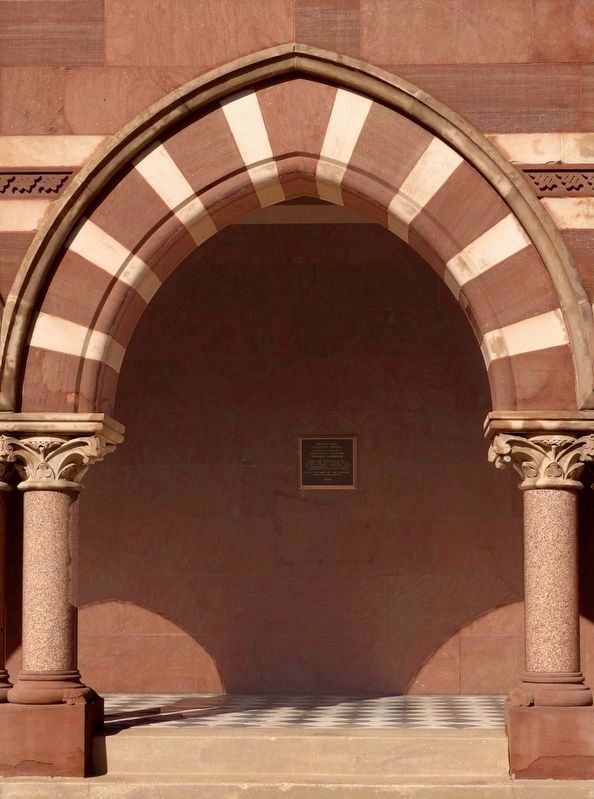
Photographed by Allen C. Browne, March 11, 2018
6. Chapel Hall Marker
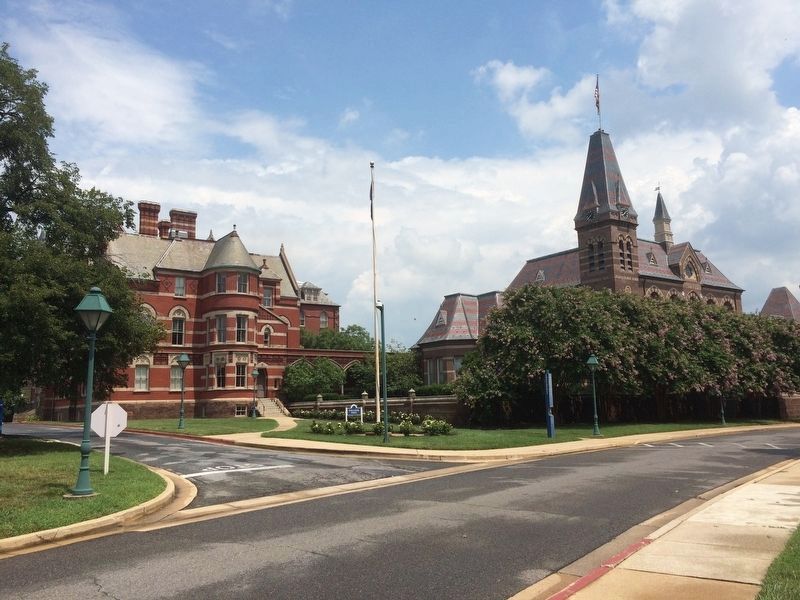
Photographed by J. Makali Bruton, July 30, 2016
7. Chapel Hall, with College Hall to the left, at Gallaudet University
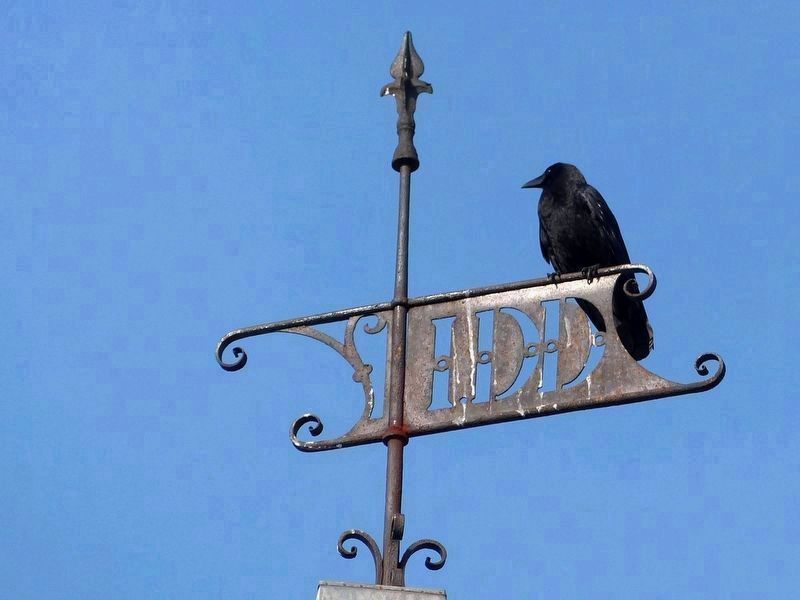
Photographed by Allen C. Browne, March 11, 2018
8. I D D
Institution for the Deaf and Dumb
Institution for the Deaf and Dumb
Gallaudet University began as the Columbia Institution for the Deaf and Dumb established in 1857 which became the National Deaf Mute College in 1864 and was renamed in honor of Edward Miner Gallaudet in 1894.
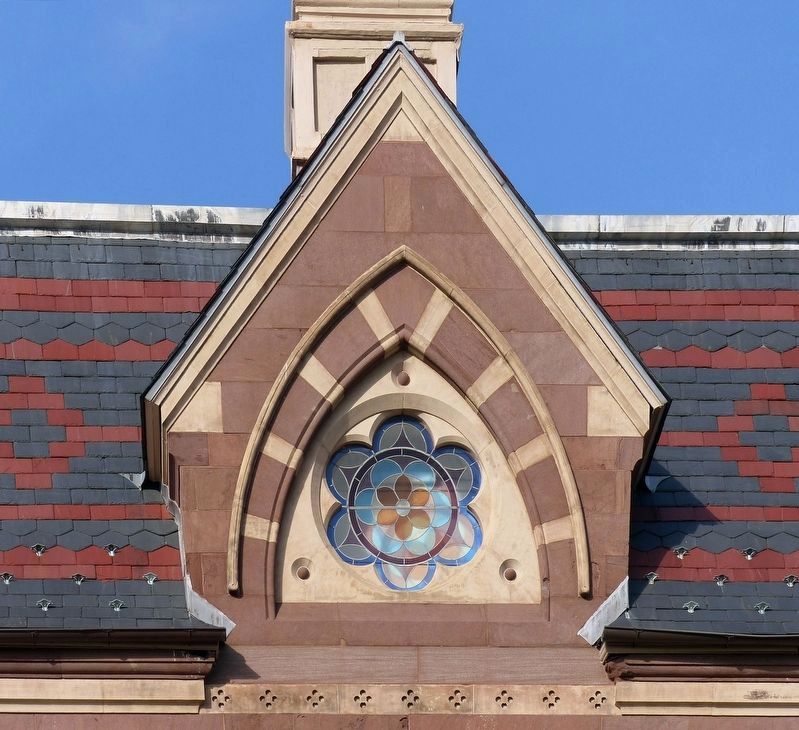
Photographed by Allen C. Browne, March 11, 2018
9. Stained Glass Window
“The ‘Main Central Building’ at Gallaudet College, Chapel Hall is one of the finest examples of post-Civil War collegiate architecture in the United States and is the focal point of this nationally significant educational institution. It is a picturesque, brownstone, High Victorian Gothic Revival building designed by Frederick C. Withers of the leading mid-19th century firm of Vaux, Withers and Co. Its design reflects the romantic architectural associationalism prevalent in post-Civil War America. The building was consciously designed to be a symbol of the national importance of the institution—the only collegiate institution for the deaf in the United States. The building has a rather ecclesiastical character and was an early important building in Washington in the Ruskinian Gothic Revial style with constructional polychromy and assymmetrical planning.” – National Register Form
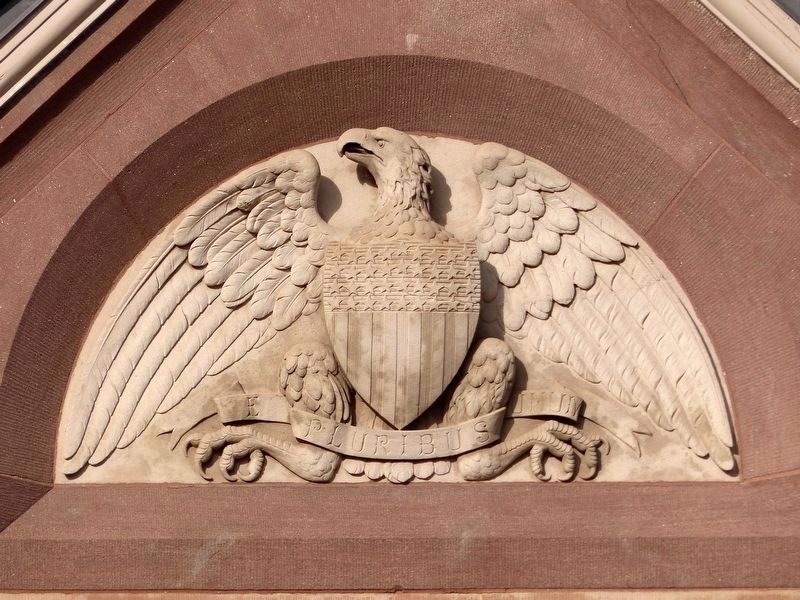
Photographed by Allen C. Browne, March 11, 2018
10. E Pluribus Unum
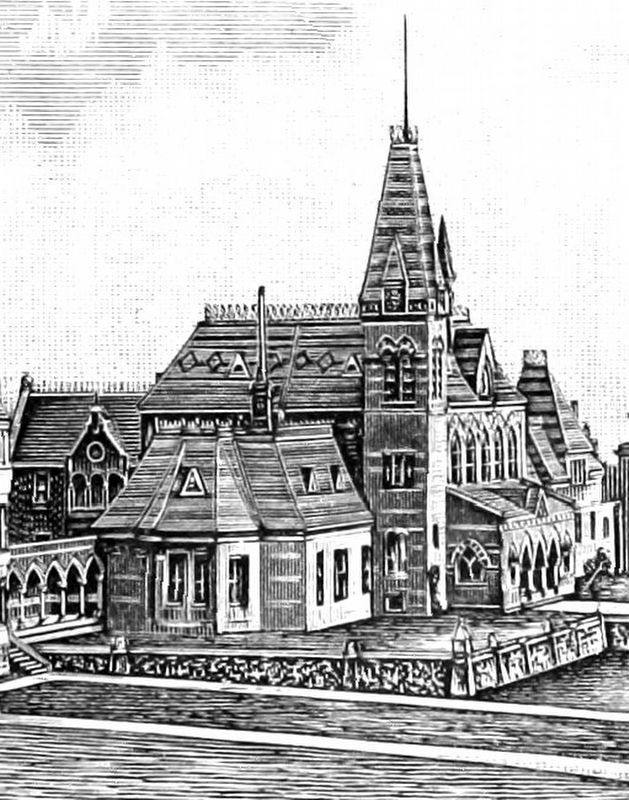
Internet Archive
11. Chapel Hall
Detail from an illustration in A Biographical Sketch of the Rev. Thomas Hopkins Gallaudet, LL.D., 1887, by Henry Winter Syle
Credits. This page was last revised on February 20, 2023. It was originally submitted on February 15, 2011, by Richard E. Miller of Oxon Hill, Maryland. This page has been viewed 2,064 times since then and 53 times this year. Last updated on February 22, 2011, by Richard E. Miller of Oxon Hill, Maryland. Photos: 1, 2, 3, 4. submitted on February 15, 2011, by Richard E. Miller of Oxon Hill, Maryland. 5. submitted on October 2, 2022, by Larry Gertner of New York, New York. 6. submitted on March 25, 2018, by Allen C. Browne of Silver Spring, Maryland. 7. submitted on July 31, 2016, by J. Makali Bruton of Washington, District of Columbia. 8, 9, 10. submitted on March 13, 2018, by Allen C. Browne of Silver Spring, Maryland. 11. submitted on March 25, 2018, by Allen C. Browne of Silver Spring, Maryland. • Bill Pfingsten was the editor who published this page.
