Athens in Limestone County, Alabama — The American South (East South Central)
Fort Henderson
⎯⎯⎯
Trinity School - 1865-1970
Photographed by Lee Hattabaugh, April 17, 2011
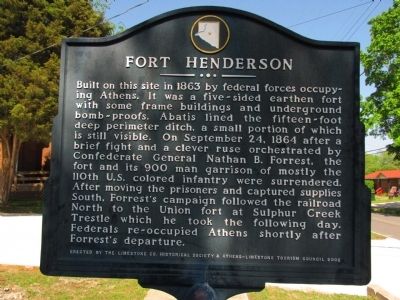
1. Fort Henderson Marker
Fort Henderson
Built on this site in 1863 by federal forces occupying Athens. It was a five-sided earthen fort with some frame buildings and underground bomb-proofs. Abatis lined the fifteen-foot deep perimeter ditch, a small portion of which is still visible. On September 24, 1864 after a brief fight and a clever ruse orchestrated by Confederate General Nathan B. Forrest, the fort and its 900 man garrison of mostly the 110th U.S. colored infantry were surrendered. After moving the prisoners and captured supplies South, Forrest's campaign followed the railroad North to the Union fort at Sulphur Creek Trestle which he took the following day. Federals re-occupied Athens shortly after Forrest's departure.
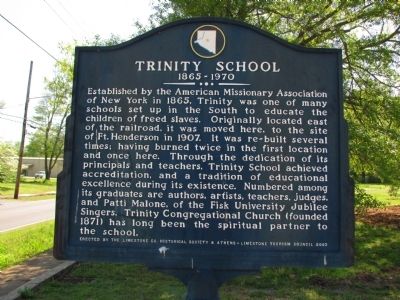
Trinity School
Established by the American Missionary Association of New York in 1865, Trinity was one of many schools set up in the South to educate the children of freed slaves. Originally located east of the railroad, it was moved here, to the site of Ft. Henderson in 1907. It was re-built several times; having burned twice in the first location and once here. Through the dedication of its principals and teachers, Trinity
this page online
Erected 2002 by Limestone Co. Historical Society & Athens-Limestone Tourism Council.
Topics and series. This historical marker is listed in these topic lists: African Americans • Education • Forts and Castles • War, US Civil. In addition, it is included in the Historically Black Colleges and Universities series list. A significant historical month for this entry is September 1936.
Location. 34° 47.841′ N, 86° 58.761′ W. Marker is in Athens, Alabama, in Limestone County. It is on Browns Ferry Street (County Road 29) west of Allyn Street, on the right when traveling west. Located in the parking lot of Trinity Congregational Church. Touch for map. Marker is at or near this postal address: 800 Browns Ferry Street, Athens AL 35611, United States of America. Touch for directions.

Regionally, this marker is in North Alabama
Photographed by Lee Hattabaugh, April 17, 2011
2. Trinity School - 1865-1970 Marker
Other nearby markers. At least 8 other markers are within walking distance of this marker: Mary Fletcher Wells (within shouting distance of this marker); The United State Colored Troops (within shouting distance of this marker); Trinity School (about 300 feet away, measured in a direct line); Coleman Hill (about 300 feet away); Reconstruction (about 400 feet away); The Battles of Fort Henderson and Sulphur Creek Trestle (about 400 feet away); Prisoners of War (about 400 feet away); Coleman Family (approx. ¼ mile away). Touch for a list and map of all markers in Athens.
Related marker. Click here for another marker that is related to this marker.
Photographed by Lee Hattabaugh, April 17, 2011
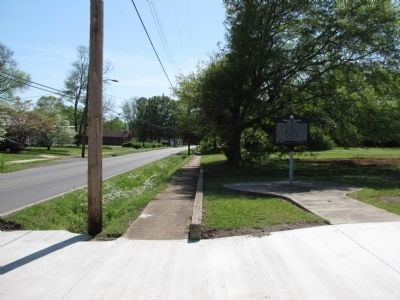
3. Fort Henderson / Trinity School - 1865-1970 Marker
Looking southwest along Browns Ferry Street.
Also see . . . Fort Henderson Historic Site & Trinity H.S. Sweet Home Alabama website entry (Submitted on April 17, 2011, by Lee Hattabaugh of Capshaw, Alabama.)
Additional keywords. Fort Henderson / Trinity School - 1865-1970
Photographed by Lee Hattabaugh, April 17, 2011
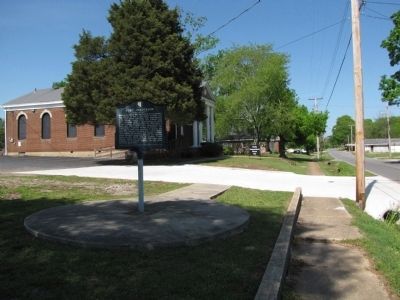
4. Fort Henderson / Trinity School - 1865-1970 Marker
Northeast along Browns Ferry Street. Intersection with Allyn Street is at the second power pole.
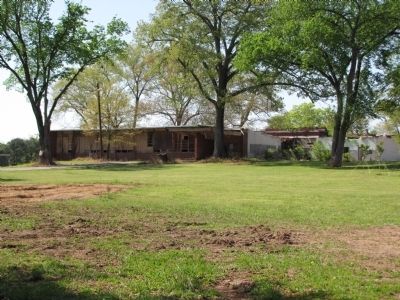
Photographed by Lee Hattabaugh, April 17, 2011
5. Trinity School
Trinity School building as seen from the marker.
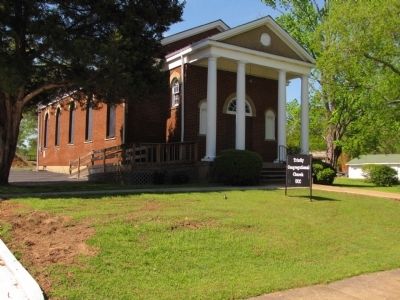
Photographed by Lee Hattabaugh, April 17, 2011
6. Trinity Congregational Church
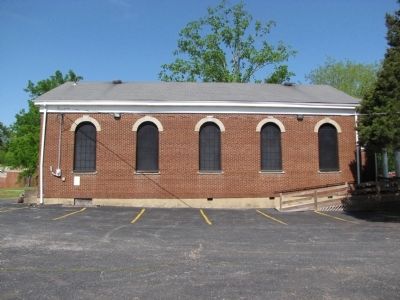
Photographed by Lee Hattabaugh, April 17, 2011
7. Trinity Congregational Church
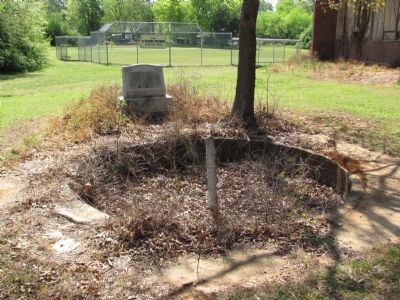
Photographed by Lee Hattabaugh, April 17, 2011
8. Trinity School fountain and dedication stone
Photographed by Lee Hattabaugh, April 17, 2011
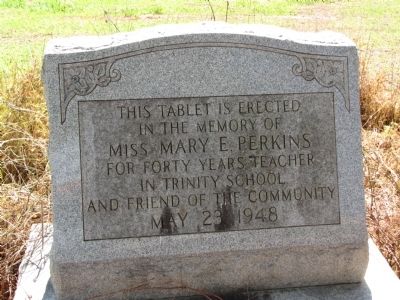
9. Trinity School memorial
in the memory of
Miss Mary E Perkins
for forty years teacher
in Trinity School
and friend of the community
May 23 1948
Photographed by Lee Hattabaugh, April 17, 2011
10. Fort Henderson / Trinity School - 1865-1970 Marker
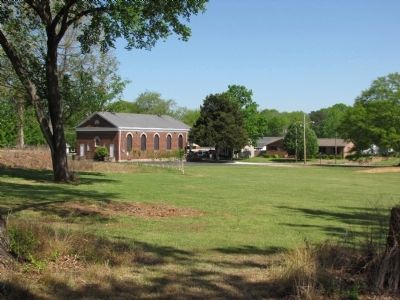
Trinity Congregational Church and the marker as seen from Trinity School.
Photographed by Lee Hattabaugh, April 17, 2011
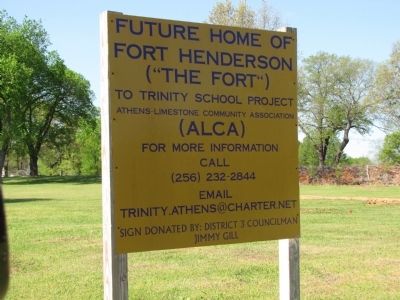
11. Fort Henderson area development
sign indicating planned development for the area. See weblinks for more information.
Credits. This page was last revised on November 19, 2024. It was originally submitted on April 17, 2011, by Lee Hattabaugh of Capshaw, Alabama. This page has been viewed 2,858 times since then and 100 times this year. Photos: 1, 2, 3, 4, 5, 6, 7, 8, 9, 10, 11. submitted on April 17, 2011, by Lee Hattabaugh of Capshaw, Alabama. • Bill Pfingsten was the editor who published this page.
