Fort Gaines in Clay County, Georgia — The American South (South Atlantic)
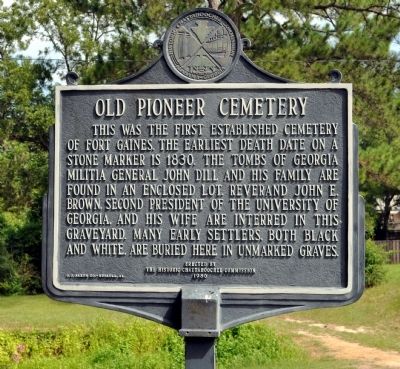
Old Pioneer Cemetery
Photographed by David Seibert, August 14, 2011
1. Old Pioneer Cemetery Marker
Erected 1980 by Historic Chattahoochee Commission.
Topics. This historical marker is listed in this topic list: Cemeteries & Burial Sites. A significant historical year for this entry is 1830.
Location. 31° 36.339′ N, 85° 3.147′ W. Marker is in Fort Gaines, Georgia, in Clay County. It is on Carroll Street 0.1 miles west of North Hancock Street, on the left when traveling west. Touch for map. Marker is in this post office area: Fort Gaines GA 39851, United States of America. Touch for directions.

Regionally, this marker is on Georgia’s Coastal Plain. It is also in the American South and specifically in the Deep South. Globally, it is in North America, the Western Hemisphere, the Western World, and the Anglosphere. Historically,
this page online
Other nearby markers. At least 8 other markers are within walking distance of this marker: Site of the First Clay County Courthouse and Jail (about 700 feet away, measured in a direct line); Fort Gaines (about 700 feet away); The Old Lattice Bridge (about 700 feet away); The 1836 Fort (about 700 feet away); Fort Gaines Guards (approx. 0.2 miles away); Historic Sites (approx. ¼ mile away); Clay County (approx. ¼ mile away); Gen. Edmund Pendleton Gaines (approx. ¼ mile away). Touch for a list and map of all markers in Fort Gaines.
Other markers no longer nearby. In the Confederacy (was about 700 feet away but has been confirmed missing); Site of Fort Gaines Female College (was about 800 feet away but has been confirmed missing).
Photographed by David Seibert, August 14, 2011
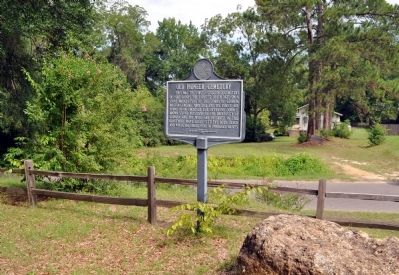
2. Old Pioneer Cemetery Marker
Photographed by David Seibert, August 14, 2011
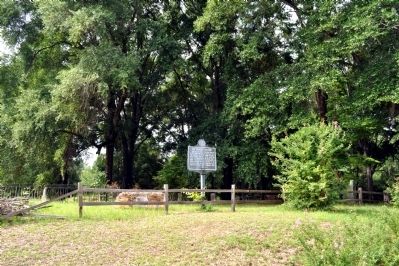
3. Old Pioneer Cemetery Marker
Photographed by David Seibert, August 14, 2011
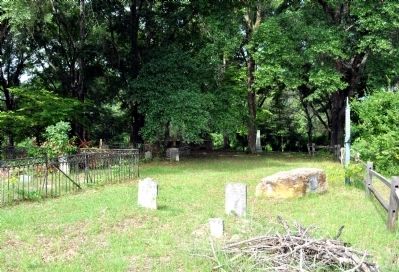
4. Old Pioneer Cemetery
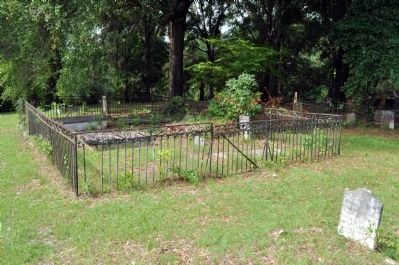
Photographed by David Seibert, August 14, 2011
5. Old Pioneer Cemetery
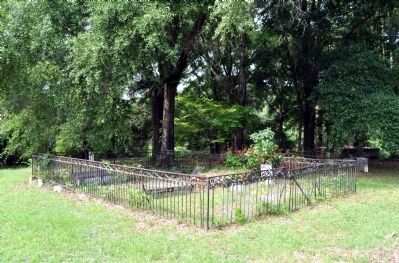
Photographed by David Seibert, August 13, 2011
6. Old Pioneer Cemetery
The "enclosed lot" mentioned on the marker, where the Dill family is buried.
Credits. This page was last revised on June 16, 2016. It was originally submitted on October 2, 2011, by David Seibert of Sandy Springs, Georgia. This page has been viewed 1,228 times since then and 42 times this year. Photos: 1, 2, 3, 4, 5, 6. submitted on October 2, 2011, by David Seibert of Sandy Springs, Georgia. • Craig Swain was the editor who published this page.
