South of Broad in Charleston in Charleston County, South Carolina — The American South (South Atlantic)
126 Tradd Street
The Dr. Peter Fayssoux House
| — | circa 1732 | — |
Photographed by Mike Stroud, October 2, 2011
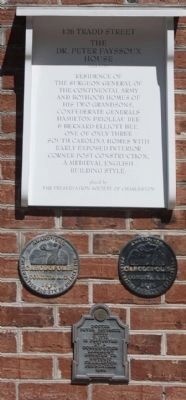
1. 126 Tradd Street The Dr. Peter Fayssoux House Marker including
Award 1966 and 1975
Carolopolis
Condita A.D.
1670
and
Conservation
Easement Award
Residence of the Surgeon General of the Continnetal Army and boyhood home of Confederate Generals Hamilton Prioleau Bee & Bernard Bee. One of only three South Carolina homes with early exposed interior corner post construction, a medieval English building style.
Erected by Preservation Society of Charleston.
Topics and series. This historical marker is listed in these topic lists: Architecture • War, US Civil • War, US Revolutionary. In addition, it is included in the South Carolina, Preservation Society of Charleston series list.
Location. 32° 46.454′ N, 79° 56.103′ W. Marker has been reported damaged. Marker is in Charleston, South Carolina, in Charleston County. It is in South of Broad. It is on Tradd Street, on the left when traveling east. Located between Logan and Legare Streets. Touch for map. Marker is at or near this postal address: 126 Tradd Street, Charleston SC 29401, United States of America. Touch for directions.

Regionally, this marker is in Historic Charleston and in the Lowcountry. It is also in the American South, specifically in the Deep South, and on the Eastern Seaboard. Globally, it is in the North Atlantic Region, North America, the Western Hemisphere, the Western World, and the Anglosphere. Historically, it finds itself in what was once the territory of the Mississippian Culture, one of the original Thirteen Colonies, one of the Confederate States of America, and the Antebellum South.
Other nearby markers. At least 10 other markers are within walking distance of this location: 125 Tradd Street (a few steps from this marker); The William C. Bee House (within shouting distance of this marker); 123 Tradd Street (within shouting distance of this marker); St. Peter's Episcopal Church Cemetery (within shouting
this page online
Also see . . .
1. Hamilton P. Bee. Wikipedia entry:
Hamilton Prioleau Bee (July 22, 1822 – October 3, 1897) was an American politician in early Texas who served one term as Speaker of the Texas House of Representatives and later was a Confederate States Army general during the American Civil War. (Submitted on June 19, 2012, by Brian Scott of Anderson, South Carolina.)
2. General Hamilton Prioleau Bee, CSA. History Central website entry:
In 1864, Bee commanded Texas cavalry regiments, three of which helped stop General Banks' Red River Campaign at Mansfield and Pleasant Hill. (Submitted on October 13, 2011, by Mike Stroud of Bluffton, South Carolina.)
3. Barnard Elliott Bee Jr. Wikipedia entry:
...the First

Photographed by Devry Becker Jones (CC0), May 21, 2026
2. 126 Tradd Street Marker
Unfortunately, the marker has significantly faded.
Additional commentary.
1. Pertaining to the subject of the house ,"The Carolopolis Award"
is a plaque placed on buildings that have been preserved, restored, rehabilitated or are outstanding examples of new construction. The award is presented to those individuals, businesses or organizations that currently own the property. The Carolopolis Award is a slightly modified reproduction of the seal of the City of Charleston. The word Carolopolis comes from the original name of the city.
— Submitted June 19, 2012, by Mike Stroud of Bluffton, South Carolina.
2. Medical Society of South Carolina
The Medical Society of South Carolina ranks among the oldest of its kind in America, the three older than it being the New Jersey State Medical Society, founded in 1766, Massachusetts Medical Society, founded in 1781, and the College of Physicians,
Photographed by Mike Stroud, October 2, 2011
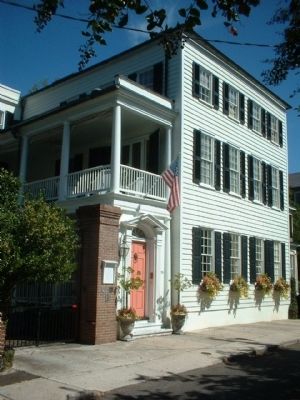
3. 126 Tradd Street The Dr. Peter Fayssoux House and Marker
— Submitted June 19, 2012, by Brian Scott of Anderson, South Carolina.
3. Brig. Gen. Barnard Elliott Bee
Although a native of Charleston, Bee really considered himself a Texan. His father had moved the family there to become the secretary of state when Texas was still a republic. Bee graduated from West Point in 1845, far down in class ranking. He fought in Mexico and was fighting Indians when he left the army in March 1861 to join South Carolina's forces. Why he joined
Historic American Buildings Survey,, circa 1977
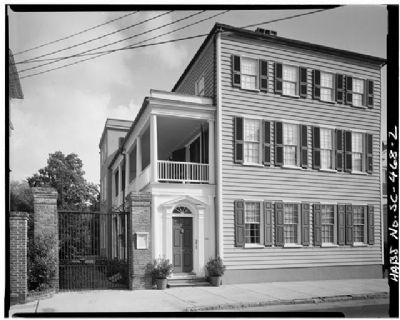
4. 126 Tradd Street The Dr. Peter Fayssoux House Marker
Historic American Engineering Record, HABS SC,10-CHAR,322-2
In that battle, Bee's troops were falling back in disarray under pressure from superior Federal forces. Bee was trying to think of something to stem the tide when his eye caught another regiment in the rear that was not moving. Behind the regiment, astride a little sorrel horse, was a general clad in a blue uniform. Bee sang out to his troops, 'There stands Jackson like a stone wall! Rally around the Virginians!'
There have always been two theories about this famous rallying cry. One theory claims that Bee was trying to impress his troops with how coolly the Virginians were holding their ground as the Federals advanced toward them. The other theory is not at all popular with Virginians. Some historians believe Bee was really cursing Jackson for keeping his troops in the rear when Jackson could plainly see that Bee's regiments were being cut to pieces. One wonders if Bee's next most famous call would have been: 'Jackson, get your butt down here, and help
Photographed by Brian Scott
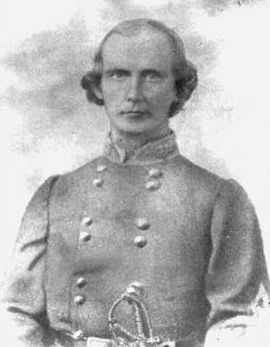
5. Hamilton Prioleau Bee
July 22, 1822 – October 3, 1897
July 22, 1822 – October 3, 1897
— Submitted June 19, 2012, by Brian Scott of Anderson, South Carolina.
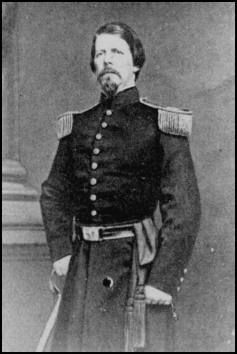
Photographed by Brian Scott
6. Barnard Elliott Bee
February 8, 1824 – July 22, 1861
February 8, 1824 – July 22, 1861
Credits. This page was last revised on May 27, 2026. It was originally submitted on October 13, 2011, by Mike Stroud of Bluffton, South Carolina. This page has been viewed 2,335 times since then and 90 times this year. Photos: 1. submitted on October 13, 2011, by Mike Stroud of Bluffton, South Carolina. 2. submitted on May 27, 2026, by Devry Becker Jones of Washington, District of Columbia. 3, 4. submitted on October 13, 2011, by Mike Stroud of Bluffton, South Carolina. 5, 6. submitted on June 19, 2012, by Brian Scott of Anderson, South Carolina.
