Ninety Six in Greenwood County, South Carolina — The American South (South Atlantic)
Woman and Child
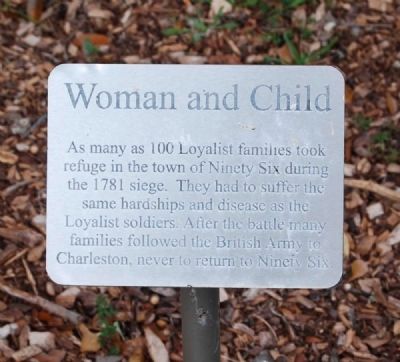
Photographed by Brian Scott, October 18, 2011
1. Woman and Child Marker
Erected 2011.
Topics. This historical marker is listed in these topic lists: Settlements & Settlers • War, US Revolutionary • Women. A significant historical year for this entry is 1781.
Location. 34° 8.697′ N, 82° 1.198′ W. Marker is in Ninety Six, South Carolina, in Greenwood County. It can be reached from South Cambridge Road. Marker is located within the boundary of the old village of Ninety Six, near the historic Whitehall Road. Touch for map. Marker is in this post office area: Ninety Six SC 29666, United States of America. Touch for directions.

Regionally, this marker is in Upstate. It is also in the American South and specifically in the Deep South. Globally, it is in North America, the Western Hemisphere, the Western World, and the Anglosphere. Historically, it finds itself in what was once the territory of the Mississippian
this page online
Other nearby markers. At least 10 other markers are within walking distance of this marker: Ninety Six (within shouting distance of this marker); Why Did the British Burn Ninety Six? (within shouting distance of this marker); Gouedy Trail and Charleston Road (within shouting distance of this marker); Law and Order in the Carolina Backcountry (about 300 feet away, measured in a direct line); The American Revolution Comes to the South (about 300 feet away); Spring Branch (about 400 feet away); Covered Way (about 400 feet away); The Attack (about 500 feet away); The Forlorn Hope (about 500 feet away); The Mine (about 600 feet away). Touch for a list and map of all markers in Ninety Six.
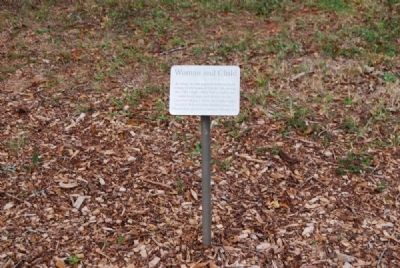
Photographed by Brian Scott, October 18, 2011
2. Woman and Child Marker
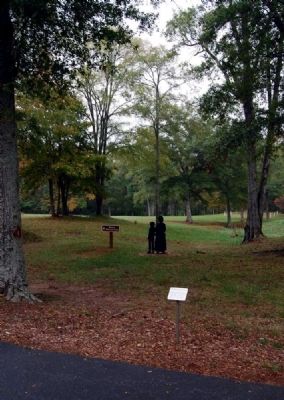
Photographed by Brian Scott, October 18, 2011
3. Woman and Child Marker and Silhoutte
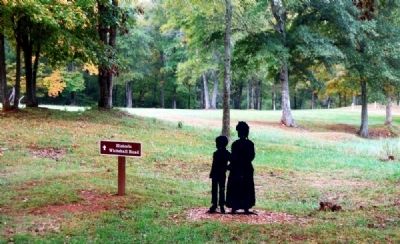
Photographed by Brian Scott, October 18, 2011
4. Woman and Child Marker and Silhoutte
Credits. This page was last revised on September 17, 2024. It was originally submitted on October 19, 2011, by Brian Scott of Anderson, South Carolina. This page has been viewed 527 times since then and 21 times this year. Photos: 1, 2, 3, 4. submitted on October 19, 2011, by Brian Scott of Anderson, South Carolina.
