Near Piffard in Livingston County, New York — The American Northeast (Mid-Atlantic)
A-on-do-wa-nuh
Photographed by Paul Crumlish, June 25, 2011
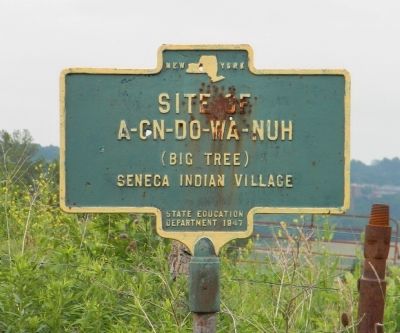
1. A-cn-do-wa-nuh Marker
Site of A-cn-do-wa-nuh (Big Tree) Seneca Indian Village
Erected 1947 by New York State Education Department.
Topics. This historical marker is listed in this topic list: Indigenous Peoples and Communities.
Location. 42° 47.889′ N, 77° 51.709′ W. Marker is near Piffard, New York, in Livingston County. It is on River Road (County Road 19) 1.7 miles north of Canandaigua Road, on the right when traveling north. Touch for map. Marker is in this post office area: Piffard NY 14533, United States of America. Touch for directions.

Regionally, this marker is in Upstate New York, specifically in Western New York, in the Finger Lakes, and in the Rochester Metropolitan Area. It is also in the American Northeast and in the Mid-Atlantic. Globally, it is in North America, the Western Hemisphere, the Western World, and the Anglosphere. Historically, it finds itself in what was once the Haudenosaunee (Iroquois) Confederacy, New Netherland, and one of the original Thirteen Colonies.
Other nearby markers. At least 8 other markers are within 2 miles of this marker,
this page online
More about this marker. Per the Bulletin - New York State Museum of Natural History, New York State Museum, New York State Museum and Science Service: "Gaundowaneh or Big Tree was a Seneca village on a hill one mile north of Cuylerville. It was on the west side of the river on the farm of EP Slocum in Leicester and was the last town occupied by the Senecas. "
The 100 ft tall Swamp White Oak which marked the location of the Seneca indian village stood on east bank of the Genesee River until it fell into river in 1857. A section of the 27 foot circumstance trunk has been preserved in nearby Geneseo.
The Treaty of Big Tree conference was held in a meadow on the east bank of the Genesee River, opposite the
Photographed by Paul Crumlish, June 25, 2011
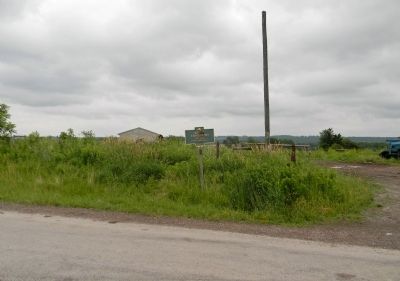
2. Wide view of the A-cn-do-wa-nuh Marker
Also see . . . Treaty of Big Tree 1797-1997. Genesee Country Magazine website entry:
Major treaty opened Genesee region to peaceful settlement. (Submitted on February 4, 2012, by PaulwC3 of Northern, Virginia.)
Photographed by Paul Crumlish, June 25, 2011
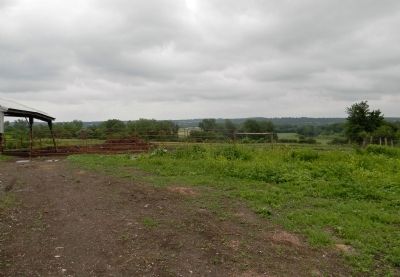
3. View of the area of A-cn-do-wa-nuh
Looking from the western rim of the Genesee Valley over the site of the A-cn-do-wa-nuh (Big Tree) Seneca indian village and across the Genesee River toward to the modern day village of Geneseo.
Credits. This page was last revised on January 11, 2025. It was originally submitted on February 4, 2012, by PaulwC3 of Northern, Virginia. This page has been viewed 1,279 times since then and 51 times this year. Photos: 1, 2, 3. submitted on February 4, 2012, by PaulwC3 of Northern, Virginia.
Editor’s want-list for this marker. Photo of the section of Big Tree trunk on display at the Geneseo Historical Museum • Can you help?
