Long Bridge Park in Arlington in Arlington County, Virginia — The American South (Mid-Atlantic)
Fort Runyon
Historical Site
| — | Defenses of Washington 1861 - 1865 | — |
February 9, 2008
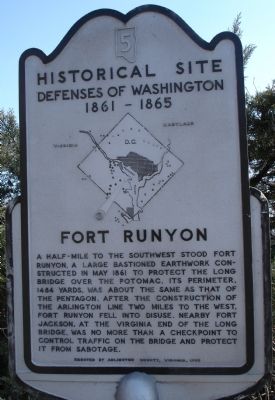
1. Fort Runyon Marker
Erected 1965 by Arlington County, Virginia. (Marker Number 5.)
Topics and series. This historical marker is listed in these topic lists: Forts and Castles • War, US Civil. In addition, it is included in the Defenses of Washington series list. A significant historical month for this entry is May 1861.
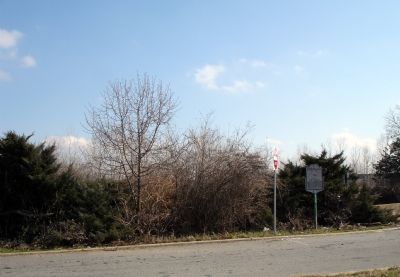
Location. 38° 52.191′ N, 77° 2.705′ W. Marker is in Arlington, Virginia, in Arlington County. It is in Long Bridge Park. It is at the intersection of Clark Street and Boundary Channel Drive, on the right when traveling north on Clark Street. Marker is located on Clark Street which is the terminus of Old Jefferson Davis Highway at Boundary Channel Drive. Touch for map.
this page online

Regionally, this marker is in the Washington Metropolitan Area and in Northern Virginia. It is also in the American South, specifically in the Upper South, in the Mid-Atlantic, and on the Eastern Seaboard. Globally, it is in the North Atlantic Region, North America, the Western Hemisphere, the Western World, and the Anglosphere. Historically, it finds itself in what was once the territory of the Mississippian Culture, one of the original Thirteen Colonies, one of the Confederate States of America, and the Antebellum South.
Other nearby markers. At least 8 other markers are within walking distance of this marker: Looking Beyond the Park (about 700 feet away, measured in a direct line); A Historic Junction (about 700 feet away); Bridging the Past (about 700 feet away); Long Bridge Park: A Legacy of Recreation (about 700 feet away); From Brownfield to Playing Fields (approx. 0.2 miles away); Arlington's Natural Side (approx. ¼ mile away); A Roadside Respite (approx. 0.4 miles away); Fort Runyon: Defending the Capital
February 9, 2008
2. Fort Runyon Marker
Other markers no longer nearby. Long Bridge Park: A Community Space (was about 700 feet away but has been replaced with another marker now near it); a different marker also named From Brownfield to Playing Fields (was approx. 0.2 miles away but has been replaced with another marker now near it).
More about this marker. In the center of the marker is a map of the Washington Defenses, with an arrow pointing out the location of Fort Runyon.
Additional commentary.
1. Fort Runyon Particulars
From "Mr. Lincoln's Forts: A Guide to the Civil War Defenses of Washington," by Benjamin Franklin Cooling III and Walton H. Owen II:
The fort was named in honor of Brig. Gen. Theodore Runyon, of the New Jersey Brigade. Covering 12 acres of ground enclosed within a 1,484 yard perimeter, Fort Runyon rated as the largest of the Washington Forts. Built starting in May 1861, it was also among the first built. The Fort guarded the Virginia side of the Long Bridge (which crossed to the south of the modern railroad bridge). It also served to cover the Washington-Alexandria
Internet Archive
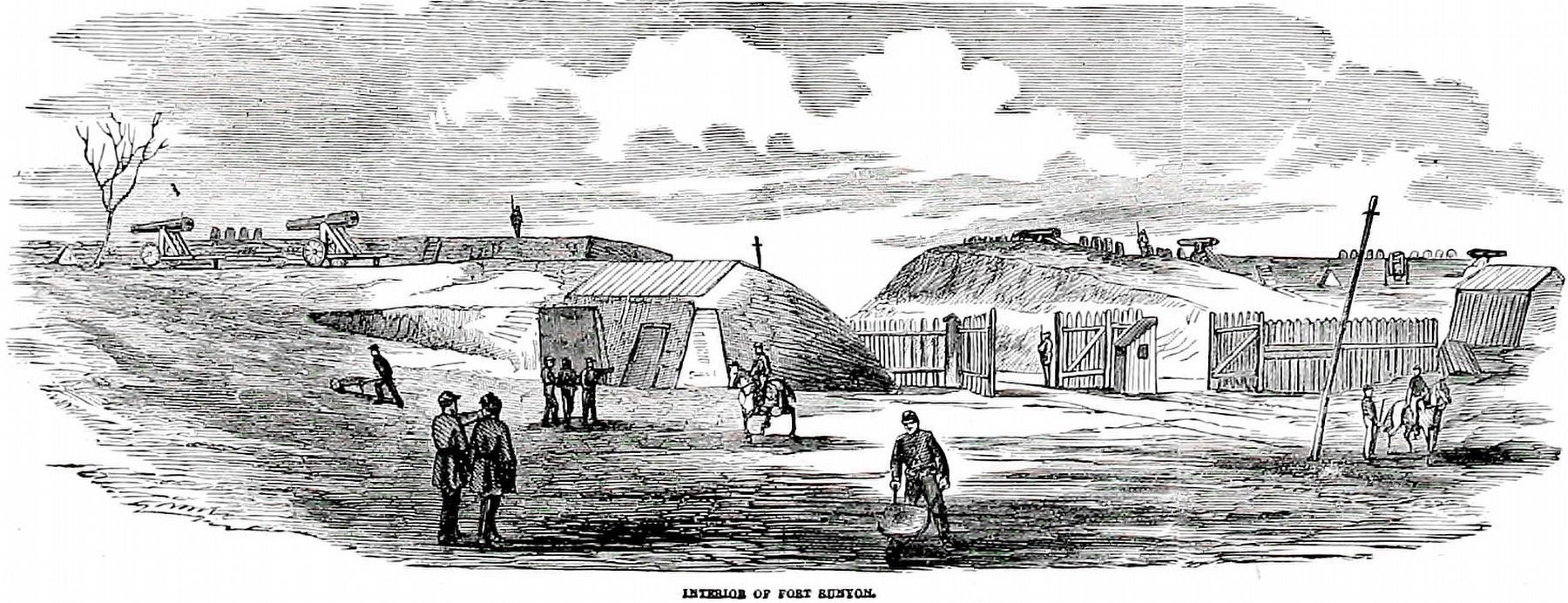
3. Interior of Fort Runyon, April 1861.
From Harper's Pictorial History of the Civil War, by Alfred H. Guernsey and Henry Mills Alden, 1894, Vol 1, page 160.
As other forts were built and covered the approaches to sufficient depth, guns from Fort Runyon were relocated to more important sites. By the fall of 1862 it was being used more as a supply depot and corral. Armament was listed as one 8-inch seacoast howitzer and one 32-pdr gun at that time.
Units stationed at Fort Runyon over time included the 1st Massachusetts Heavy Artillery, 2nd, 3rd, and 21st New Jersey Infantry, 13th New Hampshire Infantry, and 7th New York Militia.
— Submitted February 9, 2008, by Craig Swain of Leesburg, Virginia.
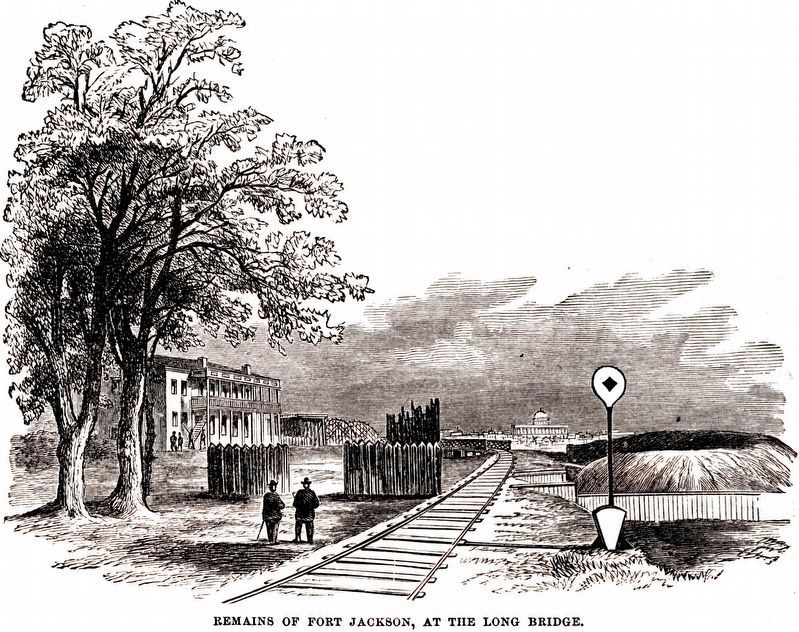
2. Fort Jackson Particulars
From "Mr. Lincoln's Forts: A Guide to the Civil War Defenses of Washington," by Benjamin Franklin Cooling III and Walton H. Owen II:
Named for Jackson City, a failed development project from the 1850s. The fort stood about 50 yards south of the Metro Rail bridge. It was built to defend the Long Bridge and control bridge traffic. Little is recorded other than its use as a check point.
— Submitted February 9, 2008, by Craig Swain of Leesburg, Virginia.
Library of Congress
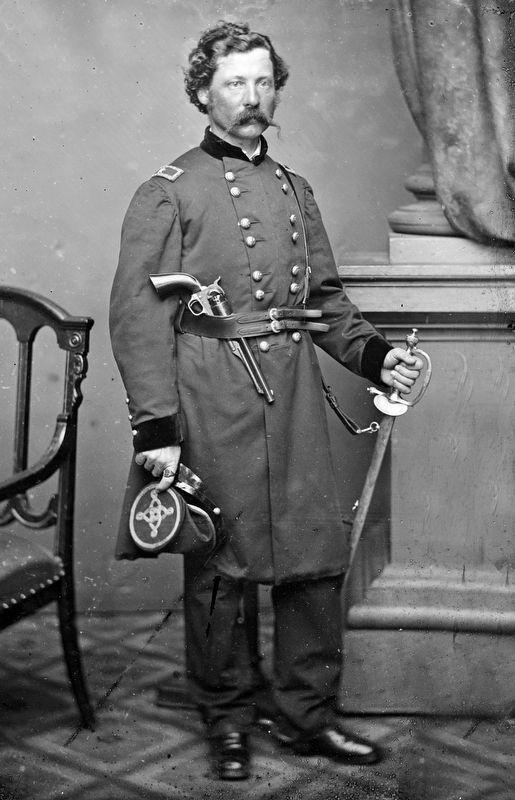
4. General Theodore Runyon
Civil war photographs, 1861-1865, Library of Congress, Prints and Photographs Division.
Internet Archive
5. Remains of Fort Jackson, at the Long Bridge
“This is from a sketch made by the author at the close of April, 1865, and shows the embankments of Fort Jackson on the right, and the remains of the pickets, with the railway, in the foreground. On the left is a public house of entertainment, and just beyond it is seen a portion of the Long Bridge. The Capitol is seen in the distance.” – B. J. Lossing.
from The Pictorial Field Book of the Civil War in the United States of America by Benson John Lossing, 1874, Vol. 1, page 582.
from The Pictorial Field Book of the Civil War in the United States of America by Benson John Lossing, 1874, Vol. 1, page 582.
Credits. This page was last revised on March 3, 2023. It was originally submitted on February 9, 2008. This page has been viewed 3,082 times since then and 54 times this year. Photos: 1, 2. submitted on February 9, 2008. 3, 4. submitted on December 12, 2020, by Allen C. Browne of Silver Spring, Maryland. 5. submitted on January 14, 2021, by Allen C. Browne of Silver Spring, Maryland. • Craig Swain was the editor who published this page.
