Madison in Dane County, Wisconsin — The American Midwest (Great Lakes)
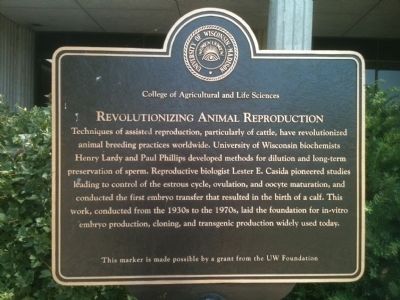
Revolutionizing Animal Reproduction
College of Agricultural and Life Sciences
Photographed by William J. Toman, July 4, 2012
1. Revolutionizing Animal Reproduction Marker
This marker is made possible by a grant from the UW Foundation
Erected 2001 by the UW Foundation.
Topics and series. This historical marker is listed in these topic lists: Animals • Education • Science & Medicine. In addition, it is included in the University of Wisconsin series list.
Location. 43° 4.581′ N, 89° 24.913′ W. Marker is in Madison, Wisconsin, in Dane County. It is at the intersection of Observatory Drive and Elm Drive, on the right when
this page online

Regionally, this marker is in Southeast Wisconsin. It is also in the American Midwest and in the Corn Belt. Globally, it is in North America, the Western Hemisphere, the Western World, and the Anglosphere. Historically, it finds itself in what was once the territory of the Mississippian Culture and also the Northwest Territory.
Other nearby markers. At least 8 other markers are within walking distance of this marker: Understanding Immunity (within shouting distance of this marker); Preventing Endemic Goiter (about 300 feet away, measured in a direct line); Discovering Vitamins and Trace Minerals (about 300 feet away); Scientific Approach to Agriculture (about 500 feet away); Disease-Resistant Plants (about 600 feet away); First Reliable Test of Milk Quality (about 700 feet away); The Land Ethic (about 700 feet away); Mass Production of Penicillin
Photographed by William J. Toman, July 4, 2012
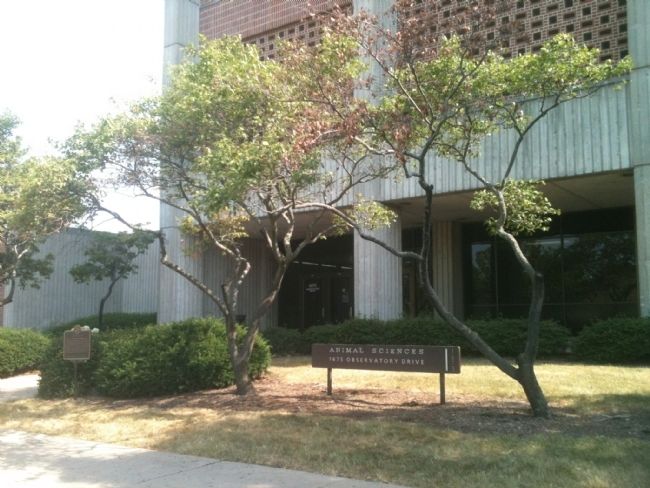
2. Revolutionizing Animal Reproduction Marker
More about this marker. This marker is part of a series commemorating the sesquicentennial of the University of Wisconsin-Madison.
Photographed by William J. Toman, July 4, 2012
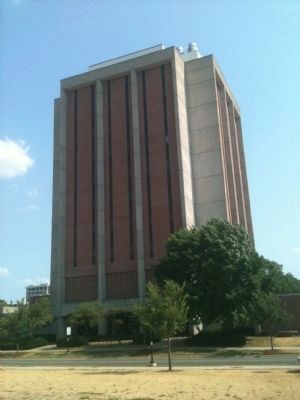
3. Animal Sciences Building
Credits. This page was last revised on June 16, 2016. It was originally submitted on July 4, 2012, by William J. Toman of Green Lake, Wisconsin. This page has been viewed 491 times since then and 19 times this year. Photos: 1, 2, 3. submitted on July 4, 2012, by William J. Toman of Green Lake, Wisconsin.
