Near Bolivar in Jefferson County, West Virginia — The American South (Appalachia)
Sheridan Dug In
Harpers Ferry National Historical Park
| — | National Park Service, U.S. Department of the Interior | — |
March 1, 2008
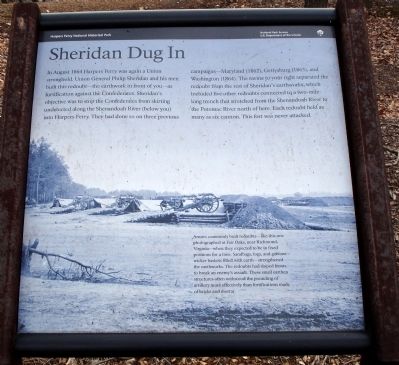
1. Sheridan Dug In Marker
Erected by National Park Service, U.S. Department of the Interior.
Topics. This historical marker is listed in this topic list: War, US Civil. A significant historical year for this entry is 1864.
Location. 39° 18.472′ N, 77° 45.865′ W. Marker is near Bolivar, West Virginia, in Jefferson County. It can be reached from Shoreline Drive. Located on the Murphy Farm trail in the Harpers
this page online

Regionally, this marker is in the Washington Metropolitan Area and in the Eastern Panhandle. It is also in the American South, specifically in the Upper South, in Appalachia, and specifically in Northern Appalachia. Globally, it is in North America, the Western Hemisphere, the Western World, and the Anglosphere. Historically, it finds itself in what was once the territory of the Mississippian Culture and also the Antebellum South.
Other nearby markers. At least 8 other markers are within walking distance of this marker: Mountains, Men, and Maneuvers (about 400 feet away, measured in a direct line); The Murphy Farm (about 700 feet away); A Moving Symbol (about 800 feet away); Pilgrimage (about 800 feet away); Holy Ground (about 800 feet away); The Fate of Harpers Ferry was sealed. (approx. ¼ mile away); Gun Position #6 (approx. 0.3 miles away); Struggle to the Heights (approx. 0.4 miles away). Touch for a list and map of all markers in Bolivar.
More about this marker.
March 1, 2008
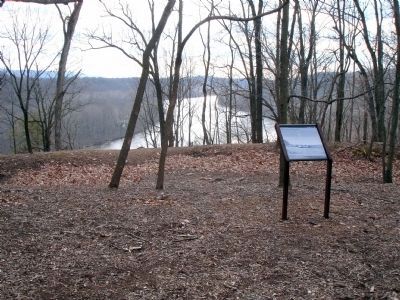
2. Sheridan Dug In Marker
March 1, 2008
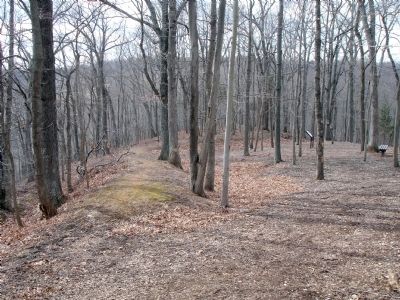
3. Another view of the earthwork
Credits. This page was last revised on July 6, 2020. It was originally submitted on March 2, 2008. This page has been viewed 1,465 times since then and 31 times this year. Photos: 1, 2, 3. submitted on March 2, 2008. • Craig Swain was the editor who published this page.
