Near Richmond Hill in Bryan County, Georgia — The American South (South Atlantic)
Richard James Arnold
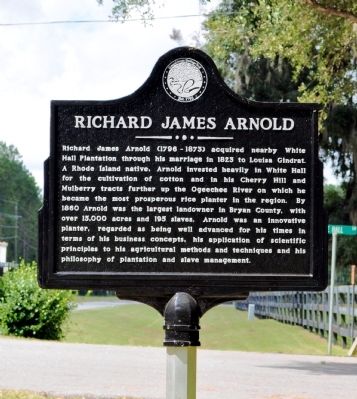
Photographed by David Seibert, September 26, 2012
1. Richard James Arnold Marker
Erected 2012 by Coastal Bryan Heritage Trail.
Topics. This historical marker is listed in this topic list: Agriculture. A significant historical year for this entry is 1823.
Location. 31° 53.15′ N, 81° 15.15′ W. Marker is near Richmond Hill, Georgia, in Bryan County. It is at the intersection of Fort McAllister Road (Georgia Route 144 Spur) and White Hall Lane, on the left when traveling east on Fort McAllister Road. Touch for map.
this page online

Regionally, this marker is on the Coastal Plain, on the Georgia Coast and the Golden Isles, and in Greater Savannah. It is also in the American South, specifically in the Deep South, and on the Eastern Seaboard. Globally, it is in the North Atlantic Region, North America, the Western Hemisphere, the Western World, and the Anglosphere. Historically, it finds itself in what was once New Spain, the territory of the Mississippian Culture, one of the original Thirteen Colonies, one of the Confederate States of America, and the Antebellum South.
Other nearby markers. At least 8 other markers are within 2 miles of this marker, measured as the crow flies: Kilpatrick on Bryan Neck (approx. 0.6 miles away); a different marker also named Fort McAllister (approx. 0.6 miles away); Burnt Church Cemetery (approx. 0.7 miles away); George W. McAllister (approx. ¾ mile away); The Clay Family of Bryan Neck (approx. ¾ mile away); George Washington Carver School (approx. 1.1 miles away); Bryan Neck Missionary Baptist Church (approx.
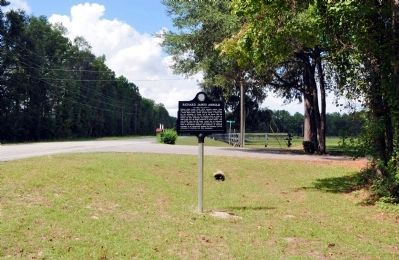
Photographed by David Seibert, September 26, 2012
2. Richard James Arnold Marker
Looking west: Fort McAllister Road (Georgia Highway 144 Spur) is to the left, and White Hall Lane in the background.
Other markers no longer nearby. Fort McAllister (was approx. 0.6 miles away but has been replaced with another marker now near it); Kilpatrick On Bryan Neck (was approx. 0.6 miles away but has been replaced with another marker now near it).
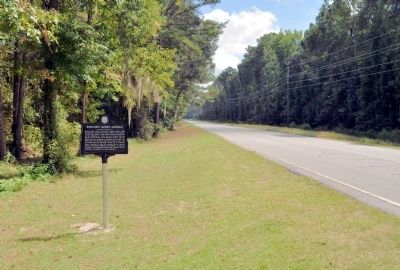
Photographed by David Seibert, September 26, 2012
3. Richard James Arnold Marker
Looking east on Fort McAllister Road (Georgia Highway 144 Spur) toward Fort McAllister.
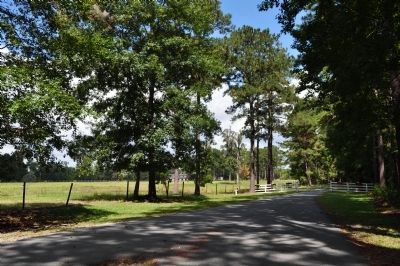
Photographed by David Seibert, September 26, 2012
4. White Hall Plantation Site
The house at White Hall Plantation burned in 1914.
Photographed by David Seibert, November 14, 2002
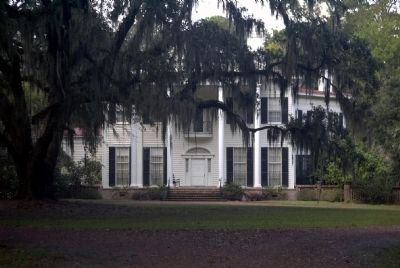
5. Folly Farms Plantation
Arnold purchased a tract adjoining White Hall in 1824, and built this house, originally called Myrtle Grove, in 1850. In 1871 Arnold conveyed Myrtle Grove to his granddaughter. The tract and house passed through other hands, and in 1920 was renamed Folly Farms. It is privately owned, and not open to the public.
Credits. This page was last revised on July 23, 2025. It was originally submitted on October 3, 2012, by David Seibert of Sandy Springs, Georgia. This page has been viewed 2,595 times since then and 113 times this year. Photos: 1, 2, 3, 4, 5. submitted on October 3, 2012, by David Seibert of Sandy Springs, Georgia. • Craig Swain was the editor who published this page.
