Montmartre in Paris in Département de Paris, Île-de-France, France — Western Europe
Le cimetiere Montmartre
[The Montmartre Cemetery]
| — | Histoire de Paris | — |
Photographed by Barry Swackhamer, September 29, 2012
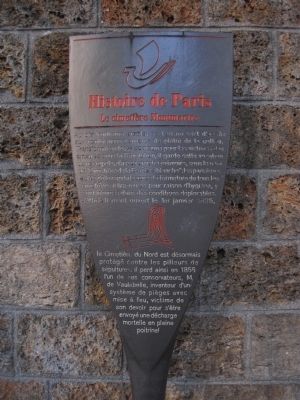
1. Le cimetiere Montmartre Marker
[Translated by Google Translate with modifications:
The Montmartre Cemetery
In the eighteenth century, this land was access to numerous plaster quarries on the hill. Turned into a common grave for victims of the riots in the French Revolution, it retained this vocation necropolis, of rather infamous reputation , as the "Graveyard of the white barrier,": Parisian
this page online
Topics and series. This historical marker is listed in this topic list: Cemeteries & Burial Sites. In addition, it is included in the Histoire de Paris series list. A significant historical date for this entry is January 1, 1825.
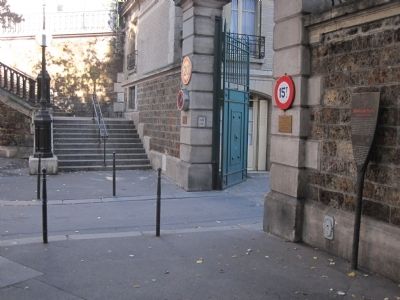
Location. 48° 53.112′ N, 2° 19.866′ E. Marker is in Paris, Île-de-France, in Département de Paris. It is in Montmartre. It is on Avenue Rachel. This marker is in the Montmartre District of Paris. Touch for map. Marker is at or near this postal address: 20 Avenue Rachel, Paris, Île-de-France 75018, France. Touch for directions.

Regionally, it is in the North Atlantic Region, Europe, the European Union, Atlantic Europe, the Schengen Area, Western Europe, a coastal Mediterranean country, and the Western World. Historically, it finds itself
Photographed by Barry Swackhamer, September 29, 2012
2. Le cimetiere Montmartre Marker
Other nearby markers. At least 8 other markers are within walking distance of this marker: Cimetière Montmartre (1825) (a few steps from this marker); Le Gaumont-Palace illuminé la nuit (about 120 meters away, measured in a direct line); L’Hippo-Palace (about 120 meters away); Bernard-Marie Koltès (about 120 meters away); Raymond Souplex (about 120 meters away); Le boulevard de Clichy sous le neige (about 150 meters away); Copi (about 150 meters away); L’hôtel du comte d’Escalopier / Count Escalopier’s Mansion (about 150 meters away). Touch for a list and map of all markers in Paris.
Additional keywords. panneau
Photographed by Barry Swackhamer, September 29, 2012
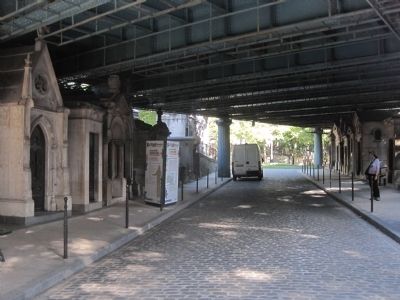
3. Le cimetiere Montmartre
Photographed by Barry Swackhamer, September 29, 2012
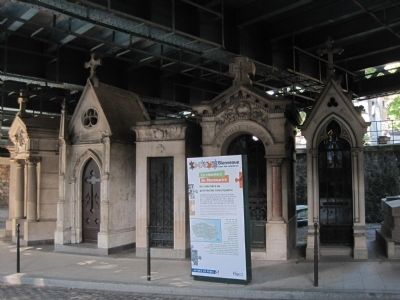
4. Le cimetiere Montmartre
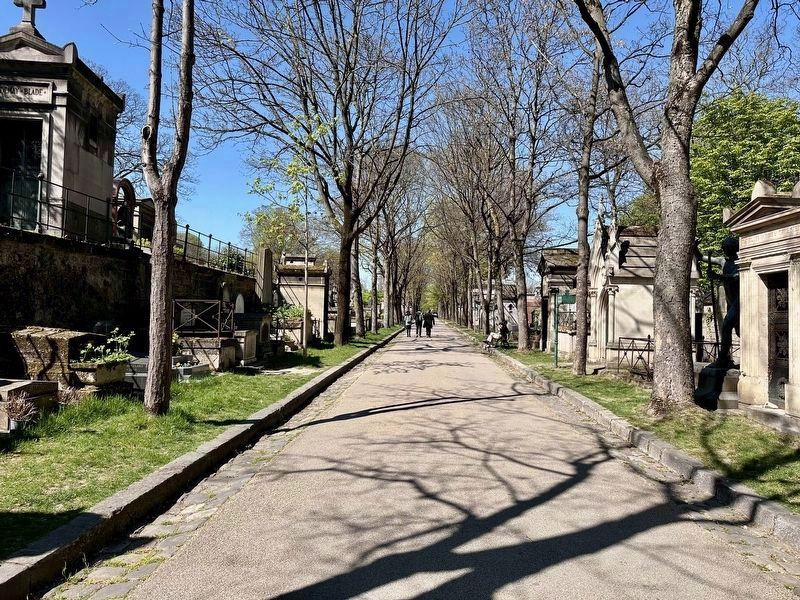
April 7, 2025
5. Le cimetiere Montmartre - general view
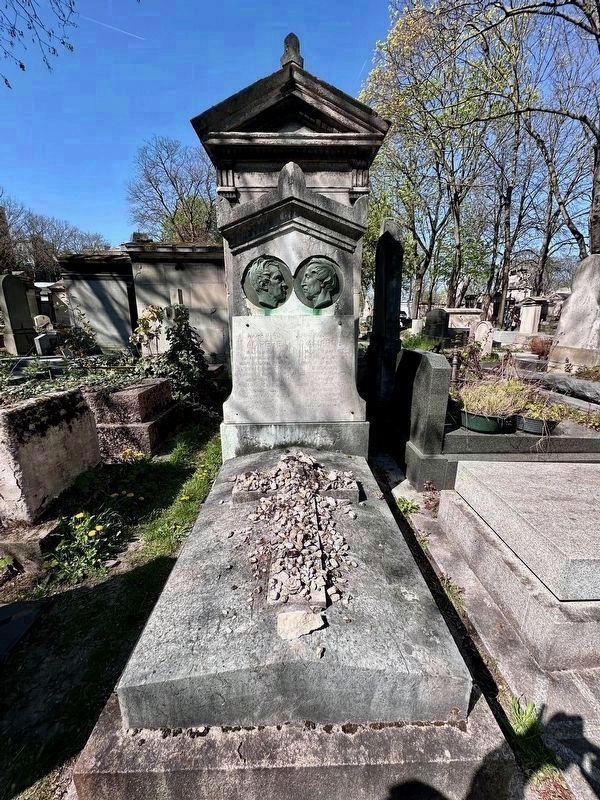
April 7, 2025
6. Grave of André-Marie Ampere (Division 30)
André-Marie Ampère (20 January 1775 – 10 June 1836) was a French physicist and mathematician who was one of the founders of the science of classical electromagnetism, which he referred to as electrodynamics. He made also important contributions in chemistry and philosophy. He is also the inventor of numerous applications, such as the solenoid (a term coined by him) and the electrical telegraph.… -Wikipedia
Click for more information.
Click for more information.
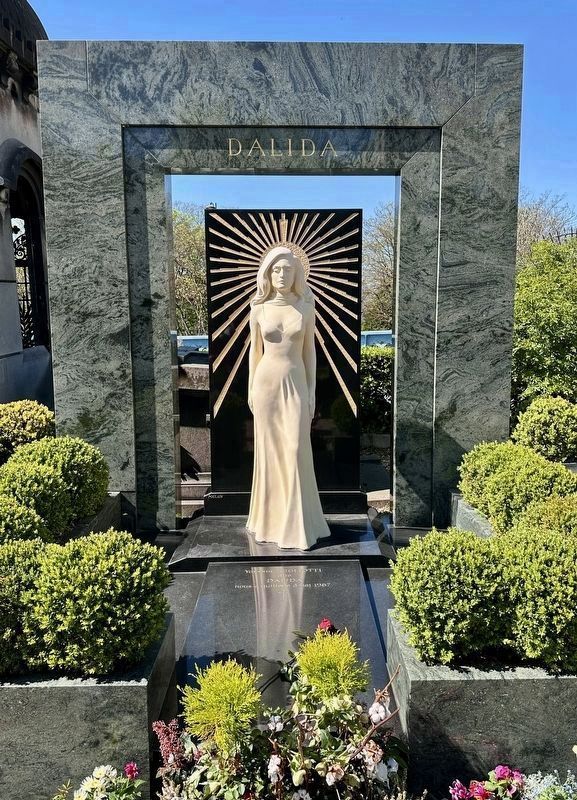
April 7, 2025
7. Grave of Dalida (Division 18)
Iolanda Cristina Gigliotti (17 January 1933 – 3 May 1987), professionally known as Dalida, was an Italian naturalized French singer and actress. Throughout her international career, Dalida sold more than 140 million records worldwide. - Wikipedia
Click for more information.
Click for more information.
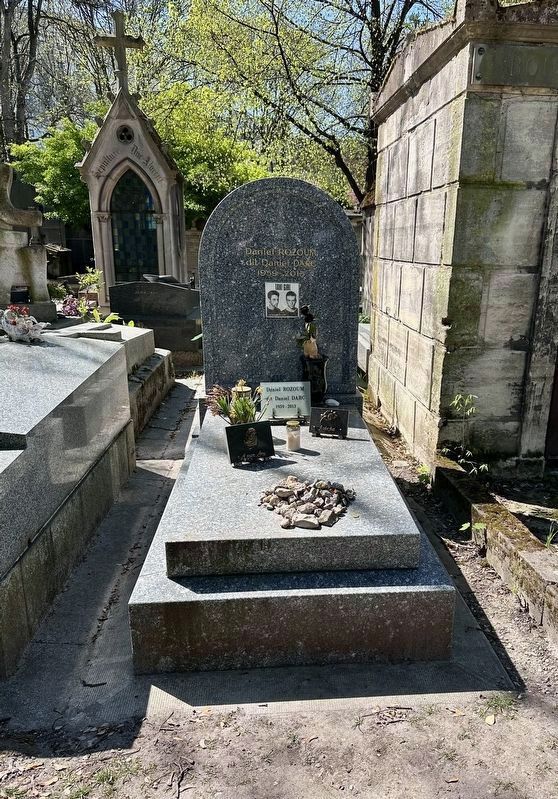
April 7, 2025
8. Grave of Daniel Darc
Daniel Rozoum (20 May 1959 – 28 February 2013), known as Daniel Darc, was a French singer, who achieved success with his band Taxi Girl (together with Mirwais Ahmadzaï) between 1978 and 1986, and also as a solo artist. - Wikipedia
April 7, 2025
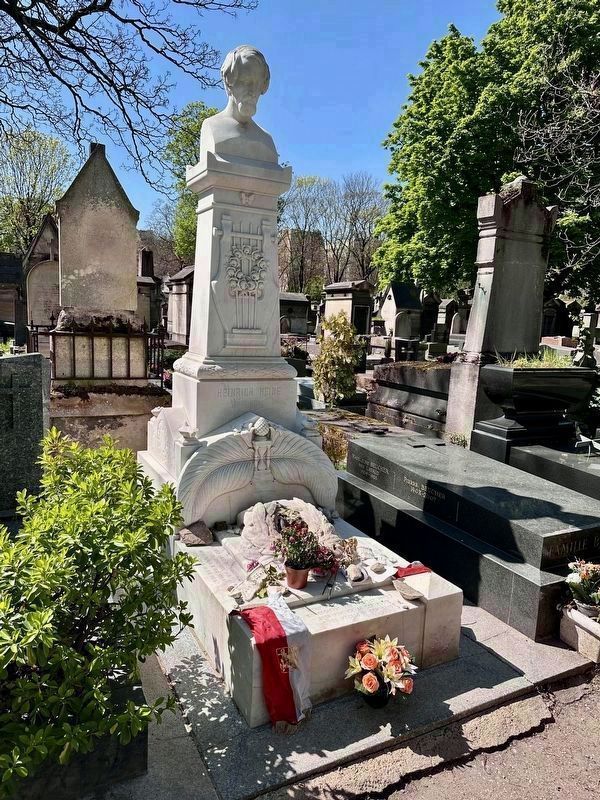
9. Grave of Heinrich Heine (Division 27)
Christian Johann Heinrich Heine (born Harry Heine; 13 December 1797 – 17 February 1856) was a German poet, writer and literary critic.… - Wikipedia
Click for more information.
Click for more information.
April 7, 2025
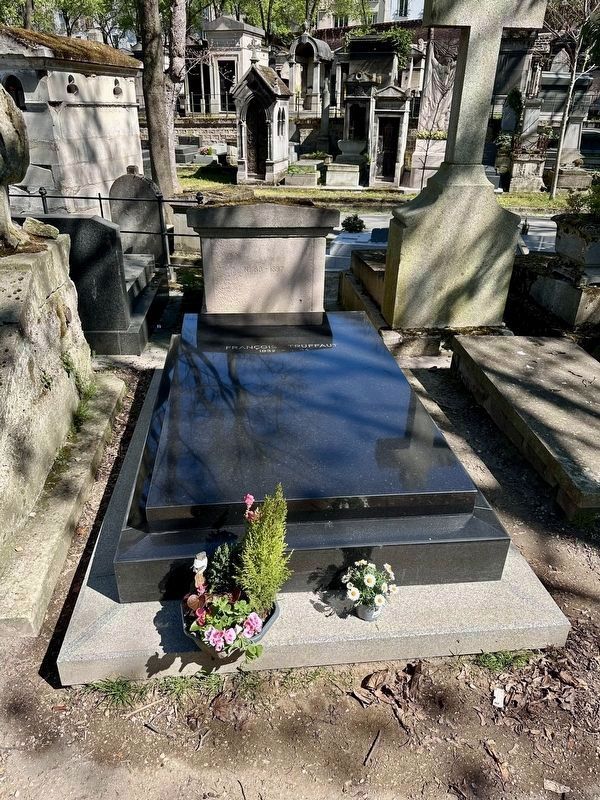
10. Grave of François Truffaut (Division 21)
François Roland Truffaut (6 February 1932 – 21 October 1984) was a French filmmaker, actor, and critic. He is widely regarded as one of the founders of the French New Wave.… -Wikipedia
Credits. This page was last revised on February 2, 2026. It was originally submitted on November 2, 2012, by Barry Swackhamer of Brentwood, California. This page has been viewed 905 times since then and 77 times this year. Photos: 1, 2, 3, 4. submitted on November 2, 2012, by Barry Swackhamer of Brentwood, California. 5, 6, 7, 8, 9, 10. submitted on February 2, 2026. • Bill Pfingsten was the editor who published this page.
