Highland Park in Rochester in Monroe County, New York — The American Northeast (Mid-Atlantic)
Douglass Home
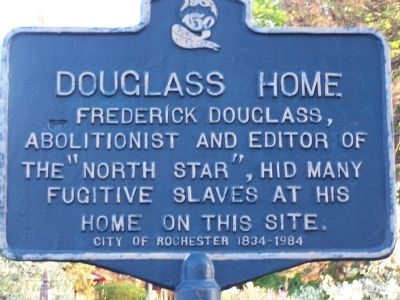
Photographed by Yugoboy, May 6, 2012
1. Douglass Home Marker
Erected 1984 by Rochester Sesquicentennial Committee.
Topics. This historical marker is listed in these topic lists: Abolition & Underground RR • African Americans.
Location. 43° 8.126′ N, 77° 36.474′ W. Marker is in Rochester, New York, in Monroe County. It is in Highland Park. It is on South Avenue 0.2 miles north of Rockingham Street. Touch for map. Marker is in this post office area: Rochester NY 14620, United States of America. Touch for directions.

Regionally, this marker is in Upstate New York, specifically in Western New York, and in the Finger Lakes. It is also in the American Northeast and in the Mid-Atlantic. Globally, it is in North America, on the Great Lakes, in the Western Hemisphere, in the Western World, and in the Anglosphere. Historically, it finds itself in what was once the Haudenosaunee (Iroquois) Confederacy, New Netherland, and one of the original Thirteen Colonies.
Other nearby markers. At least 8 other
this page online
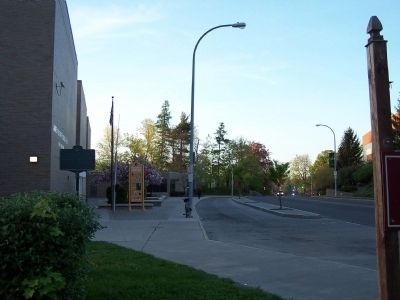
Photographed by Yugoboy, May 6, 2012
2. Douglass Home Marker as seen from southern approach
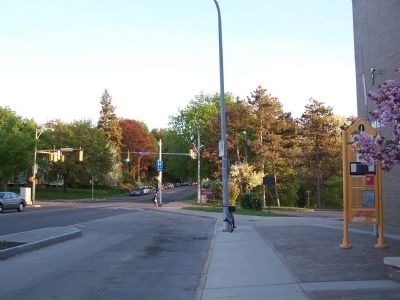
Photographed by Yugoboy, May 6, 2012
3. Douglass Home Site Marker as seen from northern approach
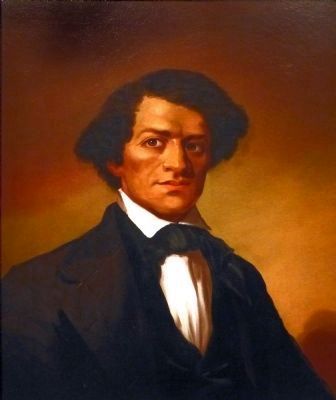
Photographed by Allen C. Browne, February 16, 2015
4. Frederick Douglass
This 1844 portrait of Frederick Douglass hangs in the Natinal Portrait Gallery in Washington, DC.
“Frederick Douglass became the first nationally known African American in U.S. History by turning his life into a testimony on the evils of slavery and the redemptive power of freedom. He had escaped from slavery in 1838 and subsequently became a powerful witness for abolitionism, speaking, writing, and organizing on behalf of the movement; he also founded a newspaper, the North Star. Douglass's charisma derived from his ability to present himself as the author of his own destiny at a time when white America could barely conceive of the black man as a thinking and feeling human being. The Narrative of the Life of Frederick Douglass is not only a gripping nonfiction account of one man's struggle for freedom; it is also one of the greatest American autobiographies. This powerful portrait shows Douglass as he grew in prominence during the 1840s.” — National Portrait Gallery.
“Frederick Douglass became the first nationally known African American in U.S. History by turning his life into a testimony on the evils of slavery and the redemptive power of freedom. He had escaped from slavery in 1838 and subsequently became a powerful witness for abolitionism, speaking, writing, and organizing on behalf of the movement; he also founded a newspaper, the North Star. Douglass's charisma derived from his ability to present himself as the author of his own destiny at a time when white America could barely conceive of the black man as a thinking and feeling human being. The Narrative of the Life of Frederick Douglass is not only a gripping nonfiction account of one man's struggle for freedom; it is also one of the greatest American autobiographies. This powerful portrait shows Douglass as he grew in prominence during the 1840s.” — National Portrait Gallery.
Credits. This page was last revised on February 16, 2023. It was originally submitted on May 7, 2013, by Yugoboy of Rochester, New York. This page has been viewed 1,020 times since then and 31 times this year. Photos: 1, 2, 3. submitted on May 7, 2013, by Yugoboy of Rochester, New York. 4. submitted on May 2, 2015, by Allen C. Browne of Silver Spring, Maryland. • Bill Pfingsten was the editor who published this page.
