Near Keedysville in Washington County, Maryland — The American Northeast (Mid-Atlantic)
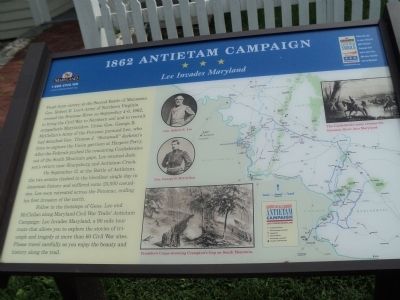
1862 Antietam Campaign
Lee Invades Maryland
Photographed by Bill Coughlin, August 13, 2013
1. 1862 Antietam Campaign Marker
Fresh from victory at the Second Battle of Manassas, Gen. Robert E. Lee’s Army of Northern Virginia crossed the Potomac River on September 4-6, 1862, to bring the Civil War to Northern soil and to recruit sympathetic Marylanders. Union Gen. George B. McClellan’s Army of the Potomac pursued Lee, who had detached Gen. Thomas J. “Stonewall” Jackson’s force to capture the Union garrison at Harpers Ferry. After the Federals pushed the remaining Confederates out of the South Mountain gaps, Lee awaited Jackson's return near Sharpsburg and Antietam Creek.
On September 17, at the Battle of Antietam, the two armies clashed in the bloodiest single day in American history and suffered some 23,000 casualties. Lee soon retreated across the Potomac, ending his first invasion of the north.
Follow in the footsteps of Gens. Lee and McClellan along Maryland Civil War Trail’s Antietam Campaign: Lee Invades Maryland, a 90 mile tour route that allows you to explore the stories of triumph and tragedy at more than 60 Civil War sites. Please travel carefully as you enjoy the beauty and history along the trail.
Erected by Maryland Civil War Trails.
this page online
Topics. This historical marker is listed in this topic list: War, US Civil. A significant historical month for this entry is September 1906.
Location. Marker has been permanently removed. It was located near 39° 27.877′ N, 77° 43.644′ W. Marker was near Keedysville, Maryland, in Washington County. It was on Shepherdstown Pike (Maryland Route 34), on the left when traveling east. Marker is located on the Antietam Battlefield, in front of the Newcomer House. Touch for map. Marker was at or near this postal address: 18422 Shepherdstown Pike, Keedysville MD 21756, United States of America.
We have been informed that this marker is no longer there and will not be replaced. This page is an archival view of what was.
Regionally, this marker was in Western Maryland. It was also in the American Mid-Atlantic, in Appalachia, and specifically in Northern Appalachia. Globally, it was in North America, the Western Hemisphere, the Western World, and the Anglosphere. Historically, it found itself in what was once one of the original Thirteen Colonies.

Other nearby markers. At least 8 other markers are within walking distance of this location: Heart of the Civil War Heritage Area
Photographed by Bill Coughlin, August 13, 2013
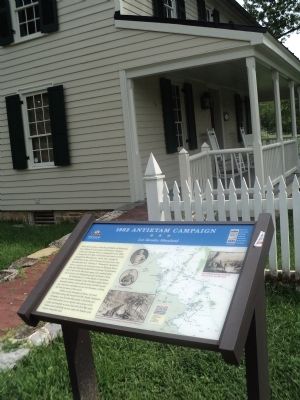
2. 1862 Antietam Campaign Marker
Other markers no longer nearby. Gettysburg Campaign (was here, next to this marker but has been replaced with another marker now near it); Early's Washington Raid (was here, next to this marker but has been permanently removed); The Newcomer House (was a few steps from this marker but has been permanently removed); Heart of the Civil War (was a few steps from this marker but has been permanently removed); Middle Bridge (was about 300 feet away, measured in a direct line but has been confirmed missing).
More about this marker. The background of the marker contains a map showing the locations of Civil War Trails markers
Photographed by Bill Coughlin, August 13, 2013
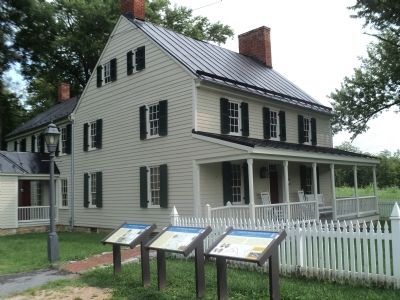
3. Marker on the Antietam Battlefield
The marker is located in front of the Newcomer House, seen in the background. The Antietam Campaign marker is the leftmost of the three shown here.
Photographed by Bill Coughlin, August 13, 2013
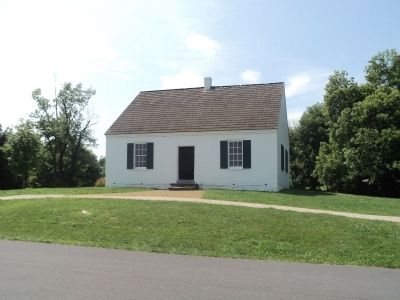
4. Dunker Church
The Union attack was directed at the area around this church during the early phase of the Battle of Antietam.
Photographed by Bill Coughlin, August 13, 2013
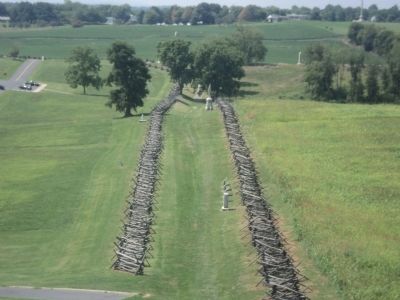
5. Bloody Lane
Intense fighting took place along this sunken road during the mid-morning phase of the battle. More than 2,000 Confederates used this lane as a fortification and held off repeated attacks by almost 10,000 Union troops before finally falling back.
Photographed by Bill Coughlin, August 13, 2013
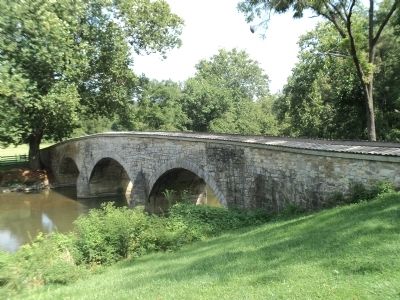
6. Burnside Bridge
The final phase of the battle involved this lower bridge over Antietam Creek. A small group of Georgians and other Confederates held off troops under Gen. Ambrose Burnside until late in the day.
Credits. This page was last revised on April 1, 2025. It was originally submitted on August 15, 2013, by Bill Coughlin of Woodland Park, New Jersey. This page has been viewed 792 times since then and 23 times this year. Photos: 1, 2, 3, 4, 5, 6. submitted on August 15, 2013, by Bill Coughlin of Woodland Park, New Jersey.
