Perryville in Cecil County, Maryland — The American Northeast (Mid-Atlantic)
Rodgers Tavern
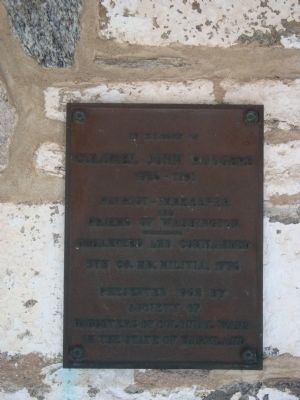
Photographed by Roger Dean Meyer, April 5, 2009
1. Rodgers Tavern Marker
Erected 1962 by Society of Daughters of Colonial Wars In the State of Maryland.
Topics and series. This historical marker is listed in these topic lists: Colonial Era • War, US Revolutionary. In addition, it is included in the Daughters of Colonial Wars, and the National Register of Historic Places (NRHP) series lists. A significant historical year for this entry is 1776.
Location. 39° 33.424′ N, 76° 4.686′ W. Marker is in Perryville, Maryland, in Cecil County. It can be reached from Broad Street (Maryland Route 7) 0.1 miles east of Frenchtown Road, on the right when traveling east. Marker is on the right side of the entry to Rodgers Tavern. Touch for map. Marker is in this post office area: Perryville MD 21903, United States of America. Touch for directions.

Regionally, this marker is in Greater Wilmington, on the Eastern Shore, and in Greater Philadelphia. It is also in the American Mid-Atlantic, on the Delmarva Peninsula,
this page online
Other nearby markers. At least 8 other markers are within walking distance of this marker: Geo Washington Traveled This Road (a few steps from this marker); Historic Rodgers Tavern (a few steps from this marker); Old Post Road (within shouting distance of this marker); Revered Son (within shouting distance of this marker); a different marker also named Perryville (within shouting distance of this marker); Perryville Railroad Ferry & Station (about 300 feet away, measured in a direct line); Count de Rochambeau’s Troops (about 400 feet away); a different marker also named Perryville (about 500 feet away). Touch for a list and map of all markers in Perryville.
Another marker is no longer nearby. Perryville (was within shouting distance of this marker but has been replaced with another marker now near it).
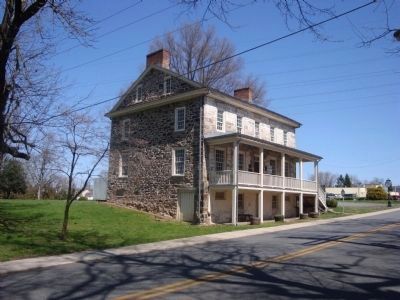
Photographed by Roger Dean Meyer, April 5, 2009
2. Rodgers Tavern
Also see . . .
1. Rodgers Tavern (Stevenson's Tavern),. CE-129 , Maryland Inventory of Historic Properties.
"Rodgers Tavern is of national importance due to the frequent visits of George Washington between the years 1775-1798. Colonel John Rodgers (1728-1791), the owner during most of Washington's visits, was the progenitor of the Rodgers family which distinguished itself in the formation and growth of the United States Navy. Also the visits of distinguished persons, namely Martha Washington, Lafayette, Rochambeau and others, make the hostelry of prime importance, and one of the remaining hostelries used by eighteenth and nineteenth century travelers.
Prior to John Rodgers' purchase of the tavern in 1780, it was operated by William Stevenson. George Washington's diary of May 7, 1775 mentions having "dined at Rogers and lodged at Stevenson's". John Rodgers already had established a tavern in Havre de Grace and a ferry across the Susquehanna River between Havre de Grace and the spot where Stevenson operated his tavern. George Washington's next stop was a year after John Rodgers had bought "Mr. Stevenson's Tavern". Rodgers
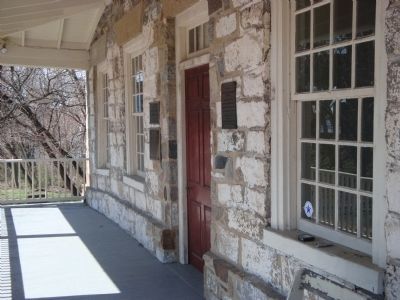
Photographed by Roger Dean Meyer, April 5, 2009
3. Rodgers Tavern Marker Near Entry to Tavern
2. Rodgers Tavern - National Register of Historic Places Nomination Form.
Rodgers Tavern is of national importance due to the frequent visits of George Washington between the years 1775-1798.(Submitted on May 5, 2025, by Pete Skillman of Wilmington, Delaware.)
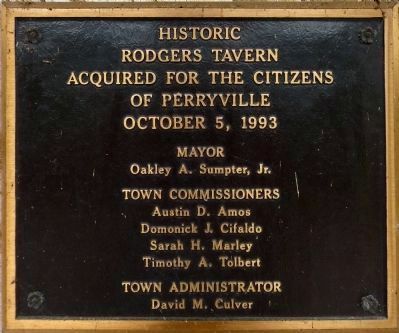
Photographed by Allen C. Browne, October 8, 2013
4. Rodgers Tavern Acquired for the Citizens of Perryville
October 5, 1993
October 5, 1993
Mayor: Oakley A. Sumpter, Jr.
Town Commissioners: Austin D. Amos, Domonick J. Cifaldo, Sarah H. Marley, Timothy A. Tolbert
Town Adminsitrator: David M. Culver
Town Commissioners: Austin D. Amos, Domonick J. Cifaldo, Sarah H. Marley, Timothy A. Tolbert
Town Adminsitrator: David M. Culver
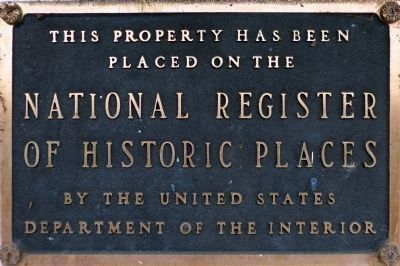
Photographed by Allen C. Browne, October 8, 2013
5. National Register Plaque
Placed on The
National Register
Of Historic Places
By the United States
Department of the Interior
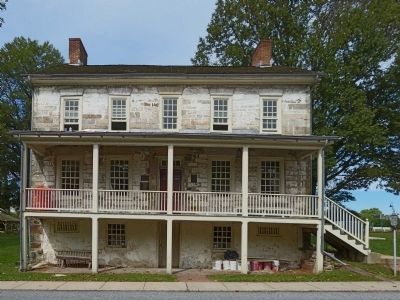
Photographed by Allen C. Browne, October 8, 2013
6. Rodgers Tavern
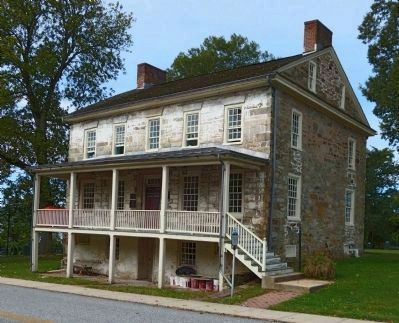
Photographed by Allen C. Browne, October 8, 2013
7. Rodgers Tavern
Credits. This page was last revised on May 5, 2025. It was originally submitted on February 23, 2010, by Roger Dean Meyer of Yankton, South Dakota. This page has been viewed 2,118 times since then and 65 times this year. Last updated on October 9, 2013, by Allen C. Browne of Silver Spring, Maryland. Photos: 1, 2, 3. submitted on February 23, 2010, by Roger Dean Meyer of Yankton, South Dakota. 4, 5, 6, 7. submitted on October 9, 2013, by Allen C. Browne of Silver Spring, Maryland. • Bill Pfingsten was the editor who published this page.
