Waterford in Saratoga County, New York — The American Northeast (Mid-Atlantic)
Union Bridge
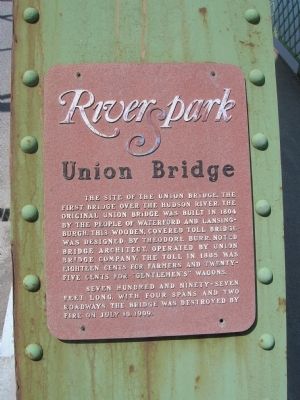
Photographed by Howard C. Ohlhous, May 5, 2008
1. Union Bridge Marker
Union Bridge
The site of the Union Bridge, the first bridge over the Hudson River, the original Union Bridge was built in 1804 by the people of Waterford and Lansingburgh. This wooden, covered toll bridge was designed by Theodore Burr, noted bridge architect. Operated by Union Bridge Company, the toll in 1805 was eighteen cents for farmers and twenty five cents for "gentlemen's" wagons.
Seven hundred and ninety-seven feet long, with four spans and two roadways the bridge was destroyed by fire on July 10, 1909.
Erected by River Spark.
Topics. This historical marker is listed in these topic lists: Bridges & Viaducts • Man-Made Features • Roads & Vehicles. A significant historical month for this entry is July 1804.
Location. 42° 47.343′ N, 73° 40.505′ W. Marker is in Waterford, New York, in Saratoga County. It is on Broad Street (New York State Route 4), on the right when traveling east. Touch for map. Marker is in this post office area: Waterford NY 12188, United States of America. Touch for directions.

Regionally, this marker is in Upstate New York, in the Capital District, and in the Albany Metropolitan
this page online
Other nearby markers. At least 8 other markers are within walking distance of this marker: Waterford Bridges (here, next to this marker); Waterford N.Y. (within shouting distance of this marker); Waterford War Memorial (within shouting distance of this marker); Waterford (within shouting distance of this marker); Troy - Waterford Bridge (within shouting distance of this marker); Waterford Village Historic District (within shouting distance of this marker); Village of Waterford (within shouting distance of this marker); Birthplace of Howard Lindsay (within shouting distance of this marker). Touch for a list and map of all markers in Waterford.
More about this marker. There are two RiverSpark plaques, each one mounted on opposite ends of the bridge.
Regarding Union Bridge. In 1804, Theodore Burr designed the first "sizable
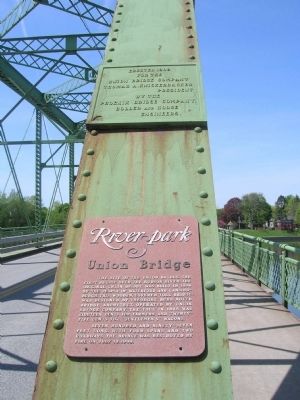
Photographed by Howard C. Ohlhous, May 5, 2008
2. RiverSpark Union Bridge Marker
This is one of two RiverSpark Union Bridge Markers. This one is on the east/Lansingburgh side of the bridge. Additionally, the bridge builder's plaque is seen here mounted above the RiverSpark Union Bridge plaque.
Additional keywords. 126th Street Bridge Closed Detour
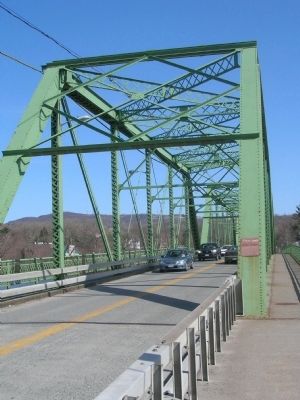
Photographed by Howard C. Ohlhous, April 8, 2008
3. RiverSpark Union Bridge Marker
This view shows the Union Bridge marker on the west/Waterford end of the bridge.
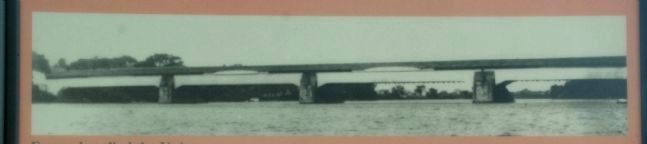
Photographed by Howard C. Ohlhous, September 11, 2013
4. The 1804 Wooden Covered Union Bridge at Waterford
This photo is on display at an interpretive display in the park in Waterford.
Photographed by Howard C. Ohlhous, September 11, 2013
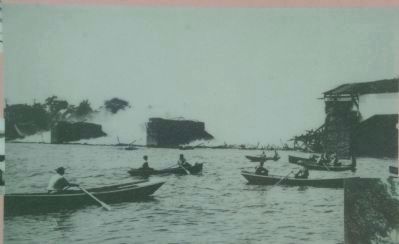
5. Union Bridge Fire - July 10, 1909
After a half hour's burning three of the four bridge spans dropped into the river and with them six members of the volunteer fire department. They were rescued with difficulty and escaped injury. This photo is on an information kiosk in the park near the bridge.
Photographed by Howard C. Ohlhous, September 18, 2008
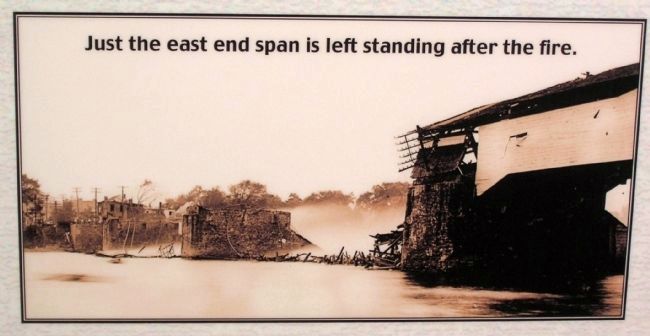
6. Union Bridge Fire July 10, 1909
This photo is on display at the Waterford Historical Museum and Cultural Center, located in the 1830 Hugh White Homestead.
Photographed by Howard C. Ohlhous, April 8, 2008
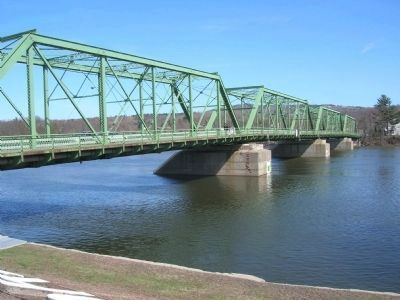
7. The 1909 Union Bridge
The original stone piers of the Union Bridge are encased in the concrete piers that support the current Troy - Waterford Bridge.
Photographed by Howard C. Ohlhous, May 5, 2008
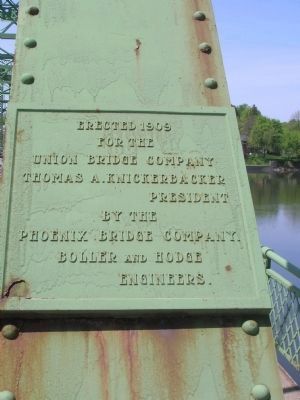
8. Union Bridge Builder's Plaque - East End of the Bridge
For The
Union Bridge Company
Thomas A. Knickerbacker
President
By The
Phoenix Bridge Company
Boller And Hodge
Engineers.
United States Patent and Trademark Office
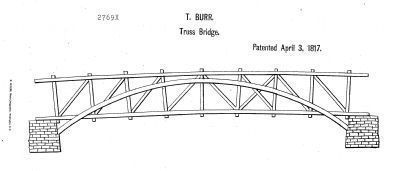
9. Burr Truss - Patent Number: US0X0002769
This is a patent drawing for the Burr Truss, the type used on the Union Bridge in Waterford in 1804. The Burr truss combines an arch with a multiple-Kingpost truss. Though the Union bridge was built in 1804, this patent for the truss design was not issued until April 3, 1817.
Photographed by Howard C. Ohlhous, March 2, 2007
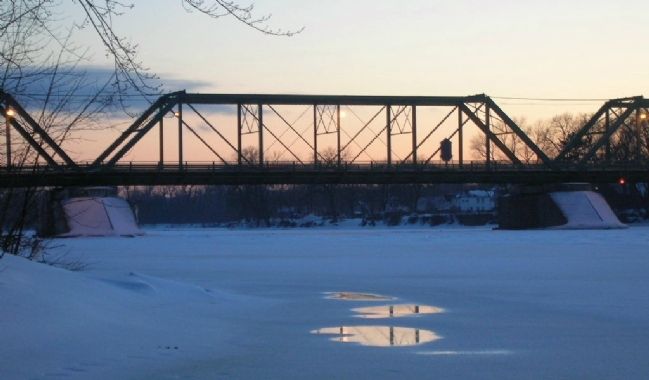
10. The Union Bridge across the Hudson
Credits. This page was last revised on June 16, 2016. It was originally submitted on September 22, 2013, by Howard C. Ohlhous of Duanesburg, New York. This page has been viewed 1,246 times since then and 43 times this year. Last updated on November 23, 2013, by Howard C. Ohlhous of Duanesburg, New York. Photos: 1, 2, 3, 4, 5, 6, 7, 8, 9, 10. submitted on September 22, 2013, by Howard C. Ohlhous of Duanesburg, New York. • Andrew Ruppenstein was the editor who published this page.
